
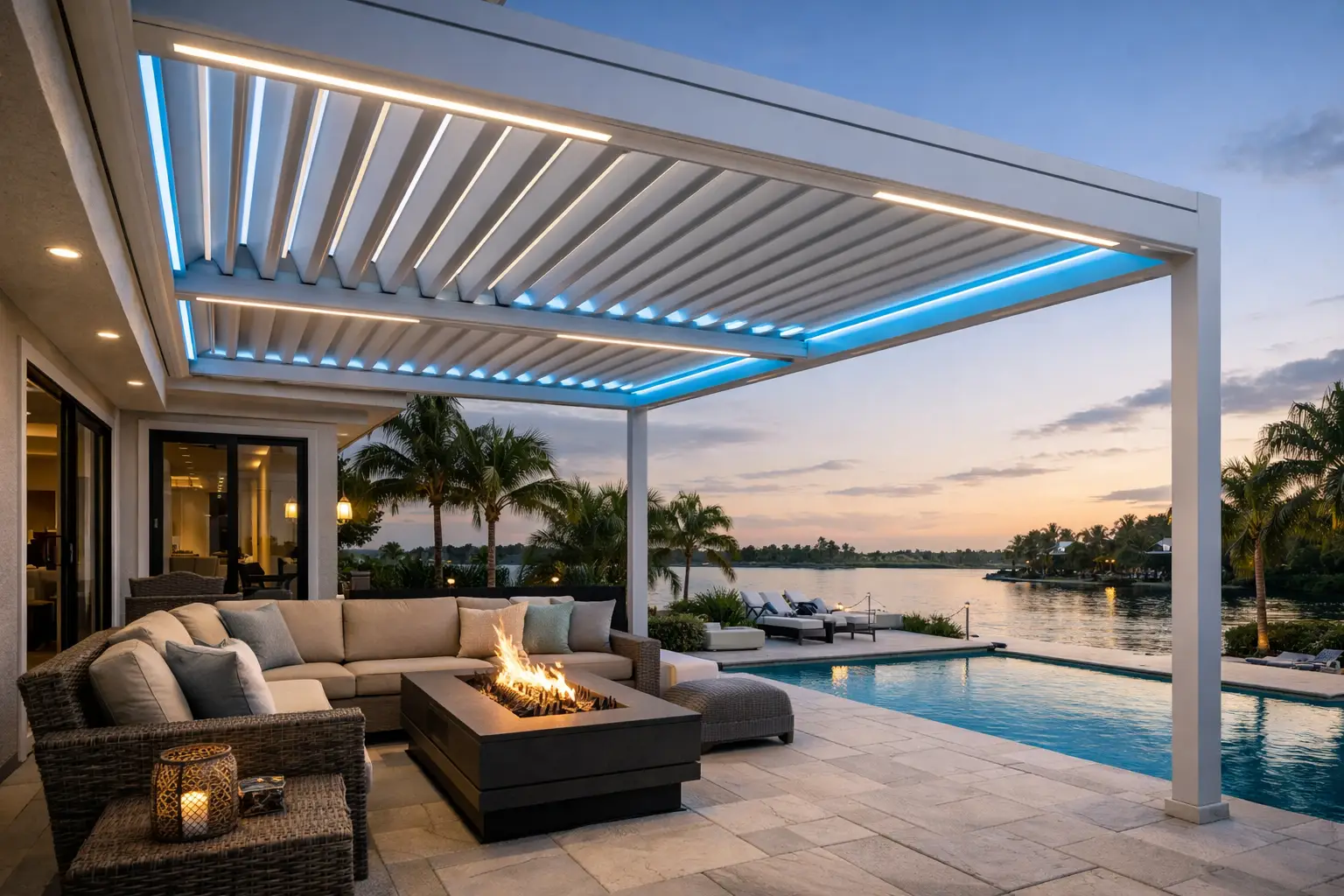
A Florida patio can be perfect at 8:00 a.m. and too exposed to enjoy by noon. Then comes a fast-moving rain shower, a humid evening, or a windy coastal forecast. A motorized pergola Florida homeowners choose for a serious outdoor upgrade needs to do more than look refined. It needs to give you control over the elements while standing up to the conditions that define life here.
For homeowners investing in a pool deck, terrace, lanai, or outdoor kitchen, a motorized louvered pergola creates a more usable living area without sacrificing the open-air feeling that makes Florida living so appealing. With the touch of a button, adjustable louvers can shift from open sky to cooling shade to a closed roof that helps keep rain out. The difference is not merely convenience. It is the ability to plan a dinner, host family, or enjoy a quiet afternoon outside with far less dependence on the forecast.
What a Motorized Pergola Florida Home Needs
Not every motorized pergola is designed for Florida’s heat, driving rain, salt air, and hurricane exposure. That distinction should shape the entire buying decision. A premium system begins with architectural-grade aluminum, precision-engineered components, and a structure designed around the specific installation site.
Motorized louvers are the heart of the experience. Open them to release heat and invite in natural light. Angle them to reduce direct sun while maintaining airflow. Close them when rain arrives. This adjustable overhead coverage gives a patio the flexibility of an interior room while preserving its connection to the landscape.
The system itself matters just as much as the louvers. Quality frames, concealed drainage, secure attachment methods, and professionally planned footing or foundation details all contribute to performance. For a freestanding installation near a pool, a roof-mounted design over a patio, or a pergola integrated with an outdoor kitchen, the engineering must fit the application. A beautiful rendering is not a structural plan.
Control the Sun, Rain, and Evening Atmosphere
Florida homeowners often begin with shade as the priority. After installation, many find that rain management and extended evening use are equally valuable. A motorized pergola turns a space that was reserved for ideal weather into a setting that supports daily life.
During the hottest part of the day, louvers can be positioned to limit harsh overhead sun without making the area feel closed in. When the temperature drops, opening the roof restores the feeling of an uncovered terrace. In rain, closed louvers direct water into an integrated gutter system rather than allowing runoff to interrupt the gathering below.
Integrated lighting is where the structure becomes an outdoor destination after sunset. Thoughtfully placed LED lighting can provide a soft glow for conversation, brighter illumination for dining, or a polished backdrop for entertaining. Optional automated shades add privacy and low-angle sun protection, particularly on west-facing exposures or waterfront properties where glare can become a daily issue.
There are trade-offs worth discussing upfront. A larger covered footprint delivers more shade and rain protection, but it also requires careful attention to drainage, setbacks, attachment conditions, and sightlines. Automated shades improve comfort, yet they should be selected and positioned with wind exposure in mind. The right solution is not a standard package. It is a design that responds to how you use the space and what the property can support.
Hurricane-Rated Engineering Is the Luxury Feature That Matters
In coastal Florida, structural confidence is not an optional upgrade. It is part of the value of the project. An outdoor structure should be evaluated for its wind rating, engineered plans, installation method, and permitting requirements before design details take center stage.
enVision Pergola provides custom aluminum pergola systems engineered for wind ratings up to 185 mph, subject to the project design, site conditions, and applicable code requirements. That capability matters in communities from Boca Raton and Palm Beach to Naples, Tampa, and coastal barrier islands, where homeowners expect their exterior improvements to be designed with regional weather realities in mind.
A stated wind rating should always lead to better questions. Is the system engineered for your municipality? How will it be attached or anchored? What happens at the roofline, slab, or footing? Is permitting included in the contractor’s scope? Who is responsible for coordinating inspections? Clear answers protect both the investment and the project timeline.
Hurricane-rated performance is never a reason to ignore local storm guidance or property preparation requirements. It is, however, a powerful indicator that the pergola was selected as a long-term architectural addition rather than a seasonal accessory. For a homeowner who values peace of mind, that difference is significant.
Why Custom Design Changes the Result
Luxury outdoor living should look intentional from every angle. The pergola’s proportions, post placement, finish, louver orientation, and lighting plan should complement the home rather than compete with it. A custom system can define a dining area beside the pool, create a sheltered lounge outside a primary suite, or give an outdoor kitchen the architectural presence it deserves.
The most successful designs start with use, not just dimensions. Consider how many people you host, the direction of afternoon sun, prevailing wind, views you want to preserve, and where rainwater should be directed. A small adjustment to louver orientation or pergola placement can materially improve comfort at the time of day when you are most likely to use the space.
For homes with established landscaping or detailed hardscape, installation planning is especially important. Access routes, utility locations, drainage paths, and finish protection should be discussed before work begins. A concierge-style process keeps the homeowner informed from estimate through design, permitting, installation, and final walkthrough, rather than leaving critical decisions to the jobsite.
Look Beyond the Initial Price
A motorized pergola is a premium home improvement, and comparable-looking proposals can represent very different levels of engineering, material quality, service, and long-term support. The lowest number may not include permits, engineered documentation, integrated lighting, professional electrical coordination, or the structural work required for the selected wind rating.
Ask for a clear scope of work. You should understand what is included in the design, permitting, installation, controls, drainage, lighting, and warranty coverage. This is also the time to ask how the company communicates during permitting delays, weather interruptions, or site discoveries. Premium service is not simply a polished sales presentation. It is proactive project management when details need attention.
Warranty coverage deserves the same scrutiny. A strong warranty on the structure, motors, and lighting reduces ownership risk and signals confidence in the system. enVision Pergola offers 20-year structural coverage along with 20-year coverage for motors and lighting, giving qualified homeowners a clear long-term standard to consider when comparing options.
Begin With the Property, Not the Product
The right motorized pergola begins with an on-site conversation about your home, your lifestyle, and the local conditions that affect the design. Bring photos of the space at different times of day, note where water collects after rain, and be candid about whether the priority is entertaining, shade, privacy, or all three. Those details lead to a pergola that feels like it was always meant to be there.
A well-designed outdoor retreat should make Florida life more comfortable on ordinary days, not only during special occasions. Choose a system with the engineering, controls, and professional installation to earn its place beside your home for years to come.