
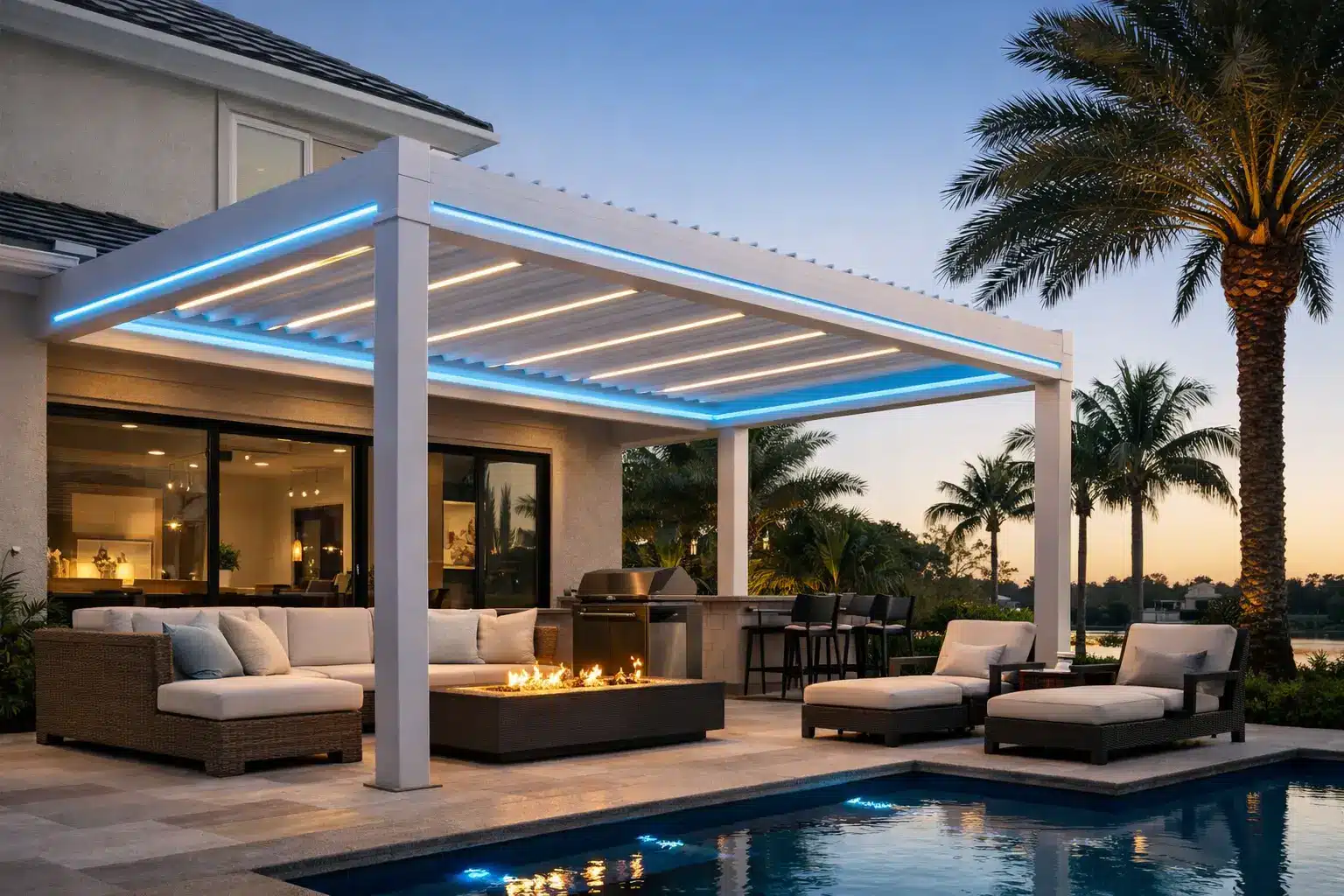
A luxury pergola should do more than make a pool deck or patio look finished. In Florida, it must manage intense sun, sudden rain, coastal humidity, and potentially severe wind while feeling like a natural extension of the home. This luxury pergola buying guide focuses on the decisions that separate a beautiful outdoor feature from a long-term, high-performance investment.
For discerning homeowners, the right system creates a true outdoor room: a place for morning coffee, family dinners, poolside entertaining, or a quiet retreat after sunset. The wrong system can bring unnecessary permit delays, drainage concerns, weak warranty coverage, and a result that does not hold up to the climate. Start with performance, then choose the details that make the space distinctly yours.
Start With the Structure, Not the Accessories
Motorized louvers, lighting, and shades are compelling features, but the structural system comes first. A premium pergola should be architectural-grade aluminum, engineered for the site, and designed to carry its loads through the posts, beams, footings, and attachment points safely.
Ask how the pergola is rated, what wind speed the rating applies to, and whether that rating reflects the exact configuration proposed for your home. Wind performance is not a generic promise. Size, freestanding versus attached placement, elevation, exposure, foundation conditions, and local code requirements can all affect engineering.
For coastal and hurricane-prone Florida properties, this conversation is essential. A system engineered and rated up to 185 mph can provide meaningful peace of mind, but homeowners should expect the contractor to explain what is included in the engineered design and how the installation will meet local requirements. High-end outdoor living deserves more than a decorative structure with vague performance claims.
Choose a Roof System That Changes How You Use the Space
The defining feature of a luxury pergola is often the roof. Fixed-roof designs provide constant coverage, while motorized louvered systems give homeowners active control over sun, airflow, shade, and rain protection.
Why motorized louvers matter
A louvered roof lets you open the ceiling when you want light and a breeze, tilt the louvers to reduce direct sun, or close them when a Florida rain shower passes through. That versatility can make a patio usable across more hours of the day and more months of the year.
The quality of the motor and louver mechanism matters as much as the visual effect. Look for a system with dependable operation, clean alignment, integrated gutters, and a warranty that covers the components homeowners will use every day. A premium motorized roof should feel precise and quiet, not improvised.
Understand rain management before installation
Closed louvers should channel water into an integrated gutter system and direct it away from the living area. This is a detail worth discussing early, especially near pools, outdoor kitchens, doors, and landscaped areas.
Ask where downspouts will be located and how water will exit the structure. A thoughtful design incorporates drainage without cluttering the view or creating runoff issues at the patio edge. If the pergola is attached to the home, the connection and water-management plan deserve even closer attention.
Design for the Architecture Already There
A luxury pergola should look intentional from every angle, including from inside the home. Before selecting dimensions or finishes, consider the rooflines, columns, window placement, exterior colors, hardscape, and sightlines that define your property.
Scale is one of the most overlooked decisions. A pergola that is too small can feel like an afterthought over a large pool deck. One that is oversized can overwhelm a modest patio or obstruct desirable views. The best layout creates usable zones: perhaps a shaded dining area near the kitchen, a lounge area facing the water, or a covered gathering space beside the pool.
Color, post placement, and beam proportions should complement the home rather than compete with it. This is where a custom design process has real value. Renderings, field measurements, and a clear conversation about how you entertain can prevent expensive corrections later.
Add Comfort Features With a Purpose
Luxury upgrades should solve a real comfort or usability need. Integrated LED lighting, for example, can extend the space well beyond sunset and create a refined atmosphere without adding visible fixtures. Automated shades can help manage late-day glare, improve privacy, and soften wind around the perimeter.
Consider how each side of the pergola performs at different times of day. A west-facing opening may benefit from shades in the afternoon, while a poolside orientation may call for lighting that supports evening entertaining without creating harsh glare. The goal is not to add every available option. It is to build a space that works beautifully in the moments you will actually use it.
For the cleanest result, plan lighting, shades, electrical access, and control placement during design. Retrofitting features after installation can be possible, but it rarely delivers the same integrated appearance.
Treat Permitting as Part of the Purchase
In Florida, permits are not an administrative footnote. They are part of protecting the investment. A quality contractor should evaluate the property, prepare the necessary documentation, coordinate engineering when required, submit for permits, and keep you informed as the project moves through review.
Permit requirements vary by municipality, neighborhood rules, attachment method, and project scope. Homeowners associations may also require approval before construction begins. A contractor who promises a quick installation without discussing these variables may be creating expectations that do not match the process.
A concierge-style project experience means clear expectations from the first estimate through final installation. You should know who is handling permits, what the anticipated timeline looks like, what decisions are needed from you, and how project updates will be communicated. For high-value homes, professionalism behind the scenes matters just as much as craftsmanship on installation day.
Compare Warranties by What They Actually Cover
A long warranty can be reassuring, but the details matter. Structural coverage, motors, lighting, finish quality, labor, and exclusions may all be handled differently. Read beyond the headline number and ask direct questions.
A premium pergola provider should be able to explain the warranty in plain language: what is covered, how long it is covered, who performs service, and what happens if a motor or lighting component needs attention years later. Strong coverage such as a 20-year structural warranty and 20-year protection for motors and lighting reduces ownership risk, particularly when the pergola includes technology that will be used frequently.
Also ask about the company standing behind the installation. A product warranty is only as helpful as the provider’s ability to respond. Local experience, consistent communication, and a proven reputation are meaningful considerations when selecting a contractor for a permanent exterior improvement.
Know What a Complete Proposal Includes
The lowest proposal is not automatically the better value. Compare each scope carefully to understand whether it includes engineering, permits, site preparation, electrical coordination, integrated drainage, lighting, shades, installation, and final cleanup.
A transparent proposal should identify the exact system, dimensions, finish, options, installation approach, and known assumptions. If a proposal is vague, it is difficult to compare and leaves too much room for change orders. Premium service begins with clarity.
It also helps to ask about the installation sequence. Find out how the crew will protect existing hardscape, how long the work should take after permits are approved, and how the team handles unforeseen site conditions. Great customer communication is not a luxury add-on. It is part of a well-managed build.
The Right Time to Request an Expert Estimate
Request an estimate once you have a general sense of how you want to live outdoors, not after every detail is decided. A qualified design specialist can help determine the right footprint, orientation, louver configuration, accessories, and structural approach for your property.
Bring photos, a survey if available, inspiration images, and a candid description of your priorities. Whether your focus is hurricane-rated performance, shaded entertaining, privacy, or a polished poolside retreat, those priorities should guide the design from the beginning.
The most satisfying luxury pergola projects are not chosen from a catalog. They are engineered for the home, designed around the owner’s lifestyle, and installed by a team that treats every detail as part of the finished experience. When you are ready to make your outdoor space feel as considered as the rooms inside, schedule a professional estimate and start with a design built to last.