
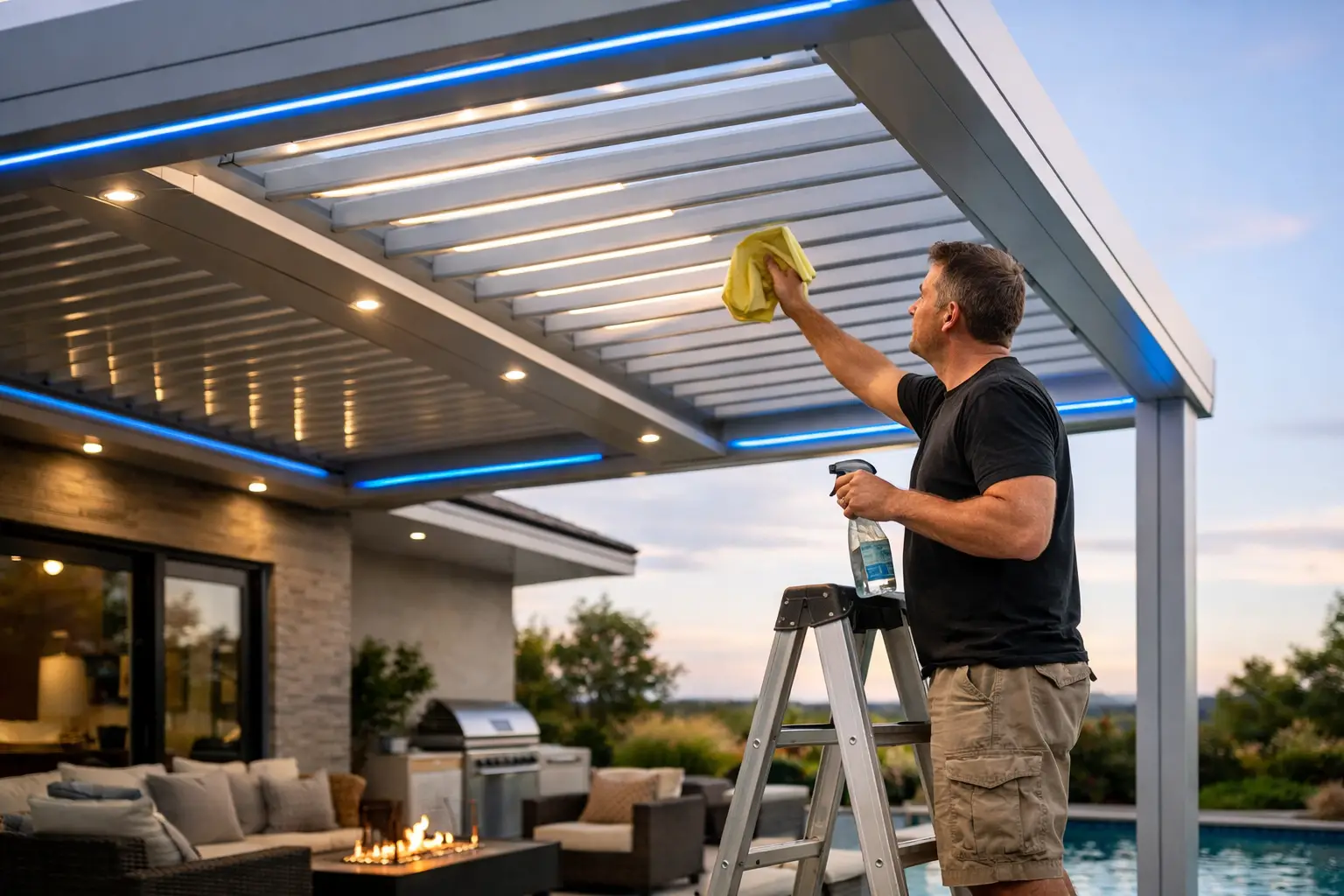
A motorized louvered pergola earns its place every time the Florida sun intensifies, a passing shower moves in, or guests stay outside later than expected. Thoughtful pergola maintenance for aluminum louvers protects that comfort, preserves the architectural finish, and helps keep every moving component operating as designed. For a premium outdoor structure, maintenance is not complicated, but it should be intentional.
Aluminum is selected for its durability, corrosion resistance, and clean appearance. Yet Florida presents an unusually demanding ownership environment: high UV exposure, humidity, wind-driven rain, airborne debris, pool chemicals, and, in coastal areas, salt air. A simple seasonal routine is the difference between a pergola that continues to look tailored to the home and one that is left to collect residue until a small issue becomes an avoidable service call.
What Aluminum Louvers Need From You
The good news is that aluminum louvers do not require constant attention. Their finish is designed for outdoor exposure, and a professionally installed system is engineered so its louvers, gutters, posts, and motorized controls work together. The priority is keeping the system clean, allowing water to travel where it is supposed to go, and noticing changes early.
Most homeowners can handle routine care in a few minutes at a time. More involved inspection or adjustment should be left to a qualified pergola professional, particularly when the system includes motorization, integrated lighting, automated shades, or storm-rated anchoring.
Clean the Louvers Without Damaging the Finish
Rinse the louver blades and frame periodically with a garden hose using a gentle spray. This removes dust, pollen, leaves, and mineral residue before it has time to build up. In South Florida and Gulf Coast communities, a more frequent rinse is wise when salt air, poolside mist, or construction dust is present.
For visible grime, use lukewarm water, a mild pH-neutral soap, and a soft microfiber cloth or soft-bristle brush. Work with the louver blades open so you can clean their upper and lower surfaces, then rinse thoroughly. Avoid abrasive pads, harsh degreasers, chlorine-based cleaners, pressure washers at close range, and solvents. These can dull or compromise the finish, force water into areas it should not enter, or affect seals.
Do not overlook the underside of the louvers. It is the surface most visible from your seating area, and it is where insects, soot, and airborne residue can gradually affect the crisp appearance of the structure.
Pergola Maintenance for Aluminum Louvers in Florida
Florida weather makes drainage checks essential. A louvered pergola is designed to channel rainwater away through an integrated gutter and post system when the louvers are closed. Leaves, palm fragments, seed pods, and roof debris can interrupt that path.
After heavy rain, look for water that is slow to clear, spills from an unexpected location, or pools where it should not. With the louvers open, remove loose debris from accessible gutter channels and inspect the openings near the posts. Never use sharp tools that could scratch coated surfaces or puncture a hidden component.
If water backs up repeatedly, do not assume more force is the answer. The source may be debris higher in the system, a drainage obstruction, or a condition that needs professional evaluation. Timely service protects the pergola, the surrounding hardscape, and the outdoor furnishings beneath it.
Exercise the Louvers Regularly
Motorized louvers are built for frequent use. Opening and closing them regularly helps you recognize an operational change before it interrupts a planned dinner, pool day, or weekend gathering. Run the system through a full open and close cycle at least once each month, even during periods when the weather has been consistently dry.
Watch and listen as the louvers move. Their motion should be controlled and consistent, without unusual hesitation, grinding, clicking, or uneven alignment. Confirm that the louvers close as intended and that water-management edges meet correctly. If the system behaves differently than usual, stop operating it repeatedly and arrange a professional inspection.
Do not apply household lubricants to motors, gears, pivots, or seals unless your manufacturer documentation specifically directs it. A lubricant that seems helpful can attract grit, interfere with engineered components, or complicate a warranty claim. Premium systems are designed around precise tolerances, not improvised fixes.
Protect Lighting, Shades, and Controls
Integrated lighting and automated shades make a pergola feel like a true extension of the home, but they also add components worth checking during your routine walk-through. Test lighting zones, wall controls, remotes, and any approved automation settings. Replace batteries in remotes when response becomes inconsistent, and keep control equipment dry and protected according to its installation requirements.
For automated shades, inspect the visible track area for leaves, insects, or debris that could interfere with travel. Operate shades when they are clear and dry whenever possible. If a shade begins to stop unevenly or does not fully retract, avoid pulling it by hand. A professional can determine whether the concern is environmental debris, alignment, or a control issue.
It also pays to preserve your documentation. Keep installation records, warranty information, control instructions, and service notes in one place. That gives you a clear history of the system and makes seasonal support faster if it is ever needed.
A Practical Seasonal Schedule
A consistent schedule keeps maintenance light. Monthly, operate the louvers and check that controls, lighting, and drainage appear normal. Every three to four months, rinse the structure and remove accessible debris from gutter areas. In coastal settings, increase rinsing as conditions demand.
Before storm season, schedule a professional inspection if your pergola has experienced unusual weather, visible impact, drainage concerns, or changes in operation. Review the operating guidance for your specific system and follow local official instructions when severe weather is forecast. Storm-rated engineering is a major advantage, but performance depends on the installed configuration, site conditions, proper permitting, and using the system as directed.
After a major storm, inspect from the ground before operating the louvers. Look for branches, debris, standing water, loose exterior items, or signs of impact. If anything appears misaligned or damaged, do not attempt a repair from a ladder or roofline. Document what you see and contact a qualified service team.
When to Call a Pergola Professional
Routine cleaning belongs to the homeowner. Electrical diagnostics, motor service, louver alignment, drainage repairs, structural fastener inspection, and storm-related assessments belong to trained professionals. That distinction protects both your investment and the system warranty.
Arrange service if you notice persistent leaks when the louvers are fully closed, water exiting outside intended drainage points, a louver that does not align with the others, repeated control failures, visible finish damage, or new noise during operation. These concerns are often manageable when addressed early.
For homeowners who value a turnkey ownership experience, the best maintenance plan starts with expert design and installation. Proper slope, drainage routing, electrical planning, and anchoring are established long before the first rinse or seasonal inspection. At enVision Pergola, that engineering-first approach is part of building an outdoor retreat designed for Florida conditions.
A well-maintained louvered pergola should feel effortless: shade when you want it, rain protection when you need it, and a polished outdoor setting ready for the next gathering. Give it a few informed checks each season, and let qualified specialists handle anything beyond routine care.