
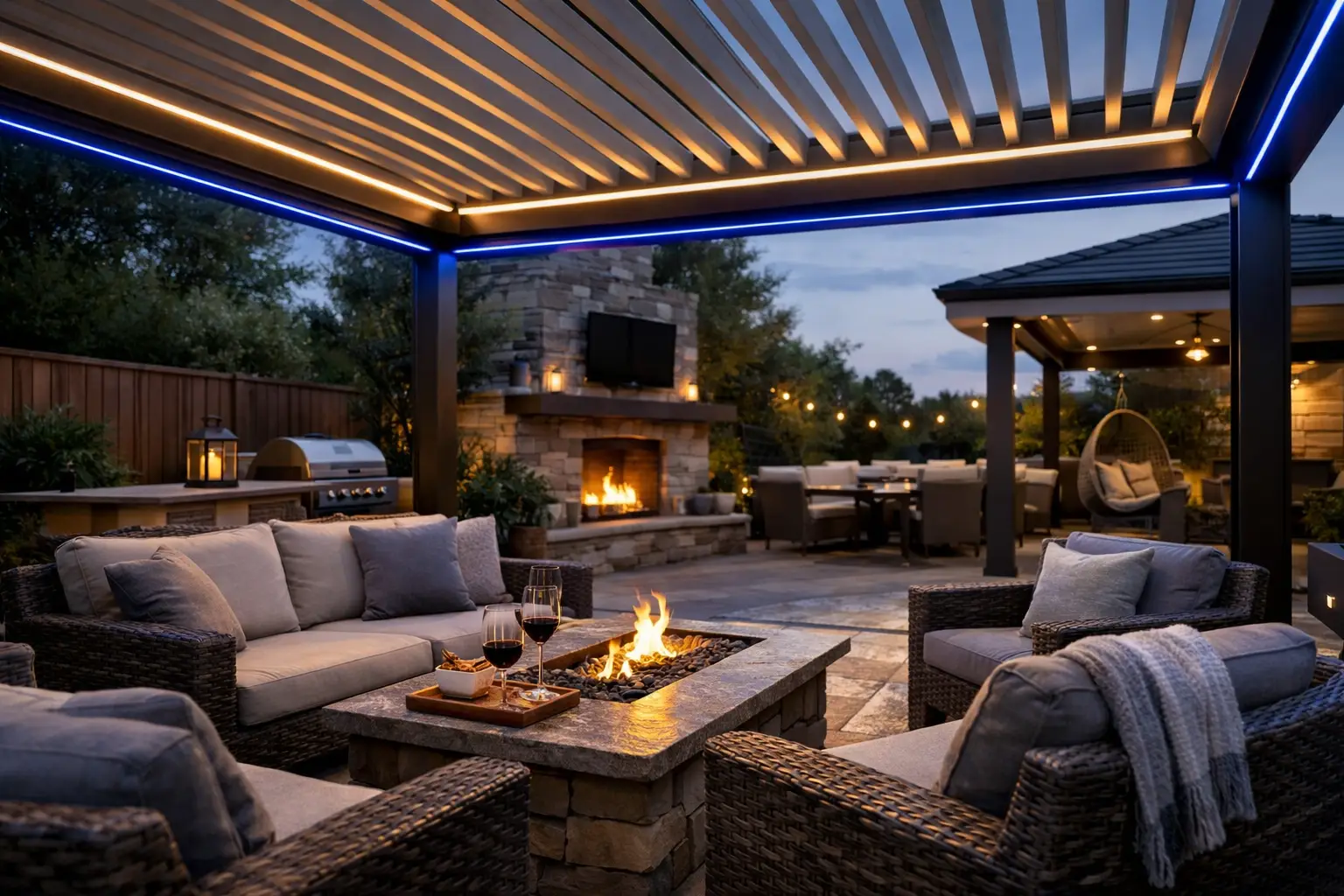
A beautiful patio is easy to love in perfect weather. The real test comes at 4 p.m. in July when the sun is punishing, the wind picks up, and a passing storm threatens to send everyone indoors. If you are researching how to weatherproof outdoor entertaining spaces, the goal is not simply adding cover. It is creating an outdoor room that still feels comfortable, polished, and dependable when Florida weather does what it always does.
For high-end homes, weatherproofing should protect the experience as much as the furnishings. Guests should not be squinting into glare, rushing cushions inside, or abandoning dinner because a light rain rolled through. The right design makes outdoor living feel intentional, not conditional.
How to weatherproof outdoor entertaining spaces without sacrificing design
The biggest mistake homeowners make is treating weather protection as a single purchase. One umbrella, one fan, or one screen rarely solves the full problem. A durable outdoor entertaining space works because several systems are planned together – overhead coverage, water management, shade control, airflow, lighting, and material selection all have to support each other.
That matters even more in coastal and hurricane-prone areas. A structure that looks elegant in listing photos but cannot handle driving rain, salt exposure, or serious wind is not a luxury investment. It is a maintenance problem waiting to happen.
For most upscale outdoor spaces, the best starting point is the structure itself. If the overhead system is weak, undersized, or poorly engineered, everything beneath it is compromised. Furniture protection, guest comfort, and long-term value all depend on having a covering designed for the local climate.
Start with a permanent overhead system
If you entertain often, a permanent pergola system gives you a level of control that temporary solutions cannot match. This is especially true when the system is engineered aluminum rather than a lightweight decorative product. In Florida, overhead structures need to do more than cast shade. They need to stand up to heavy rain, strong wind events, and constant UV exposure while still looking refined.
Motorized louvered pergolas are especially effective because they adapt to changing conditions. Louvers can rotate to reduce glare, increase ventilation, or close to provide rain protection. That flexibility matters because weatherproofing is rarely about one fixed setting. Morning sun, afternoon heat, and a fast-moving storm all call for different responses.
There is a trade-off, of course. A premium pergola system costs more upfront than a patchwork of lower-cost shade products. But for homeowners who want a true extension of the home, the performance, aesthetics, and property value impact are in a different category.
Make drainage part of the design
Rain protection is only half the job. Water has to go somewhere. One of the clearest signs of a poorly planned outdoor area is runoff dripping at the edges, splashing onto seating, or pooling around the perimeter.
An effective weatherproofed entertaining space manages water through integrated gutter systems, controlled downspout routing, and grading that moves water away from the entertaining zone. This is where engineering matters more than appearance. A clean roofline may look impressive, but if the drainage plan is weak, the space becomes unreliable the moment weather turns.
For pool decks and patios, slip resistance also deserves attention. Smooth surfaces can look sleek but become hazardous during rain or after condensation-heavy evenings. Material selection should support both visual quality and safety.
Control sun, wind, and rain at the edges
Once the overhead layer is handled, the next challenge is the perimeter. Outdoor entertaining rarely fails because of rain falling straight down. It fails because of low-angle sun, blowing rain, and wind crossing the seating area.
This is where automated shades and screens add real value. They help block glare during dinner, create privacy when needed, and reduce wind intrusion without making the space feel boxed in. The best systems disappear visually when not in use and respond quickly when conditions shift.
For homes near the coast, side protection can make the difference between a space that gets used occasionally and one that works year-round. It also protects finishes, upholstery, and electronics from repeated exposure.
That said, full enclosure is not always the right answer. Some homeowners want maximum openness and are willing to tolerate more weather variability. Others care more about consistency and comfort. The right balance depends on how you entertain, what direction the space faces, and how exposed the property is.
Think in microclimates, not square footage
A large backyard does not have one weather condition. It has several. The poolside lounge may need stronger shade, while the dining zone may need rain protection and integrated lighting. An outdoor kitchen may require ventilation planning and more durable nearby finishes.
When weatherproofing is done well, each area is tailored to its use. Dining spaces benefit from overhead coverage and controllable light. Lounge areas often need softer shade, airflow, and evening ambiance. Transitional areas near the home need clean drainage and flooring that will not turn slick in wet weather.
This is one reason custom design consistently outperforms off-the-shelf solutions. Entertaining spaces work best when the structure is sized and configured around actual use patterns rather than generic dimensions.
Choose materials that can handle Florida exposure
Luxury finishes should still look luxury after years of sun, humidity, and storms. That sounds obvious, but many outdoor spaces are built around looks first and performance second.
Architectural-grade aluminum is a strong choice for Florida because it resists corrosion, handles moisture well, and maintains a clean modern appearance with less maintenance than many alternative materials. Powder-coated finishes also help preserve color and surface quality under intense sun exposure.
Fabrics, cabinetry finishes, and lighting components matter too. Weatherproofing is not just about the frame overhead. It includes every surface and system that has to survive heat, rain, salt air, and daily use. Premium projects should specify exterior-rated components from the start rather than upgrading after failures appear.
A warranty is also worth reading closely. Long coverage periods usually signal confidence in the product, but the details matter. Structural warranties, motor coverage, and lighting protection each tell you something different about expected long-term performance.
Do not overlook lighting and power
Entertaining does not stop when the sun goes down. In fact, many of Florida’s best outdoor gatherings start in the evening. That makes integrated lighting part of weatherproofing, not an afterthought.
Built-in LED lighting eliminates the clutter and vulnerability of temporary fixtures. It also creates a more finished architectural look. The same logic applies to fans, heaters where appropriate, speakers, and charging access. If these features are planned into the structure, the space stays cleaner, safer, and more dependable.
Exposed cords, plug-in fixtures, and loosely installed accessories often become weak points during storms or heavy moisture. A professionally designed system avoids that problem.
How to weatherproof outdoor entertaining spaces for storm season
Every Florida homeowner understands the difference between everyday weather and severe weather. If your outdoor investment is substantial, storm resilience should be part of the buying decision from day one.
This does not mean every feature needs to be overbuilt for the most extreme scenario imaginable. It does mean the primary structure should be engineered for local conditions, installed correctly, and backed by meaningful documentation. Permitting, anchoring, and load calculations are not glamorous topics, but they are central to long-term safety and peace of mind.
In markets like Boca Raton, Naples, Tampa, and other exposed coastal areas, homeowners should ask direct questions about wind ratings, installation standards, and how the system performs when not in active use. A premium pergola is not just a design statement. It is part of the home’s exterior envelope and should be treated with that level of seriousness.
This is where a full-service contractor adds value. Design, permitting, engineering, and installation should work together. If those responsibilities are fragmented, problems often surface later in the form of delays, finger-pointing, or compromised performance.
Weatherproofing should make the space easier to use
The best outdoor entertaining spaces do not feel technical, even when the engineering behind them is impressive. They feel effortless. Shade adjusts when needed. Rain is handled without drama. Lighting is built in. The furniture stays protected, the atmosphere stays elevated, and the host is not managing the weather every twenty minutes.
That is the real standard. Not whether a space survives the season, but whether it invites use across more days, more evenings, and more of the year.
For homeowners planning a serious outdoor upgrade, weatherproofing is not a finishing touch. It is the framework that turns a patio into a reliable luxury living space. When the structure, controls, drainage, and materials are designed together, the result is more than protection. It is confidence every time guests arrive, no matter what the forecast says.