
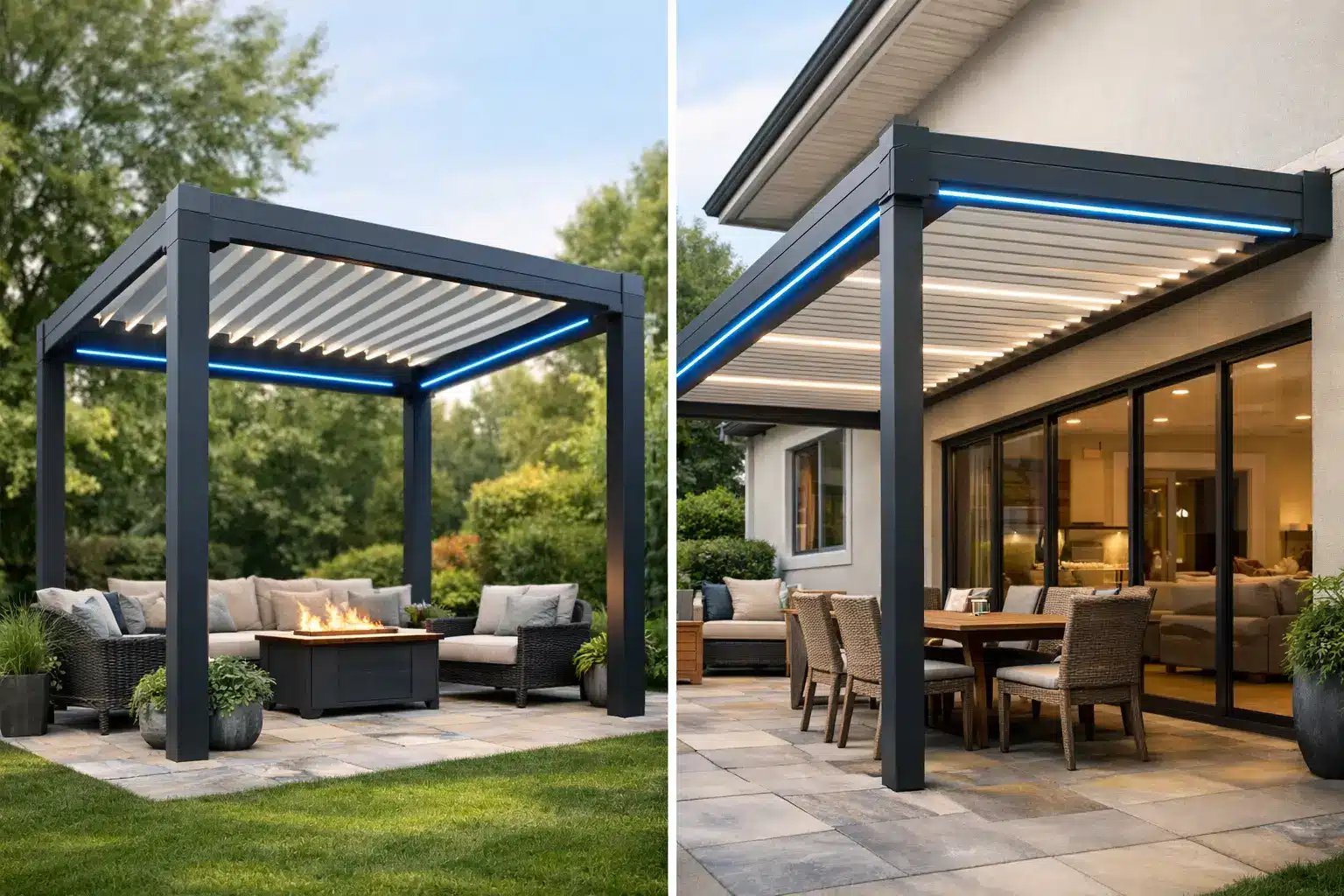
A pergola can completely change how a Florida home lives and entertains, but the wrong layout choice can leave you with too little shade, awkward traffic flow, or a structure that does not fully serve the space. When homeowners compare freestanding pergola vs attached pergola options, they are usually not choosing between two looks. They are choosing how they want to use their property every day, how close they want that experience tied to the home, and how much performance they expect from the structure in a coastal climate.
For many luxury homes, this decision comes down to one question: should the pergola function as an extension of the house, or as a destination within the landscape? Both can be excellent. The better option depends on architecture, exposure, entertaining habits, and engineering priorities.
Freestanding pergola vs attached pergola: the core difference
A freestanding pergola is structurally independent. It stands on its own posts and can be placed over a pool deck, outdoor kitchen, garden lounge, or open entertaining area away from the home. An attached pergola is connected directly to the house and typically extends from the rear elevation, patio, lanai, or terrace.
That simple distinction changes almost everything else. It affects how the space feels, how people move through it, how much weather protection you get near the house, and what kind of visual statement the pergola makes.
An attached system usually feels more integrated with the home’s architecture. It can create a strong indoor-outdoor transition, especially when installed just outside large sliders or a covered patio opening. A freestanding system feels more like a defined outdoor room. It creates separation, which can be a major advantage if you want the backyard to have zones rather than one continuous space.
When an attached pergola makes more sense
If your goal is to expand your primary living area, an attached pergola is often the better fit. It works especially well when the area just outside the home already functions as the center of outdoor life – dining, lounging, morning coffee, or evening entertaining.
Attached pergolas are often preferred by homeowners who want immediate access from the kitchen, great room, or covered lanai. That convenience matters. If you regularly host guests, serve meals outdoors, or want a refined transition from interior finishes to exterior living, attachment to the home tends to feel more natural and intentional.
There is also a design advantage. A properly designed attached pergola can look like it was always part of the original architecture rather than an addition. For upscale homes, that cohesion matters. The pergola should not feel like an accessory. It should feel like a permanent structural enhancement.
In Florida, attached pergolas can also help make the space closest to the home more usable during intense sun or passing rain. If the system includes motorized louvers, integrated lighting, and optional shades, the result is a more controlled outdoor environment directly where homeowners are most likely to use it.
That said, attached pergolas are not automatically the right answer. The home’s structure, roofline, drainage conditions, and permitting requirements all matter. The installation has to respect both aesthetics and engineering, particularly in hurricane-prone regions.
When a freestanding pergola is the better investment
A freestanding pergola shines when the best outdoor living area is not right up against the house. Many Florida properties have pools, deck areas, gardens, or waterfront views that deserve their own focal point. In those cases, pulling the pergola away from the home often creates a stronger experience.
This option works well for homeowners who want a resort-style layout. A freestanding structure can define a lounge by the pool, cover an outdoor dining setting in the landscape, or create a shaded retreat with a more private feel. Instead of simply extending the house, it gives the yard a second center of gravity.
There is also more freedom in placement and orientation. If the strongest afternoon sun hits one corner of the property, or if the best breeze and best view happen away from the rear wall of the home, a freestanding pergola allows the design to follow performance rather than just convenience.
For larger estates or homes with expansive backyards, freestanding pergolas often look more balanced. An attached system can sometimes make the rear elevation feel heavy if the house is already visually dominant. A separate structure can introduce proportion and create a more thoughtful outdoor composition.
The performance question matters in Florida
For Florida homeowners, this is not just a style choice. Storm exposure, code requirements, and structural performance should be part of the conversation from the start.
An attached pergola transfers some design complexity to the connection point with the home. That attachment must be engineered correctly, especially in high-wind areas. A freestanding pergola avoids that specific interface, but it still requires precise structural design, proper footings, and a system built to perform under local conditions.
This is where product quality and installer capability matter far more than generic pergola advice. In coastal and hurricane-sensitive markets like Boca Raton, Naples, Tampa, and surrounding areas, homeowners should not evaluate pergolas as if they are simple decorative structures. They should evaluate them as permanent outdoor building systems.
Architectural-grade aluminum, professional permitting, and hurricane-rated engineering are not luxury add-ons in this market. They are part of responsible decision-making. If a pergola is expected to deliver comfort, visual value, and peace of mind for years, it has to be built with Florida in mind.
Design, shade, and how the space actually feels
The better pergola is usually the one that matches your daily routine, not just your floor plan.
An attached pergola tends to feel more convenient and connected. You step outside, and the shaded living area is already there. That is ideal for homeowners who want a natural extension of the home for lunch, cocktails, family time, or evening relaxation.
A freestanding pergola feels more intentional. You walk to it. You arrive in it. That small separation can make the experience feel elevated, especially around pools and landscaped entertaining areas. It creates a destination rather than a pass-through zone.
Shade behavior matters too. The orientation of the structure, the height of surrounding architecture, and the path of the sun can make one location significantly more comfortable than another. A freestanding pergola may allow you to chase the best position for afternoon shade. An attached pergola may benefit from the home itself, depending on the exposure.
If you are considering motorized louvers and automated shade elements, both layouts can offer a high level of comfort. The key is using those features where they will have the most impact. The best pergola is not the one with the most features. It is the one whose features solve the right problem.
Cost is not just about the structure
Homeowners often ask whether freestanding or attached pergolas cost less. The honest answer is that it depends on the site and the engineering.
An attached pergola may appear simpler because it shares a connection with the house, but that does not always reduce complexity. Structural integration, waterproofing considerations, and architectural detailing can add precision work. A freestanding pergola may require more posts and dedicated foundation planning, but it can also avoid some of the house-connection challenges.
For luxury homes, the larger financial question is not which option has the lower starting price. It is which option delivers stronger daily use, better visual integration, and better long-term value. A pergola that gets used constantly is the better investment, even if it costs more upfront.
How to decide between the two
If your outdoor lifestyle centers on the space directly behind the home, an attached pergola is often the strongest choice. If your property has a pool, garden axis, water view, or secondary entertaining area that deserves its own identity, a freestanding pergola may create the more compelling result.
The smartest decisions usually come from looking at three things together: where you spend time now, where the property has the best comfort conditions, and how the structure will perform in severe weather. That combination leads to a better answer than aesthetics alone.
For homeowners seeking a premium, fully engineered solution, the process should feel consultative rather than transactional. A quality builder should help you evaluate placement, architecture, permitting, wind performance, drainage, lighting, and usability as one cohesive project. That is especially true when the pergola is meant to function as a true extension of luxury living, not just a visual upgrade.
At the high end of the market, there is no universal winner in the freestanding pergola vs attached pergola debate. There is only the right answer for your home, your lot, and your priorities. The best pergola is the one that feels like it belongs there, performs when conditions turn serious, and gives you one more reason to spend time outside.