
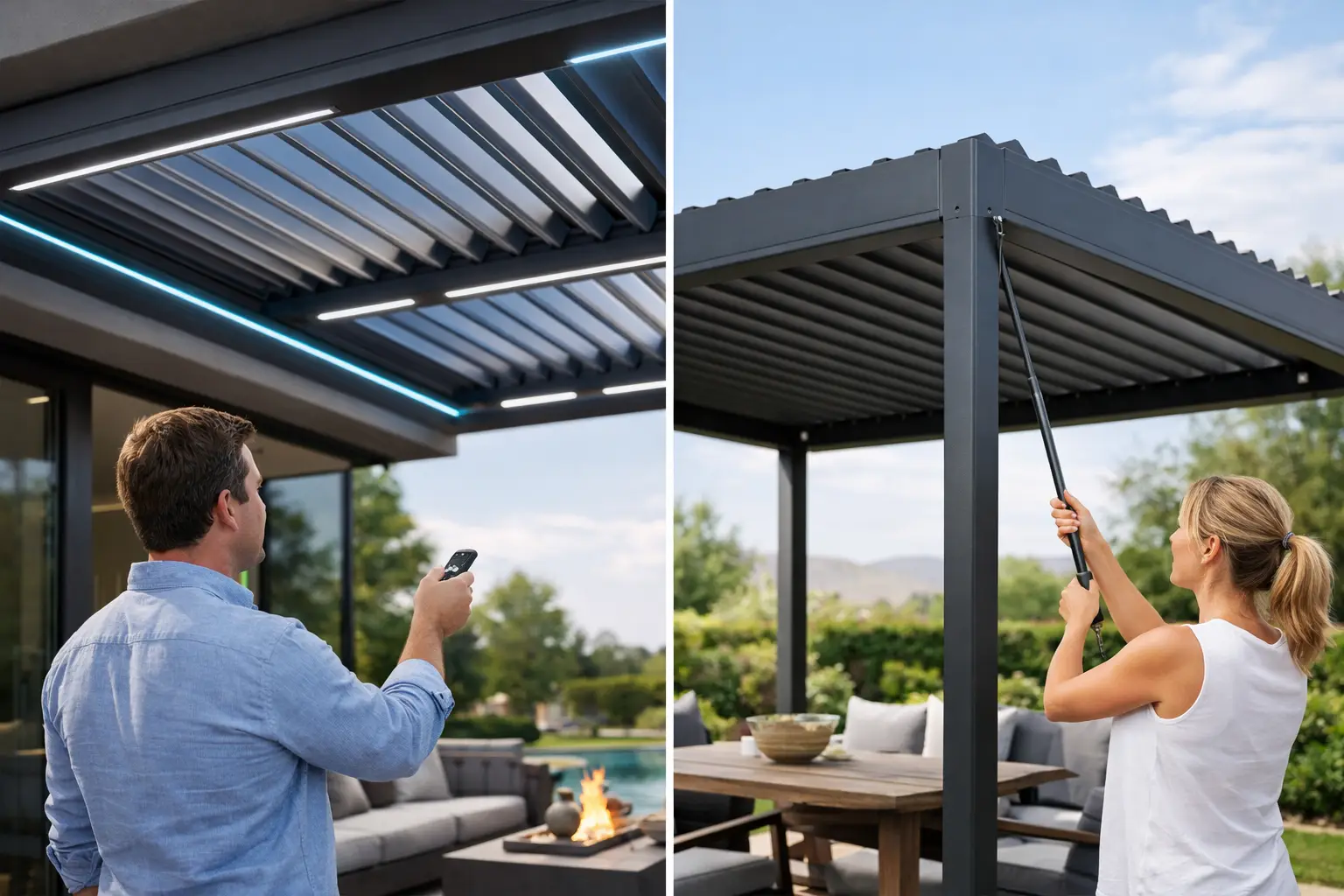
If you are comparing motorized pergola vs manual systems, you are probably not shopping for a simple shade feature. You are deciding how your outdoor living space should perform on a 95-degree afternoon, during a passing rain shower, and through Florida’s unpredictable weather shifts. That decision affects comfort, convenience, appearance, and long-term value more than many homeowners expect.
For a high-end home, the pergola is rarely just a backyard accessory. It becomes part of the architecture, part of the entertaining space, and part of how the property functions day to day. That is why the difference between manual and motorized operation deserves a closer look.
Motorized pergola vs manual: the real difference
At the surface, the distinction seems simple. A manual pergola requires physical adjustment, typically with a hand crank or similar mechanism. A motorized pergola uses powered louvers that open and close with the push of a button, wall control, or integrated automation.
But the bigger difference is not just how the louvers move. It is how the system fits into your lifestyle. Manual operation asks you to walk outside, make the adjustment yourself, and react to weather changes in real time. Motorized operation makes those changes immediate and far more precise.
For some homeowners, that may sound like a convenience upgrade. In practice, it often becomes a usability upgrade. A pergola that is easy to adjust gets used more often and used more effectively.
Why convenience matters more than it sounds
Luxury outdoor living works best when the space feels effortless. If the sun shifts during lunch, or rain starts while guests are outside, you want control right away. With a motorized pergola, that control is instant. The louvers can be adjusted in seconds without interrupting the moment.
A manual system can still provide shade and rain protection, but it creates more friction. That matters on larger pergolas, on pool decks, and in homes where the outdoor area is used often for dining or entertaining. It also matters for homeowners who simply do not want to step into heat or rain to make a basic adjustment.
This is one reason motorized systems tend to feel more aligned with premium homes. They are not just more advanced. They make the outdoor space easier to enjoy on a regular basis.
Performance in Florida weather
Florida is where this comparison gets more serious. In milder climates, a manual pergola may be enough for occasional shade control. In coastal and hurricane-prone regions, responsiveness and engineering carry more weight.
A sudden weather change is not unusual here. Bright sun can turn into hard rain quickly, and wind conditions can shift fast. A motorized louvered pergola gives homeowners the ability to close the roof quickly when needed and reopen it just as fast when conditions improve. That speed changes the way the space performs.
Of course, motorization alone does not make a pergola storm-ready. Structural engineering, installation quality, and wind ratings matter far more. A poorly built motorized unit is still a poor investment. But when a motorized system is paired with architectural-grade aluminum construction and hurricane-rated design, it becomes a far stronger solution for Florida living.
That is where homeowners should be selective. The conversation should not be just manual versus motorized. It should also include how the pergola is engineered, permitted, installed, and warranted.
Cost upfront versus value over time
A manual pergola usually has a lower starting price. That is the most obvious advantage, and for some buyers it will be the deciding factor. If your goal is to add adjustable shade with minimal technology and a lower initial investment, manual operation can make sense.
Still, lower upfront cost does not always mean better value. A motorized pergola often delivers more day-to-day use, stronger buyer appeal, and a more finished outdoor living experience. In higher-end properties, those benefits can justify the premium.
There is also the question of what the pergola is replacing or enhancing. If you are creating an outdoor kitchen zone, covering a dining terrace, or extending a poolside lounge area, the pergola is serving a central role in the property. In those cases, choosing manual operation to save money can feel shortsighted later, especially if the space is used frequently.
The better question is not whether motorization costs more. It does. The better question is whether the added convenience, precision, and architectural polish are worth it for how you plan to live in the space.
Motorized pergola vs manual for design and finish
There is also a visual difference, even when both systems look clean from a distance. Premium motorized pergolas tend to present as more integrated, more refined, and more consistent with contemporary luxury architecture. Controls are discreet, operation is smooth, and the overall experience feels intentional.
Manual systems can still look attractive, but the operation method can make the product feel more utilitarian. That may be acceptable on a secondary patio or a lightly used area. It is less compelling for a primary entertaining space where design cohesion matters.
For homeowners investing in a custom outdoor environment, details like integrated lighting, automated shades, and precise louver positioning can elevate the pergola from shade structure to true outdoor room. That level of finish is where motorized systems usually stand apart.
Maintenance and ownership concerns
Some buyers assume manual means fewer things can go wrong. There is some truth to that. A simpler mechanism can reduce dependence on powered components. If your priority is minimizing technology, manual operation may feel more comfortable.
That said, premium motorized pergolas are not casual consumer products. When they are professionally installed and backed by strong warranty coverage, they are built for long-term ownership. The quality of the motor system, electrical planning, and installation standards matters more than the fact that the pergola is motorized.
In other words, a well-supported motorized pergola can offer very low ownership stress. A weak warranty or poor installation is the real risk, not the presence of automation itself.
For Florida homeowners, that should be part of the evaluation. Ask not just how the pergola operates, but what protection you have after installation. Long structural warranties and extended motor coverage can significantly reduce the risk of choosing a more advanced system.
Who should choose manual
A manual pergola is usually best for homeowners with a tighter budget, a smaller or less frequently used outdoor area, or a simpler vision for the project. If you want adjustable shade and do not mind hands-on operation, it can be a practical choice.
It may also work well in spaces where weather response is less urgent, or where the pergola is more of an occasional enhancement than a daily-use feature. For example, a side seating area that is used only at certain times of day may not need the speed and ease of motorization.
The key is being honest about how you live. If you prefer simplicity and expect limited use, manual can be enough.
Who should choose motorized
Motorized pergolas are typically the better fit for homeowners who want their outdoor space to perform like a natural extension of the home. If you entertain often, use the patio year-round, or expect fast control over sun and rain, motorization is the stronger choice.
It is also the right fit when the pergola is part of a larger luxury investment. On a custom pool deck, lanai, waterfront terrace, or outdoor dining space, convenience and finish are not minor details. They define the ownership experience.
This is especially true in Florida markets where weather exposure, design expectations, and property values are all high. In places like Naples, Boca Raton, or Tampa, homeowners are often better served by a pergola system that is engineered for performance and easy to operate every day.
The decision most homeowners make after seeing both
Once homeowners see both options in the context of a real project, the conversation usually changes. The manual pergola may check the box for adjustable coverage, but the motorized system tends to align more naturally with how people want the space to feel. It feels polished. It feels easier. It feels like the outdoor area was designed to be used, not just admired.
That does not mean manual is the wrong choice. It means the right choice depends on whether your priority is saving on the front end or creating a more capable, more luxurious outdoor environment over time.
For many higher-end homes, the pergola is too central to daily living to treat as a basic utility feature. If the goal is comfort, weather control, premium aesthetics, and confidence in changing conditions, motorized usually earns its place.
A pergola should not ask you to work around it. It should respond to the way you live and make the outdoors feel as considered as the rooms inside your home.