
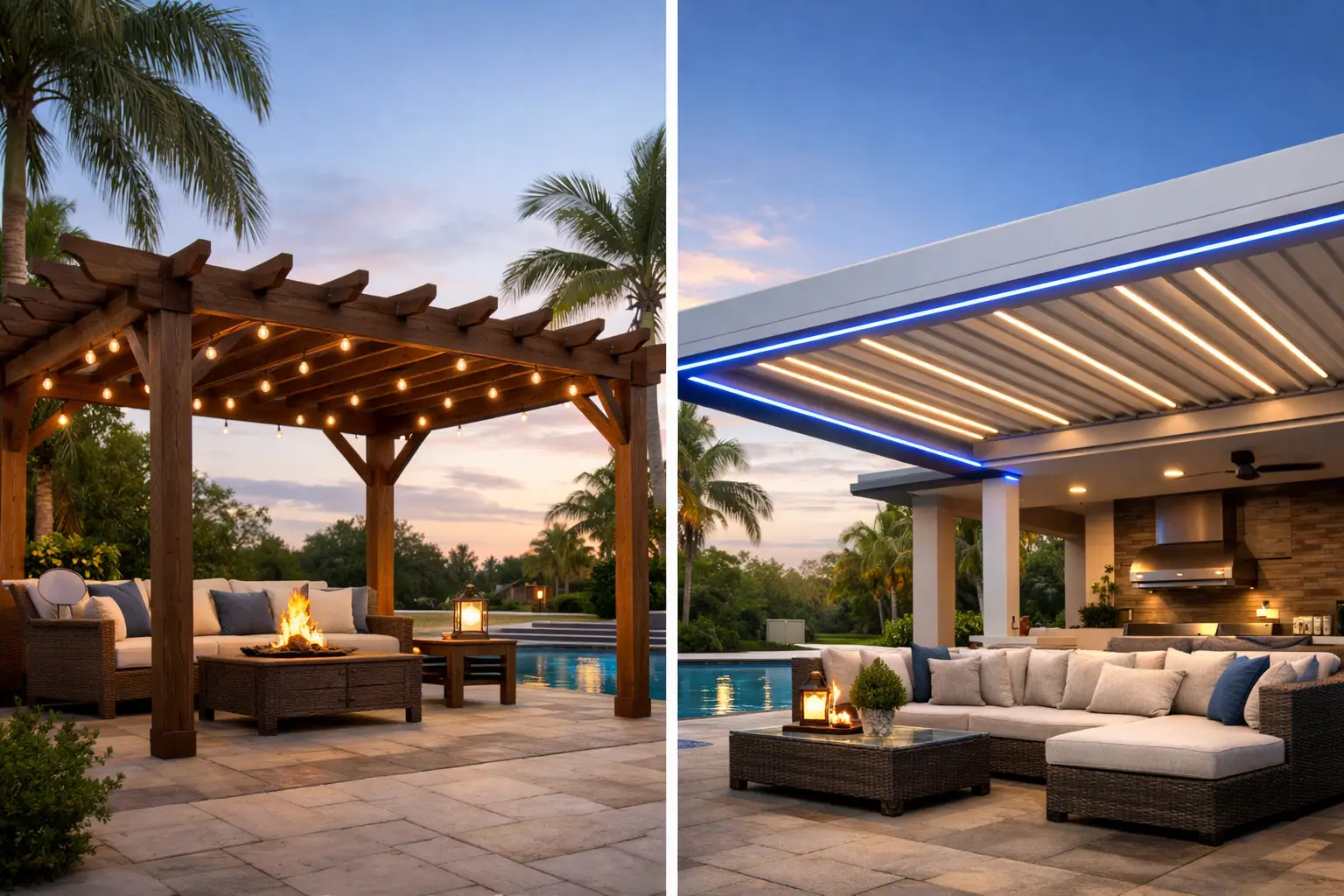
A backyard in Florida can feel perfect at 9 a.m. and punishing by noon. Add passing rain, salt air, and hurricane exposure, and the question is no longer just what looks better. When homeowners compare pergola vs patio cover Florida options, they are really deciding how they want to live outside – and how much performance they expect from that investment.
For a high-end home, this decision deserves more than a quick style preference. The right structure should fit the architecture, improve comfort through every season, and hold up in real Florida conditions. That is where the differences become meaningful.
Pergola vs patio cover in Florida: what changes the decision
At a glance, a pergola and a patio cover may seem to solve the same problem. Both define outdoor space. Both can add shade. Both can elevate a pool deck, lanai, or rear patio. But in Florida, the better choice often comes down to control, weather performance, and how refined you want the finished space to feel.
A traditional patio cover is usually a fixed roof structure designed to block sun and rain consistently. It delivers dependable overhead protection, but it can also darken adjacent interior rooms and create a more enclosed look than some homeowners want. If your goal is simple, permanent coverage over an outdoor dining or seating area, that can be appealing.
A modern aluminum pergola takes a different approach. Rather than acting as a basic roof, it can become an adjustable outdoor room. With motorized louvers, integrated lighting, and optional side shades, it gives you the ability to respond to the weather instead of accepting one fixed condition all day. That flexibility matters in Florida, where full sun at lunch can turn into a quick storm by late afternoon.
Why fixed shade is not always the best answer
Many homeowners begin by assuming more coverage is automatically better. In some cases, it is. If you want full-time rain protection and do not mind losing some openness overhead, a patio cover can be the practical answer.
But fixed coverage comes with trade-offs. It limits sky views, reduces natural light, and can make an outdoor area feel heavier than the rest of the home’s architecture. On a premium property, especially one with a contemporary or coastal design language, that visual weight can matter.
A louvered pergola gives you a more tailored result. Louvers can open to invite light and air, tilt to reduce glare, or close to provide shelter during rain. That kind of control is not a minor upgrade. It changes how often you actually use the space.
Florida homeowners who entertain regularly tend to notice this quickly. A structure that works well only in one condition is less valuable than one that adapts from sunny brunches to humid evenings to surprise showers.
Rain protection and ventilation are where the gap widens
The biggest misunderstanding in the pergola vs patio cover Florida conversation is that pergolas are only decorative and patio covers are the only serious weather solution. That may be true for older, open-roof pergola styles. It is not true for advanced aluminum systems engineered for all-season use.
A fixed patio cover offers straightforward shelter from rain. There is no adjustment required. If your priority is simple coverage with no moving parts, that simplicity can be attractive.
But Florida weather is rarely simple. Heat buildup under a solid cover can become an issue, especially over outdoor kitchens, lounge areas, or west-facing patios. Airflow matters. A motorized pergola lets you vent hot air and bring in breeze without giving up the ability to close the roof when rain moves in. That creates a more comfortable environment over a longer part of the day.
For homeowners designing a luxury outdoor living area rather than just adding shade, that comfort difference is often the reason the pergola wins.
Storm performance should be part of the design conversation
In Florida, beauty without engineering is not enough. Whether you live near the coast or farther inland, wind resistance, permitting, and structural integrity should be part of the first conversation, not an afterthought.
This is where product quality separates itself quickly. A lightly built patio cover or ornamental pergola may look acceptable in photos, but Florida exposure is unforgiving. Wind load requirements, corrosion resistance, attachment methods, and drainage design all affect long-term performance.
A premium aluminum pergola system designed for Florida can offer a much stronger ownership case because it is built as a real architectural structure, not just a decorative add-on. Hurricane-rated systems, professional installation, and clear warranty coverage matter because they reduce long-term risk. They also protect the appearance of the home. No luxury buyer wants a backyard upgrade that starts to feel compromised after a few seasons.
If your project is in a coastal market such as Boca Raton, Naples, or Tampa, this becomes even more important. Salt air and storms are not occasional concerns there. They are baseline design conditions.
Design flexibility matters more on higher-end homes
A patio cover can be visually clean, but it is often more limited in how it integrates with architecture. It tends to read as a separate roof element. On some homes, that is perfectly acceptable. On others, it can feel too utilitarian.
A modern pergola usually offers more design range. Slim sightlines, custom sizing, lighting integration, and optional automated shades allow the structure to feel intentional rather than added on. It can frame a pool terrace, define a dining zone, or create a lounge area that feels closer to an interior living room.
That is an important distinction. Luxury outdoor spaces are not judged only by whether they provide shelter. They are judged by whether they feel complete.
This is also why the builder matters. A consultative design and installation process tends to produce a much better result than a one-size-fits-all approach. Measurements, drainage planning, permitting, and site-specific engineering all shape whether the finished structure looks custom or merely installed.
Cost is only part of the equation
A patio cover may appear less expensive upfront, depending on size, materials, and complexity. For some homeowners, that will be enough to settle the decision.
But the smarter question is what you are paying for over time. If a pergola creates a more usable space in more weather conditions, aligns better with the home’s architecture, and carries stronger engineering and warranty protection, the value equation changes. Higher upfront investment can lead to better daily use, better resale appeal, and fewer compromises.
This is especially true when the structure includes motorized louvers, integrated lighting, and shade options. Those features are not cosmetic extras. They improve function and make the space feel finished.
For homeowners already investing in a premium backyard, choosing the lowest-cost overhead structure often creates the weakest link in the project.
Which option is right for your home?
If you want simple, constant overhead protection and you are comfortable with a more fixed, enclosed feel, a patio cover can be the right solution. It serves a clear purpose and may fit projects where flexibility is less important than basic shelter.
If you want a space that feels more architectural, more responsive, and more aligned with luxury outdoor living, a high-performance pergola is often the better choice. It gives you shade when you want it, openness when you do not, and a more refined balance between comfort and design.
That is why many Florida homeowners ultimately choose a motorized aluminum pergola over a standard patio cover. It is not just about aesthetics. It is about control, resilience, and getting more use out of the space you already own.
For those comparing options seriously, the best next step is not guessing from photos. It is reviewing your home’s exposure, layout, drainage, and storm requirements with a specialist who understands how Florida structures are supposed to perform. Companies such as enVision Pergola approach that process as both a design decision and an engineering decision, which is exactly how it should be handled.
The right outdoor structure should make your home feel larger, more comfortable, and more capable in every season. In Florida, that usually means choosing the option that does more than cover a patio – it should earn its place in the architecture.