
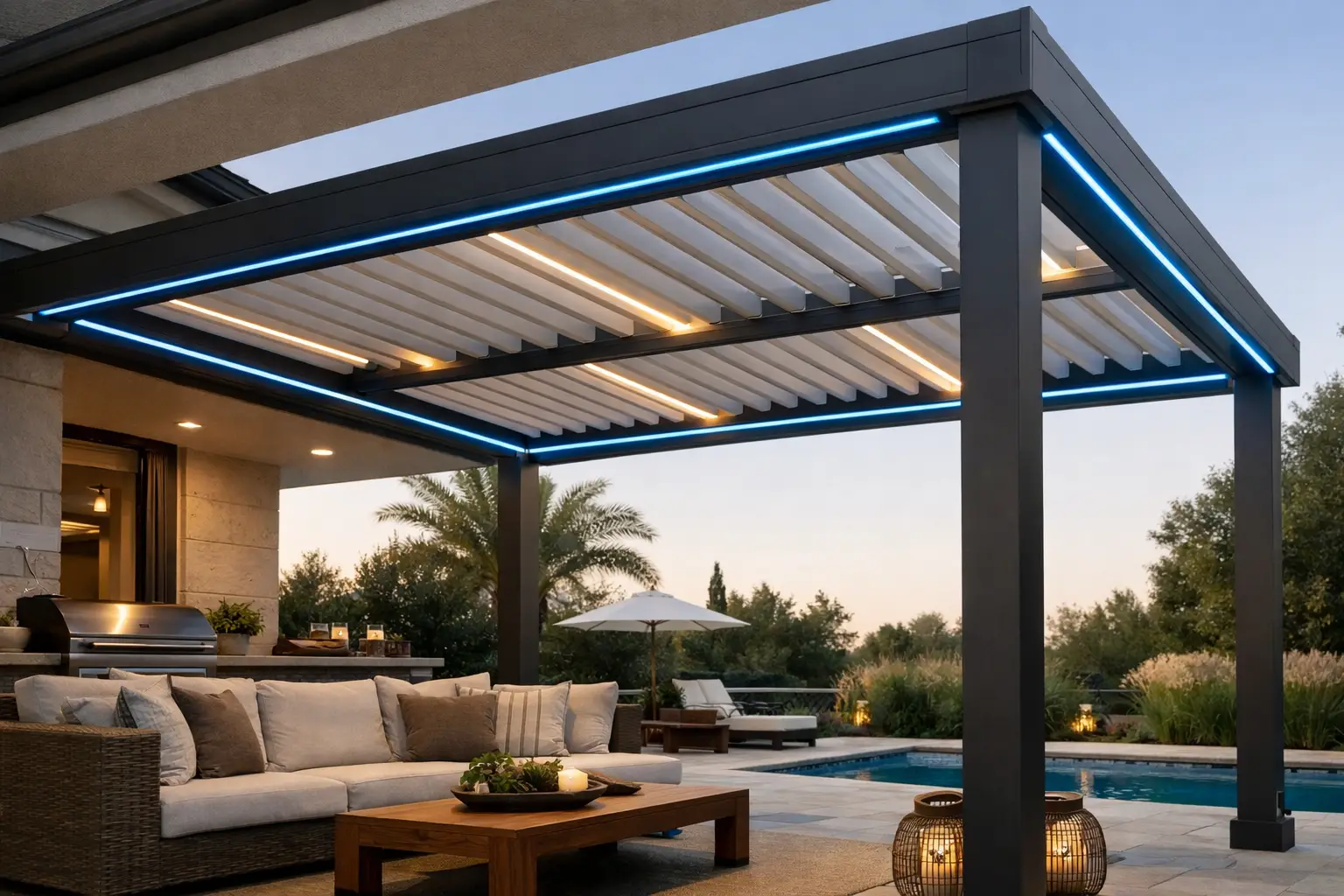
A pergola can look beautiful in a showroom and still be the wrong choice for a Florida home. The real question is not whether it adds style. It is whether the design gives you better shade at noon, better protection in summer rain, and better confidence when storm season arrives. This guide to custom pergola design options is built for homeowners who want a structure that performs as well as it presents.
For luxury outdoor living, customization is not a cosmetic extra. It is the difference between a pergola that feels added on and one that feels architecturally integrated with the home. When the system is designed correctly, it expands usable living space, improves comfort across more months of the year, and protects your investment with engineering that matches Florida conditions.
What matters most in a custom pergola design
The best pergola designs start with function, not finishes. Before selecting colors, lighting, or accessories, it helps to define how the space will actually be used. A poolside lounge has different needs than an outdoor kitchen. A lanai extension for quiet mornings has different priorities than a large entertainment area with evening dining and television.
That is why a consultative design process matters. Size, orientation, drainage, sun exposure, and wind loads all affect which features make sense. A smaller footprint may benefit from clean lines and minimal posts to preserve openness. A larger installation may need multiple zones so one area can stay shaded while another remains open to light.
For Florida homeowners, weather resilience belongs in the first conversation, not the last. A premium pergola should be engineered for demanding coastal conditions and specified with local permitting and installation requirements in mind. Otherwise, design choices that look impressive on paper can create long-term frustration.
Guide to custom pergola design options for comfort and control
The most valuable upgrade in a modern pergola is usually the roof system. Fixed-top designs can provide a defined architectural presence, but motorized louvers offer a different level of control. You can open them for sun in the morning, angle them to reduce glare in the afternoon, or close them when rain moves in. That flexibility changes how often the space gets used.
This is where premium buyers often see the clearest return. A pergola with motorized louvers is not just a shade structure. It becomes a controlled outdoor environment that adapts to the day, the season, and the event. If you entertain regularly or use your outdoor area year-round, that control tends to justify the investment.
Integrated drainage is another design detail that deserves more attention than it usually gets. When louvers close, water should be channeled intentionally, not dumped at the perimeter in a way that disrupts furniture placement or traffic flow. Proper engineering keeps the space more comfortable and prevents the pergola from becoming something you avoid every time it rains.
Automated shades add another layer of performance. In many Florida backyards, the strongest discomfort is not direct overhead sun but low-angle glare and heat from the side. Motorized screens can reduce that exposure while preserving a refined, uncluttered appearance. They also improve privacy without making the structure feel closed in.
Size, layout, and attachment choices
One of the most common design mistakes is choosing a pergola size based only on the slab or patio dimensions. The better approach is to size around furniture groupings, circulation, and edge conditions. A dining area needs room to pull chairs comfortably. A lounge layout should leave enough perimeter space that the structure feels generous rather than compressed.
Attachment style also changes the visual and functional result. A freestanding pergola can define a pool deck or garden-side retreat with strong architectural presence. An attached pergola often feels more integrated with the home and can create a natural extension of the interior living area. Neither is automatically better. It depends on the site, the rooflines, and how you want the outdoor space to connect to the house.
Post placement matters more than many buyers expect. Wider spans can create cleaner sightlines and a more upscale feel, but they must be supported by the right engineering. In a premium installation, structural performance and visual restraint should work together. You should not have to choose between strength and elegance.
Finishes and architectural style
A custom pergola should complement the home, not compete with it. That means the finish, profile, and proportions need to align with the architecture already in place. A modern coastal residence may call for crisp lines and a restrained color palette. A more transitional home may benefit from a softer visual balance that still feels current.
Color selection is often treated as a simple aesthetic decision, but it has practical implications as well. Lighter finishes can feel brighter and more airy. Darker finishes can create dramatic contrast and a stronger architectural statement. The right answer depends on the home’s exterior materials, pool deck tones, and how prominent you want the structure to be from inside the house.
Integrated lighting is one of the clearest ways to elevate the final result. Done well, it makes the pergola usable after sunset without adding visual clutter. It also helps the structure read as a true outdoor room rather than just overhead coverage. For homeowners who entertain at night, lighting is not a minor add-on. It is central to how the space functions.
Performance in Florida is not optional
In many parts of the country, pergola design can be driven mostly by appearance. In Florida, that approach is incomplete. High heat, humidity, sudden rain, salt air near the coast, and hurricane exposure all shape what a premium pergola should be.
This is why material quality and engineering standards deserve careful scrutiny. Architectural-grade aluminum offers a significant advantage for long-term durability, especially when paired with systems designed and rated for severe weather. If a structure is going to sit exposed year after year, reliability is not a luxury feature. It is part of the value.
Wind rating should be discussed clearly and early. Homeowners in coastal and hurricane-prone areas are right to ask specific questions about structural performance, permitting, and installation standards. A hurricane-rated pergola designed to withstand winds up to 185 mph offers a very different ownership experience than a decorative structure with limited engineering support.
Warranty coverage matters for the same reason. Strong structural coverage and long-term protection for motors and lighting reduce risk and signal confidence in the product. For a high-end outdoor project, that kind of backing should be part of the conversation from day one.
Choosing the right custom features without overbuilding
Not every pergola needs every available upgrade. The best design is the one that matches how you actually live. If your patio gets intense western sun, shades may matter more than additional lighting. If you host often after dark, lighting and larger coverage may deliver more value than a secondary screen wall.
There is also a practical balance between openness and enclosure. Some homeowners want the pergola to feel almost room-like, with multiple comfort features and strong weather protection. Others want a lighter touch that preserves a more open-air atmosphere. Both can be correct. The wrong move is selecting features based on trend rather than use.
This is where an experienced design and installation team adds real value. Good guidance helps you avoid paying for features that sound impressive but do not materially improve the space. It also helps you spot the upgrades that genuinely change daily comfort and long-term satisfaction.
The process should feel as premium as the product
A luxury pergola project should come with clear expectations, not guesswork. Homeowners making a significant investment want more than a product specification sheet. They want a process that covers design guidance, permitting, scheduling, installation quality, and communication at every stage.
That is especially true in Florida, where local code requirements and exposure conditions can vary by area. A turnkey partner who handles design, permits, and professional installation simplifies the project and reduces the chance of costly disconnects between what was sold and what can actually be built.
For homeowners in markets like Boca Raton, Naples, Tampa, and surrounding coastal communities, this level of execution is often what separates a premium result from a stressful one. The product matters, but so does the team behind it.
If you are weighing pergola options, focus less on broad claims and more on how the design will perform on your property, in your light, and in your weather. The right custom pergola should look exceptional on day one and feel like a smart decision for years after that.