
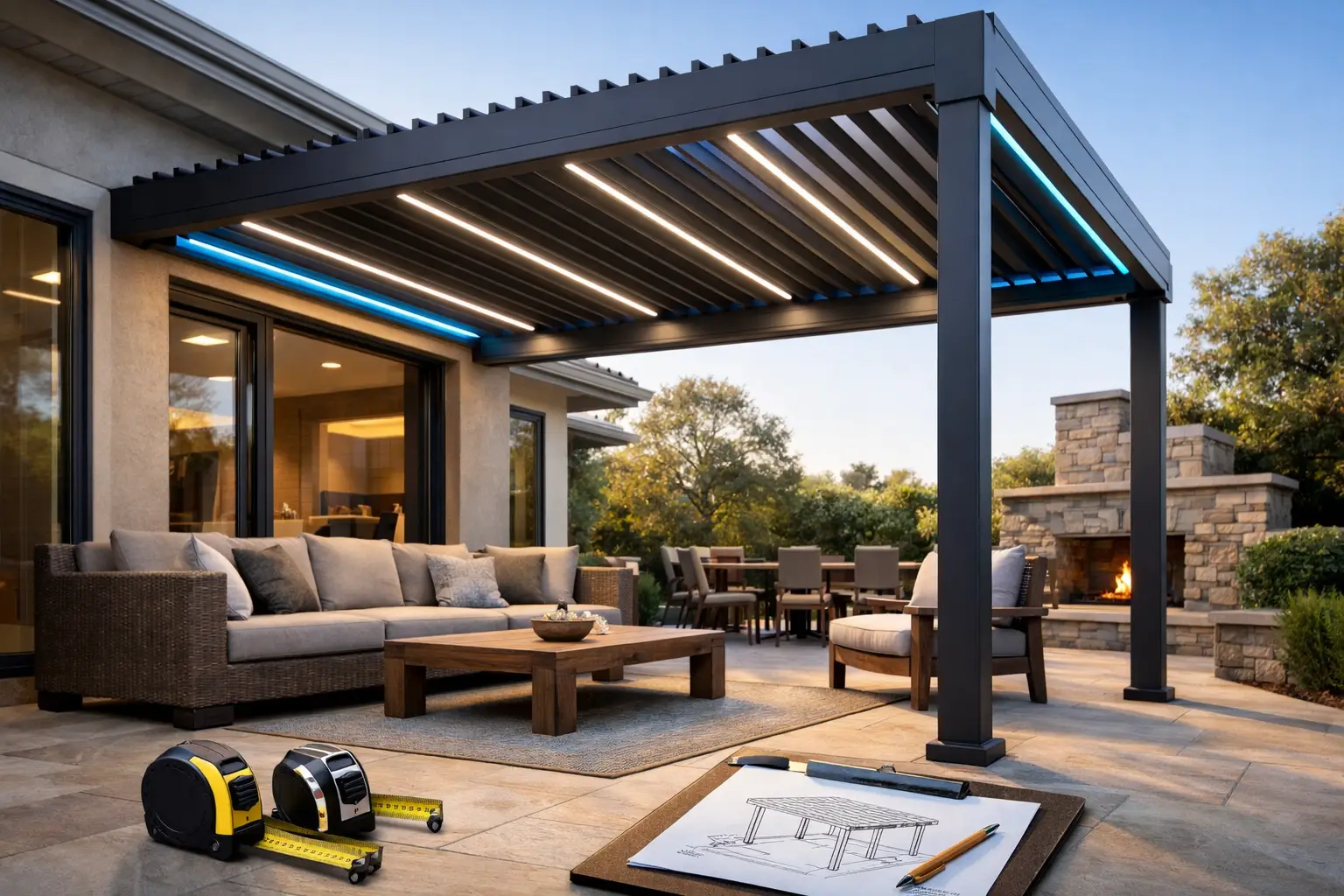
A pergola that is too small feels like an afterthought. Too large, and it can overpower the house, crowd the deck line, or create expensive structural complications that should have been solved on paper. If you are wondering how to size pergola for patio planning, the right answer starts with how you actually want to use the space – not just the slab dimensions.
For Florida homeowners, sizing also carries a higher standard. A pergola is not only a design feature. It is a permanent outdoor structure that has to look proportional, function beautifully, and perform in demanding sun, rain, and wind conditions. That means the best pergola size is usually the one that balances furniture layout, circulation, roof coverage, attachment points, and engineering requirements at the same time.
How to size pergola for patio use starts with function
Before you think about beam spans or post locations, define the job the pergola needs to do. A dining area for six has very different sizing needs than a poolside lounge or a full outdoor living room with motorized louvers, integrated lighting, and retractable screens.
If the pergola is meant to cover a dining table, the structure should extend comfortably beyond the table edge so chairs can slide in and out without feeling pinned against a post line. If it is meant for lounge seating, you need enough roof coverage to protect the full seating group rather than just the coffee table in the center. If the goal is a true outdoor room, then the pergola often needs to align with architectural features such as door openings, window groupings, or the width of the lanai.
This is where many homeowners make the first sizing mistake. They measure the patio and assume the pergola should match it exactly. Sometimes that works. Often it does not. A pergola should frame the functional zone, not just trace the outer edge of concrete.
Start with the furniture footprint, then add breathing room
A practical way to size a pergola is to measure the furniture grouping first. Take the full width and depth of the intended layout, then add clearance around it for comfort and movement.
For most patios, a good starting point is to allow at least 2 to 3 feet of circulation space around the main furniture zone. That extra room matters more than people expect. It keeps the pergola from feeling tight, allows for easier movement, and gives the structure a more intentional, luxury proportion.
For example, if your dining set and chair clearance need roughly 10 by 12 feet, a pergola sized closer to 12 by 14 or 14 by 16 may feel much more natural. If your lounge grouping occupies 11 by 11 feet, a 13 by 13 or 14 by 14 pergola may create a better visual frame and better shade coverage.
There is no universal perfect ratio because every patio layout is different. The point is simple: size for use, not just occupancy.
Think about the edges people actually use
The most successful pergola layouts respect how people enter and move through the patio. You may need more clearance on the side nearest the pool, grill, or rear door than on the side facing a landscape bed. In other words, pergola sizing should respond to traffic flow, not just geometry.
That becomes even more important when automated shades or screens are part of the design. A pergola with perimeter accessories needs room to operate cleanly without interfering with furniture placement or passage.
Height matters as much as width and depth
Homeowners often focus on footprint and overlook height, but pergola height has a major effect on comfort and appearance. Too low, and the structure can feel heavy. Too high, and it may lose its sense of shelter while exposing the space to more glare and weather.
For many patio applications, a pergola height in the 8 to 10 foot range works well, but the ideal number depends on the home elevation, rooflines, and opening heights. A structure attached near tall glass doors may need a higher finished height to feel proportional. A freestanding pergola over a more intimate seating area may feel better with a lower, more contained profile.
With louvered systems, height also affects performance. The relationship between roof position, sun angle, and shade line changes throughout the day. A taller pergola can feel airy and elegant, but it may provide less practical shade at certain times unless the design accounts for orientation and accessories.
Match the pergola to the architecture
A patio pergola should look like it belongs to the home, not like it was dropped into the backyard as a separate object. That means the right size often comes from architectural alignment as much as patio size.
In many high-end homes, the cleanest result is achieved when the pergola lines up with major architectural cues such as column spacing, door centers, soffit lines, or exterior room widths. Even a difference of a foot or two can change whether the structure looks custom or merely installed.
This is especially true on larger properties in coastal Florida, where expansive rear elevations can make undersized structures look visually lost. On the other hand, a pergola that stretches too wide across a modest patio can flatten the facade and dominate the rear exterior in a way that feels forced.
Good sizing respects both scale and proportion. The structure should support the architecture, not compete with it.
Sizing for Florida weather is not optional
In Florida, pergola sizing has to account for more than shade. Larger spans, taller profiles, and certain placement conditions can all influence engineering, permitting, and installation complexity. That does not mean you should think small. It means the design should be sized intelligently from the start.
A hurricane-rated aluminum pergola can deliver exceptional strength and long-term stability, but structural performance still depends on how the system is configured. Post count, span lengths, foundation requirements, attachment method, and site exposure all affect what is feasible and what is advisable.
This is one reason online sizing charts can be misleading. A pergola that looks ideal on a generic planning guide may need adjustments once wind load, patio conditions, and municipal permit requirements are reviewed. In markets such as Naples, Boca Raton, or Tampa, local conditions can shape the right design just as much as aesthetics do.
Attached or freestanding changes the sizing approach
If the pergola is attached to the home, available mounting height and wall structure will influence dimensions and proportions. If it is freestanding, post placement and footing design become a bigger part of the conversation.
Freestanding structures often need more deliberate sizing because they are visually exposed from all sides. Attached structures have the advantage of borrowing scale from the home, which can make them feel larger and more integrated even at similar dimensions.
Common pergola sizing mistakes
The most common error is choosing a pergola that only covers the center of the patio instead of the actual living area. The second is ignoring post locations until too late in the process. Posts can affect sightlines, furniture arrangement, and traffic paths, so they should never be treated as a minor detail.
Another mistake is sizing purely for today without considering future use. A homeowner may begin with a small seating group, then later want a larger dining arrangement, upgraded lighting, or perimeter shades. A premium pergola should be sized with enough foresight to support how you expect to live outdoors over the next several years.
There is also the issue of overbuilding. Bigger is not always better. An oversized pergola can darken adjacent interiors, complicate permitting, raise project cost, and make the patio feel less refined. The goal is not maximum coverage at any cost. The goal is the right coverage for the way the space should perform.
A simple way to think about the right size
If you want a fast rule of thumb, start by identifying the primary activity zone, then add enough margin for comfort, circulation, and structure. From there, check whether the dimensions align with the architecture and whether the design remains practical from an engineering standpoint.
That process usually leads to a smarter answer than starting with standard sizes alone. It also leads to a better finished project. Custom pergolas perform best when they are treated as part of the home, not as patio furniture with a roof.
For homeowners investing in a luxury outdoor living upgrade, sizing should feel deliberate. The structure should frame the experience, support the furniture, complement the residence, and stand up to Florida conditions with confidence. That is the difference between a pergola that simply fills space and one that truly elevates it.
If you are still deciding how large your pergola should be, the best next step is not guessing between two standard dimensions. It is evaluating the patio as a complete environment – architecture, layout, comfort, and performance together. That is where the right size becomes clear, and where a premium pergola starts to feel like it was always meant to be there.