
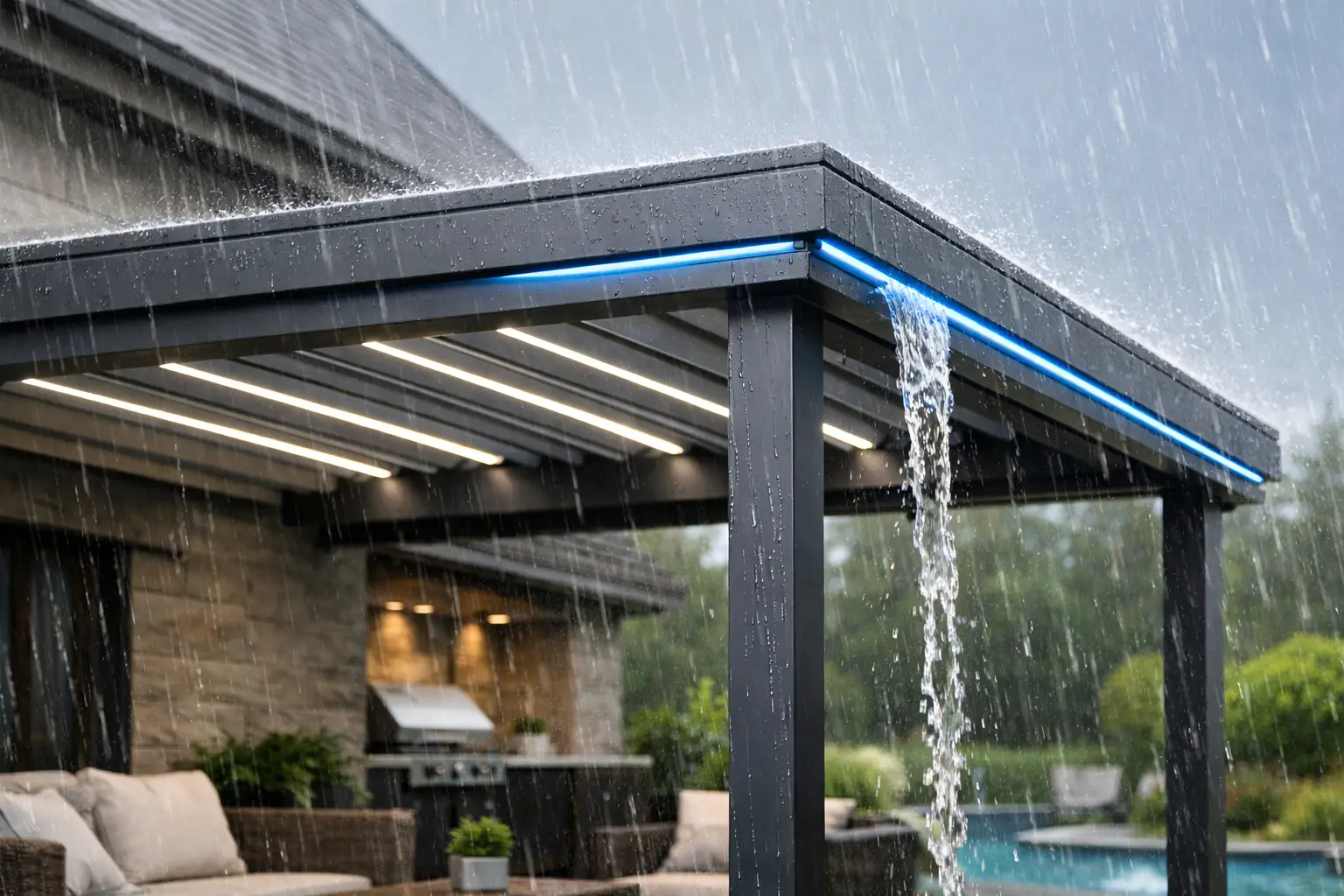
A Florida downpour will expose every shortcut in a pergola design within minutes. If water sheets off the edge, pours near the foundation, or drips through connection points, the problem usually is not the rain itself. It is the drainage strategy. Proper pergola drainage for heavy rain is less about adding a gutter after the fact and more about engineering the entire system to control water from the first drop to final discharge.
For high-end homes, that distinction matters. A luxury pergola should not become unusable the moment summer weather rolls in. It should protect the outdoor kitchen, preserve the patio surface, keep furnishings drier, and move water away from the home with purpose. In a climate like Florida, where sudden cloudbursts and tropical systems are part of ownership, drainage is a performance feature, not an accessory.
Why pergola drainage for heavy rain starts with the structure
Many homeowners assume drainage begins at the roofline. In reality, it starts with how the pergola is designed, fabricated, and installed. A louvered roof system that closes tightly during rain is only one part of the equation. The structure also needs intentional pitch, integrated channels, properly sized gutters, and a clean path to downspouts that can handle volume.
This is where premium systems separate themselves from decorative ones. If the roof captures water but the frame cannot move it efficiently, overflow becomes inevitable during heavy rain. If the water exits too close to the patio edge, you can end up with splashback, pooling, erosion, and a wet perimeter that makes the space less functional.
For Florida properties, especially around pools, lanais, and expansive entertaining areas, the goal is controlled drainage under peak conditions. Not just average rainfall. Not just light showers. Heavy rain is the standard that matters.
What an effective pergola drainage system includes
A true drainage system works as a series of connected components. Closed louvers or roof panels collect rainfall first. From there, water should move into internal gutter channels built into the perimeter frame. Those channels then direct water into posts or designated downspouts, where it can discharge away from the usable area.
The cleanest-performing systems hide much of this process inside the structure. That matters aesthetically, but it also reduces the chance of improvised add-ons failing later. Exterior gutters can work in some cases, but integrated drainage is generally better suited to a luxury installation because it looks intentional and performs more predictably.
Capacity also matters. Heavy rain does not arrive politely in Florida. A pergola over a modest seating area has different drainage demands than a large custom installation covering a poolside lounge, grill station, or commercial hospitality space. The width of channels, the number of discharge points, and the path of runoff all need to match the actual roof area.
The most common drainage failures in heavy rain
When homeowners complain that a pergola “leaks,” the issue is often more specific than that. Sometimes water enters because the roof was not fully closed or maintained. More often, the system is overwhelmed, poorly pitched, or installed without enough attention to site conditions.
One common failure is undersized drainage channels. These may handle normal rain but overflow during a summer storm. Another is poor discharge placement. If water exits at the base of a post onto a flat surface with no plan for runoff, it simply relocates the problem rather than solving it.
Installation quality is another major variable. Even a well-engineered pergola can underperform if it is out of level in the wrong way, if seal points are mishandled, or if transitions between roof and frame are not set correctly. This is why drainage should be addressed during design and permitting, not improvised after installation day.
Pergola drainage for heavy rain in Florida homes
Florida adds pressure to every part of the drainage conversation. Rain events are intense, winds can shift water direction, and many homes have outdoor living spaces directly connected to the main structure. That means bad drainage does not just inconvenience the seating area. It can affect door thresholds, adjacent walls, pool decks, and landscaping.
Coastal properties also need to think beyond rainfall volume. Salt exposure, humidity, and heat place constant demands on materials and finishes. Architectural-grade aluminum is a strong fit here because it resists the swelling, rot, and maintenance burdens that can compromise drainage performance over time. It also allows for precision fabrication, which is critical when the goal is to channel water through concealed pathways.
For homeowners in places like Boca Raton, Naples, Tampa, and other storm-conscious Florida markets, drainage should be evaluated with the same seriousness as wind rating. A pergola that looks exceptional but cannot manage heavy rain is only solving half the problem.
Design details that make the difference
There is no single feature that guarantees dry performance. It is the combination that matters.
Roof pitch is one example. Even in a modern pergola with a clean, minimal profile, water still needs directional encouragement. Subtle pitch helps move water toward collection points instead of letting it linger. The same goes for louver geometry. When louvers close, they should direct water into channels rather than allowing it to sit on the surface and spill unpredictably.
Post design matters too. In many premium systems, posts are not just structural supports. They are part of the drainage network. That allows water to travel downward in a concealed, controlled way rather than pouring visibly off the perimeter.
Then there is site integration. A pergola may drain properly and still create problems if the surrounding hardscape does not. If the slab is flat, the pavers have settled, or the drainage discharge lands near the home, the project needs a broader water-management conversation. Sometimes the right answer includes tying pergola drainage into existing site drainage. Sometimes it means adjusting where and how water exits. This is where experienced design-build oversight pays off.
What to ask before you buy
If you are evaluating a pergola for a primary residence or a high-value second home, ask direct questions about rain performance. Not vague reassurance. Specific answers.
Ask where water goes when the roof is closed in a storm. Ask whether drainage is internal or surface-mounted. Ask how many discharge points the system has and whether those are sized for the pergola span you are considering. Ask how the installer accounts for heavy rain, not just occasional showers.
You should also ask how the pergola interacts with the rest of the property. If the unit is attached to the home, how is water kept away from the connection point? If it covers a pool deck or outdoor kitchen, where will runoff end up? If the area sees frequent wind-driven rain, what level of water intrusion is realistic to expect?
That last point is important. No roofed outdoor structure is identical to an interior room. In severe weather, wind can push moisture where gravity alone would not. A trustworthy builder will explain that honestly while still showing how proper engineering dramatically improves protection and usability.
Why premium installation matters as much as the product
Luxury homeowners usually understand that finishes and design options affect price. What is less visible, but arguably more valuable, is installation discipline. Precise measurement, proper anchoring, accurate alignment, and attention to drainage pathways all determine whether the pergola performs as promised.
A concierge-style process is especially valuable here because drainage decisions often connect to permitting, slab conditions, roofline clearances, and electrical planning for lighting or motorization. Those details need coordination, not guesswork. A specialist contractor can identify conflicts early, set clear expectations, and build a system that looks refined while performing under real Florida weather.
That is part of why engineering-forward companies such as enVision Pergola position drainage and storm resilience as core value, not an afterthought. In the luxury segment, peace of mind is not created by marketing language. It is created by design integrity, professional installation, and a structure that still feels dependable when the forecast turns quickly.
The right expectation for rain protection
The best pergola drainage systems make outdoor living more reliable, more comfortable, and far more usable during the rainy season. They protect furnishings better, reduce nuisance runoff, and help preserve the investment around them. They do not rely on luck.
If you are planning a pergola in Florida, treat drainage the way you would treat structural rating or warranty coverage. Ask how it is engineered, where the water goes, and what happens in a true heavy-rain event. A beautiful pergola should elevate the architecture of your home, but the real luxury is stepping outside during a storm and knowing the system above you was built to handle it.