
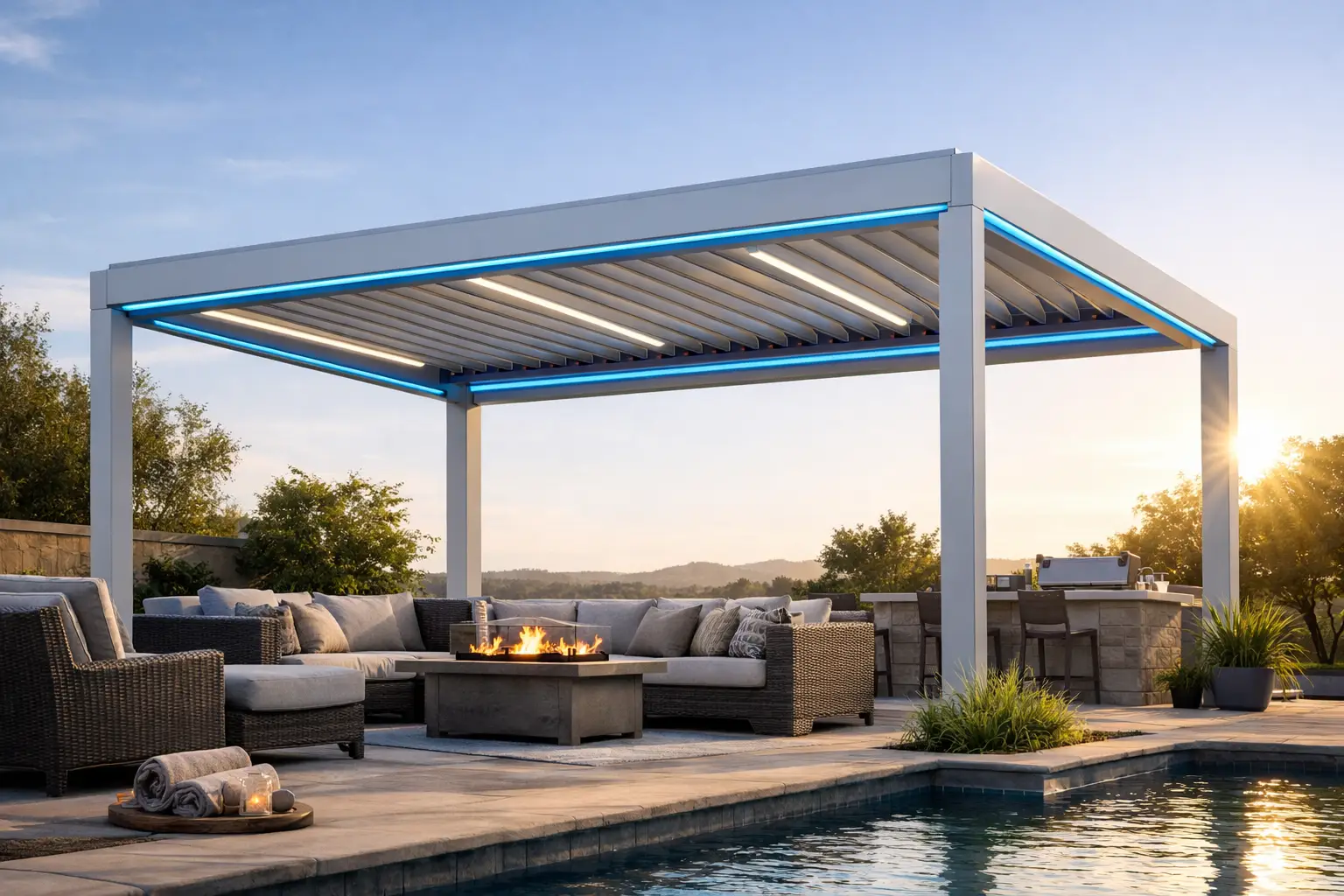
By noon in Florida, a beautiful patio can feel like a surface you cross quickly rather than a place you actually use. The issue is not simply brightness. True protection from the hot sun means managing direct exposure, reflected heat, glare, and sudden weather shifts so your outdoor space stays comfortable enough for lunch, reading, entertaining, or a quiet evening by the pool.
That distinction matters more than many homeowners expect. A shaded area is not always a usable area, especially in coastal and high-heat environments where UV intensity, humidity, and afternoon storms all work against comfort. If your goal is to make outdoor living feel like a real extension of the home, the solution has to perform, not just look attractive from inside.
What protection from the hot sun really means
Most people start by thinking about shade, and that makes sense. But the best protection from the hot sun is really about control. You want to reduce direct overhead exposure, soften glare at different times of day, and create a cooler, more stable environment that works in more than one season.
This is where simple shade structures often fall short. If the sun angle changes and your coverage does not, the space can still become harsh and uncomfortable. If there is no way to adapt to afternoon heat, low western sun, or passing rain, even a well-designed patio may sit empty during the very months you want to use it most.
For Florida homeowners, performance should guide the design from the start. The structure needs to account for heat, UV, moisture, salt air in coastal areas, and wind demands that are far more serious than in many other states. Comfort is the visible result. Engineering is what makes that comfort dependable.
Why fixed shade is not always enough
A fixed cover can improve an outdoor area, but it comes with limitations. Sun movement changes the experience of a space hour by hour. Morning coffee may feel pleasant, while late afternoon turns the same seating area into a glare-heavy hot zone.
That is why adjustable systems have become more attractive in luxury outdoor design. When louvers can open or close based on the conditions, the space responds to real life instead of forcing you to adapt to the structure. You can invite in light when you want it, block intense sun when you do not, and create a more controlled environment without giving up an open-air feel.
There is also the question of rain. In Florida, sun protection often needs to become weather protection within minutes. A space that handles only one weather condition leaves too much value on the table. A high-end outdoor installation should work harder than that.
The design factors that actually change comfort
When homeowners say they want more shade, what they usually mean is that they want the space to feel cooler and easier to enjoy. Several design factors shape that result.
Orientation is one of the biggest. A patio facing west deals with a very different sun load than one that is partially protected by the home in the afternoon. Roof height matters too. Higher structures can feel more open and elegant, but the wrong height or pitch can reduce the effectiveness of the shade below.
Material performance is equally important. Architectural-grade aluminum is favored in premium outdoor construction for a reason. It delivers clean lines and long-term durability, but just as importantly, it supports a level of engineering and finish quality that is appropriate for demanding climates. In a luxury setting, appearance matters. In Florida, resilience matters just as much.
Then there are side conditions. Overhead coverage solves one problem. Low-angle sun from the side creates another. Optional motorized screens or shades can add a critical layer of control, especially in spaces exposed to pool glare or western light late in the day. For some homes, that is the difference between occasional use and daily use.
Sun control should follow the way you live
The best outdoor spaces are not designed around a generic idea of shade. They are designed around habits. Do you host weekend dinners? Spend time poolside in the afternoon? Want a cooler place for grandchildren to play? Prefer filtered light over a fully enclosed feeling?
Those details change the right solution. A homeowner who entertains often may prioritize integrated lighting and adjustable coverage that carries the space comfortably from midday into evening. Someone focused on quiet daytime use may care more about reducing glare, lowering heat load, and preserving privacy without making the space feel closed off.
That is why a consultative design process matters in this category. Premium outdoor living is not a one-size-fits-all purchase. It should be tailored to how the property is used and what conditions the structure must handle over time.
Why engineering matters as much as aesthetics
A luxury pergola should absolutely elevate the look of a home. But in Florida, good looks without real performance are a short-term win. Homeowners investing at a high level want confidence that the system is built for this climate, permitted correctly, and installed to meet serious wind requirements.
That changes the buying conversation. You are not simply choosing a style element. You are evaluating structural integrity, long-term maintenance expectations, operating systems, and the quality of installation behind the finished product.
This is where hurricane-rated construction becomes more than a selling point. It is part of the ownership experience. A system rated for extreme wind conditions offers peace of mind that decorative shade structures cannot match. So do stronger warranties, especially when they cover both structural components and integrated features like motors and lighting.
There is a practical side to luxury. The more substantial the investment, the more important it is to know exactly what is being built over your outdoor living space and how it is expected to perform in the years ahead.
A better answer for Florida outdoor living
For many higher-end homes, the strongest answer is a custom aluminum pergola with motorized louvers and optional integrated shades. That combination gives homeowners a more precise level of environmental control while preserving the clean, architectural look expected in a premium setting.
On a bright day, the louvers can be adjusted to reduce harsh overhead exposure without making the space feel dark. When the weather shifts, the system can close to protect the area more completely. If the problem is late-day side sun, automated shades can help finish the job.
This layered approach is what makes a space feel intentionally designed rather than partially solved. It also supports year-round use, which is one of the biggest reasons Florida homeowners choose to upgrade outdoor areas in the first place. A patio, lanai, or pool deck should not have a short comfort window. It should be ready when you are.
In markets like Boca Raton, Naples, Tampa, and other coastal Florida communities, that expectation is especially reasonable. The homes are significant investments. The outdoor areas should match that standard in both appearance and performance.
What to ask before you invest
If you are comparing options for protection from the hot sun, ask direct questions. Is the structure engineered for local wind demands? Can it adapt to changing sun angles? Does it address both overhead exposure and side glare? What warranty backs the structural system and the motorized components? Who is responsible for design, permits, and installation?
Those questions separate surface-level solutions from true outdoor living systems. They also help you understand whether the company is selling a product or delivering a complete result.
For homeowners who value transparency, this part matters. The experience should feel organized, consultative, and clear from estimate through installation. High-end projects require communication, not guesswork.
Comfort should feel permanent
The best outdoor spaces do not ask you to tolerate the weather. They are designed so you can enjoy it on your terms. When protection from the hot sun is handled properly, your backyard stops being a place you avoid in peak heat and starts becoming one of the most functional parts of the home.
That is the real standard to aim for – not just more shade, but a space that feels cooler, calmer, and ready when you want to use it.