
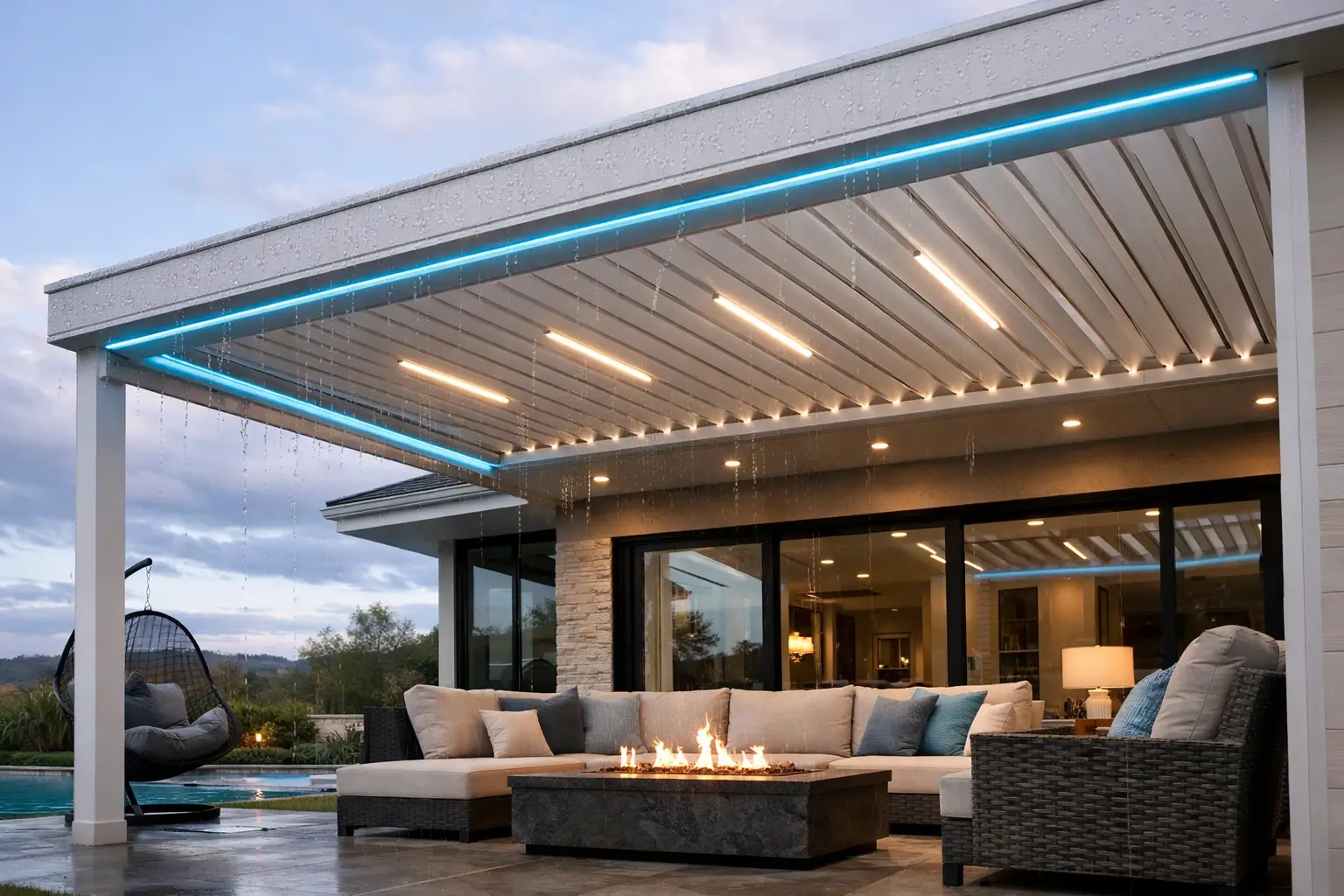
A pergola that looks beautiful at noon but leaks at dinner is not finished. For Florida homeowners investing in a true outdoor living space, understanding how to waterproof pergola roof system design works is the difference between added square footage you can actually use and a premium structure that still leaves cushions soaked after the first hard rain.
The first thing to know is that waterproofing a pergola roof is not just about putting a cover on top. It is about engineering the entire system so rain is controlled from the moment it lands to the moment it exits the structure. That includes roof design, gutter integration, post drainage, seals, slope, wind resistance, and installation precision. In a state where heavy rain and storm exposure are part of normal life, those details matter.
What waterproofing a pergola roof system really means
Many homeowners use the word waterproof when they really mean shaded or partially rain resistant. Those are not the same thing. A true waterproof pergola roof system is designed to move water off the roof in a predictable way without dripping through joints, pooling overhead, or dumping runoff where people walk and gather.
That usually means the roof itself must close tightly, direct water into an internal drainage path, and discharge it away from the living area. If the system has operable louvers, those louvers must be designed to interlock and channel water correctly when closed. If the structure is fixed, the panels and connections must be sealed and pitched properly so water does not sit on the roof.
The trade-off is simple. The more effective the waterproofing, the more important engineering and installation become. Premium systems cost more upfront, but they perform like a real architectural feature rather than a decorative frame with a roof added later.
How to waterproof pergola roof system design from the top down
The most reliable approach starts with the roof, then works down through drainage and structural details. If any one of those parts is weak, the entire system feels weak during a storm.
Start with the right roof style
Not every pergola roof can be made truly waterproof. Open-slat designs, fabric tops, and lightweight add-on covers may provide shade, but they do not deliver dependable rain protection in wind-driven weather. For homeowners who want an outdoor kitchen, lounge area, or poolside retreat they can use through summer rain, a fully engineered aluminum roof system is the stronger choice.
Motorized louvered roofs are especially effective when they are built as closed-roof systems, not just adjustable shade devices. When closed, the louvers should create a tight surface that captures water and sends it into hidden gutters. This gives you flexibility in sun and ventilation without giving up rain protection.
Fixed insulated roof panels can also work well when the goal is full-time coverage. They tend to be more straightforward from a waterproofing standpoint, though they do not offer the same level of control over light and airflow.
Drainage is where performance is won or lost
A pergola roof is only as waterproof as its drainage design. Water should never be allowed to wander. It needs a defined path.
In a well-built system, rain lands on the roof, moves into integrated perimeter gutters, then travels through internal channels inside the frame or posts before exiting at designated points. This protects the use area below and preserves the clean architectural appearance that luxury homeowners expect.
External gutters and improvised downspouts can work on lower-end structures, but they often look added on because they are. Hidden drainage is the more refined solution, and in Florida it also helps reduce the risk of splashback and water dumping near foundations, lanais, or pool decks.
Slope and water direction have to be intentional
Even modern pergola systems with flat, clean lines are not truly flat where water management is concerned. They need a calculated pitch or internal water channeling strategy so rain keeps moving.
If the roof is level or installed out of square, water can pool. Pooling puts stress on seals, increases staining, and shortens the life of the system. It can also lead to overflow in places where the structure was supposed to stay dry. This is one reason professional installation matters so much. Small alignment errors become very visible during the first storm.
Seals, joints, and moving parts matter more than most homeowners expect
The challenge with waterproofing is not usually the broad roof surface. It is the transitions.
Corners, frame connections, louver intersections, motorized components, and drainage junctions are where lesser systems tend to fail. A premium pergola roof system should use purpose-built gaskets, tight tolerances, corrosion-resistant materials, and connection details designed for repeated exposure to heat, rain, and salt air.
This is especially important in coastal areas like Boca Raton, Naples, Tampa, and surrounding waterfront communities, where humidity and salt exposure can accelerate wear on inferior hardware and seals. Waterproofing is never just about rain. It is also about how the system holds its performance over time.
Can a louvered pergola be fully waterproof?
Yes, but only when the system is specifically engineered for it.
A quality motorized louvered pergola can provide excellent rain protection when the louvers are closed, interlocked, and paired with integrated gutters. But there is nuance here. In light to moderate rain, a properly designed system should perform exceptionally well. In wind-driven storm conditions, some perimeter moisture exposure can still depend on orientation, installation context, and how exposed the site is.
That does not mean the system is inadequate. It means honest design accounts for real weather behavior. If your pergola sits on an open coastal property with little surrounding protection, the design conversation should include wind direction, drainage discharge points, and optional shade screens or enclosure elements if weather control is a high priority.
How to choose the best waterproof pergola roof system
The right system depends on how you plan to use the space.
If your goal is occasional shade by the pool, a simpler roof solution may be enough. If you want an outdoor dining room, lounge, or fully integrated extension of the home, waterproof performance becomes central to the project. In that case, ask better questions before you buy.
Ask how water is collected and where it exits. Ask whether the gutters are internal. Ask what happens during a heavy Florida downpour. Ask whether the system is engineered for high winds, and whether the installer handles permitting and site-specific structural requirements. Ask what warranty backs both the structure and the operating components.
Those answers will tell you a great deal about whether you are buying a design feature or a real exterior building system.
Material choice affects waterproofing performance
Architectural-grade aluminum remains one of the best materials for waterproof pergola construction because it combines strength, corrosion resistance, and precision manufacturing. That precision is critical. Waterproof systems depend on consistency at every connection point.
Aluminum also supports the larger performance picture. In Florida, a pergola roof system should not only manage rain, but also handle sun exposure, humidity, and storm demands without warping, rusting, or requiring constant upkeep. A premium installation is meant to feel like part of the home, not a seasonal project.
Why installation quality is as important as the product
Even the best roof system can underperform if it is installed by a team without the right experience. Waterproofing depends on tolerances, alignment, anchoring, drainage setup, and how the structure interfaces with the surrounding patio, pool deck, or rear elevation.
This is where a full-service builder brings real value. Design, engineering, permitting, fabrication, and installation need to work together. If one party sells the system, another modifies it, and another installs it, accountability can get blurry fast when leaks show up.
For homeowners making a premium investment, the better path is a consultative process with clear expectations from the beginning. That includes site evaluation, drainage planning, structural review, and a finished installation that performs as confidently as it looks. That is one reason discerning clients choose firms like enVision Pergola for projects where design and weather performance both matter.
Common mistakes when trying to waterproof an existing pergola
The most common mistake is treating waterproofing like an accessory. Adding random panels, generic covers, or surface sealants to a pergola not designed for water control often creates new problems – trapped heat, noisy rain impact, unattractive runoff, and premature wear.
Another mistake is ignoring where the water goes after it leaves the roof. A pergola can technically shed water and still create puddling around seating areas, outdoor kitchens, or door thresholds. Good waterproofing protects the experience below, not just the frame itself.
The final mistake is underestimating Florida weather. A system that seems fine in a brief shower may not hold up during repeated summer storms or hurricane-season conditions. If resilience and peace of mind matter, engineered performance should not be optional.
A well-designed waterproof pergola roof system does more than keep the rain out. It gives your outdoor space the same sense of reliability as the rooms inside your home, which is exactly what a premium backyard retreat should deliver.