
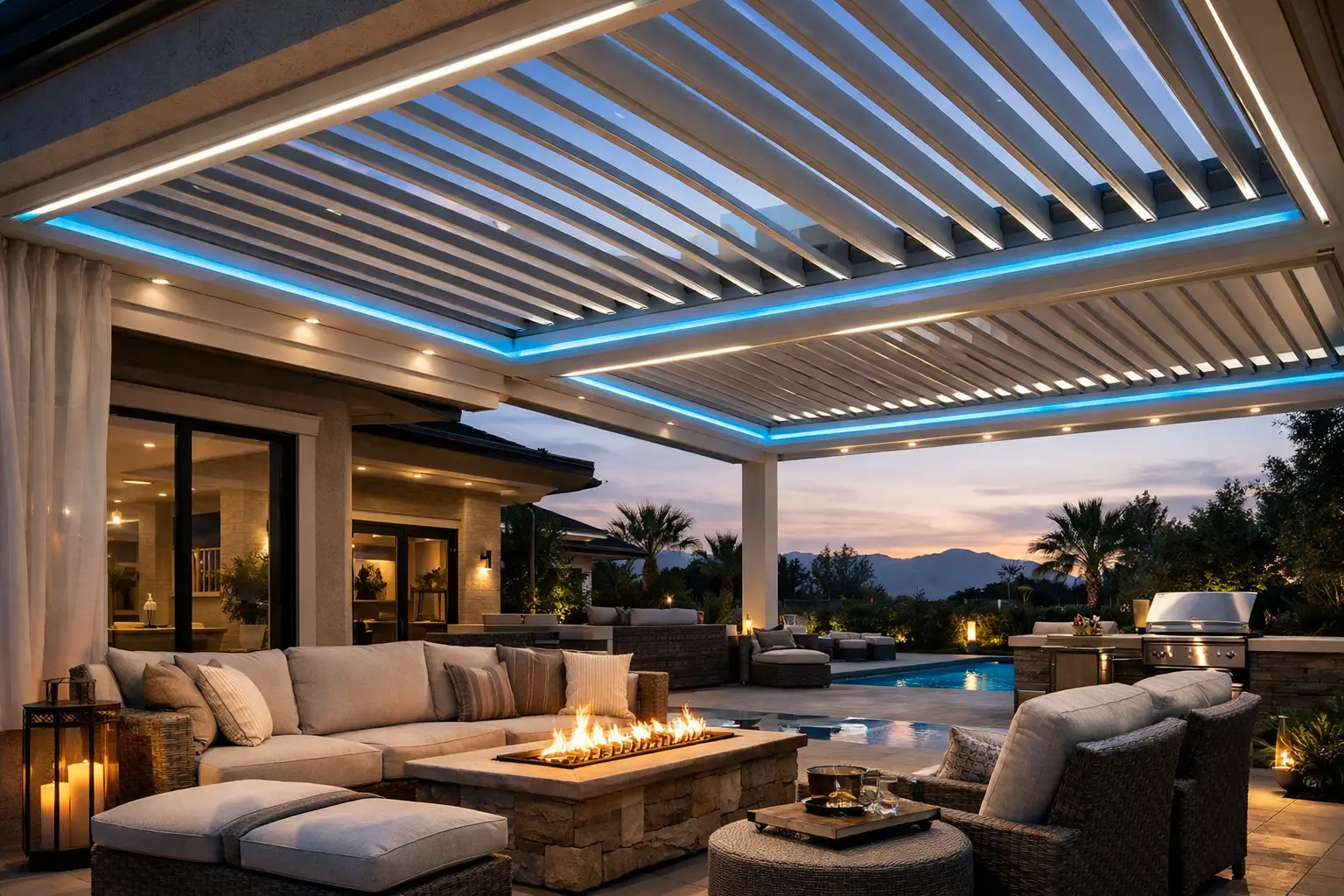
A luxury patio cover should do more than cast shade. In Florida, it has to hold its line against heat, salt air, heavy rain, and serious wind while still looking like it belongs on a high-end home. That is why the best luxury patio cover materials are not simply the prettiest options on a showroom board. They are the materials that deliver design flexibility, structural confidence, and low long-term ownership risk.
For homeowners investing in a pool deck, lanai, or outdoor entertaining space, material choice shapes everything that follows – appearance, maintenance, comfort, engineering, and how much confidence you have when weather turns. Some materials perform well in mild climates but become liabilities near the coast. Others cost more upfront but justify it through longevity, cleaner detailing, and stronger warranty potential.
What defines the best luxury patio cover materials?
In the luxury category, material quality is only part of the equation. The real question is how the system performs as an architectural extension of the home. A patio cover should feel integrated, not added on. It should complement modern exteriors, support lighting and shade upgrades, and maintain its finish over time without turning ownership into a maintenance project.
For Florida properties, storm performance matters just as much as appearance. A beautiful structure that cannot be properly engineered for local wind loads is not a premium choice. The best materials combine refined aesthetics with structural reliability, especially in coastal and hurricane-prone areas where code compliance and permitting are not minor details.
Best luxury patio cover materials for high-end homes
Architectural-grade aluminum
Architectural-grade aluminum sits at the top of the list for most luxury patio cover projects, especially in Florida. It offers the clean lines homeowners want, the engineering capacity builders need, and the low-maintenance ownership experience that fits a premium lifestyle.
Its biggest advantage is performance. Aluminum does not rust like steel can, and it does not absorb moisture or degrade under humidity the way lesser materials may. With the right powder-coated finish, it holds color well and keeps a crisp, tailored look for years. That matters on homes where every exterior detail is expected to stay polished.
It also supports advanced design features better than many alternatives. Motorized louvers, integrated lighting, automated shades, and concealed drainage all pair naturally with a well-built aluminum system. If your goal is not just shade but real control over sun, ventilation, and rain protection, aluminum gives designers and installers more room to create a finished, custom result.
The trade-off is that not all aluminum systems are equal. Thin-gauge products or lightly engineered kits may look similar in photos but perform very differently in the field. In the luxury market, the material only earns its reputation when backed by serious engineering, professional installation, and a system designed for local weather demands.
Steel
Steel has undeniable strength, and in some custom architectural applications it can be a compelling option. It can span impressively and create a bold structural presence. For certain commercial or highly specific residential designs, that may appeal to homeowners who want a strong industrial-modern profile.
Still, steel is usually less practical than aluminum for luxury patio covers in coastal Florida. The issue is not strength alone. It is the combination of moisture exposure, salt air, finish maintenance, and long-term corrosion risk. Even when protected, steel generally demands more vigilance to preserve its appearance and performance over time.
That makes steel a more specialized choice than a broadly smart one. If the design absolutely requires it, it can work. But for most luxury outdoor living projects where low maintenance and refined finish quality matter, aluminum tends to be the more balanced material.
Insulated panel systems
Insulated roof panels can make sense for homeowners who prioritize solid overhead coverage and heat reduction. They create a more enclosed feel than an open pergola-style cover and can be effective over outdoor kitchens, dining areas, or seating spaces where consistent shade is the main goal.
From a comfort standpoint, they perform well. They can help reduce direct heat gain and create a more protected environment during rain. The limitation is aesthetic and experiential. A fixed insulated roof gives you coverage, but not flexibility. You lose the ability to modulate light and airflow throughout the day, which is one of the biggest advantages in upscale outdoor living design.
For some homes, that is an acceptable trade. For others, especially where owners want a space that adapts from bright mornings to shaded afternoons and rainy evenings, a more advanced louvered aluminum system feels markedly more luxurious.
Fabric canopies and retractable systems
Fabric-based patio covers can look elegant in the right setting and often create a softer resort-style appearance. They can be attractive for temporary shade needs or for homeowners drawn to a more decorative solution.
The challenge is longevity. Fabric systems generally do not offer the same structural permanence, weather resistance, or luxury integration as architectural metal structures. In strong sun, heavy rain, coastal conditions, and high winds, they often become a compromise product rather than a true long-term investment.
For a premium home, that distinction matters. A luxury patio cover should feel permanent, engineered, and aligned with the value of the property. Fabric solutions tend to serve a narrower purpose and may not deliver the confidence many Florida homeowners expect.
Why aluminum leads in Florida
When people search for the best luxury patio cover materials, they are often trying to balance beauty with practical realities. In Florida, that balance usually points back to architectural-grade aluminum because it solves several problems at once.
It handles the climate well. It supports sophisticated design. It keeps maintenance low. And, when paired with proper engineering, it can be built for demanding wind conditions in a way that matches the expectations of luxury homeowners.
That last point deserves attention. In markets like Boca Raton, Naples, Tampa, and other coastal communities, material selection is not separate from permitting and structural design. A patio cover is not only an aesthetic purchase. It is a construction project that must satisfy code, site conditions, and owner expectations. Materials that seem attractive on paper can become far less appealing if they complicate approvals or introduce long-term vulnerability.
The role of finish, hardware, and system design
Material choice is critical, but luxury performance is never about material alone. Finish quality, hardware durability, drainage design, motor integration, and installation standards all affect how the final structure looks and performs.
A well-finished aluminum pergola with concealed fasteners, clean columns, integrated lighting, and precision motorized louvers feels entirely different from a basic patio cover made of the same base material. That is why serious buyers should evaluate complete systems, not just raw material labels.
This is also where warranty coverage becomes meaningful. Long structural and component warranties usually indicate confidence in the system as a whole, not just the frame. For high-end homeowners, that reduces ownership risk and reinforces that the patio cover is meant to be a lasting part of the property.
Choosing the right material for your project
The right answer depends on how you plan to use the space. If you want year-round flexibility, modern styling, and the ability to control sun, shade, and rain with precision, architectural-grade aluminum is usually the strongest choice. If your priority is full-time solid coverage and you do not mind giving up adjustability, insulated panels may be worth considering. Steel fits narrower design cases, while fabric options tend to suit lighter-duty needs rather than fully engineered luxury installations.
Budget matters, but value matters more. The least expensive option upfront can become the most expensive one to live with if it requires frequent upkeep, ages poorly, or limits how the space functions. Luxury buyers are rarely looking for the cheapest cover. They are looking for the one they will still be happy with years from now.
That is why a consultative design process matters. A professional should assess exposure, span requirements, drainage, finish preferences, and whether features like motorized louvers or automated shades belong in the plan from day one. A company such as enVision Pergola approaches that process the way a premium builder should – with engineering discipline, clear expectations, and a focus on long-term performance, not just first impressions.
The best patio cover material is the one that matches your home’s architecture, your climate realities, and the standard you expect every time you step outside. For most luxury homes in Florida, that means choosing a material that looks elevated, performs under pressure, and asks very little from you after installation. When a patio cover does all three, it stops feeling like an accessory and starts feeling like part of the home.