
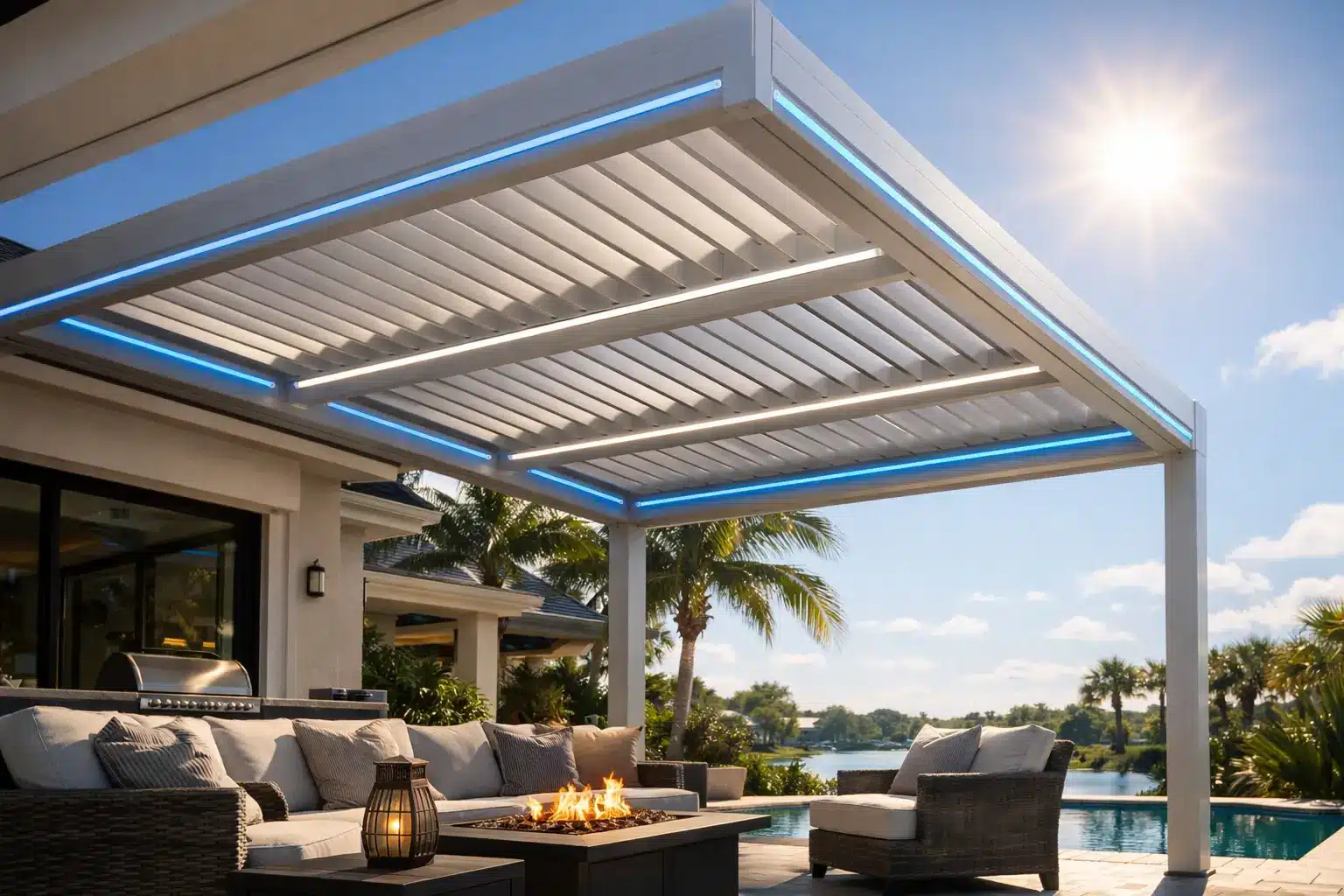
A Florida patio can become uncomfortable long before lunch is served. That is why homeowners often ask, are aluminum pergolas hot? It is a fair question, especially when the structure will sit above a pool deck, outdoor kitchen, or entertaining area exposed to intense afternoon sun.
The direct answer is this: aluminum itself can become hot when exposed to sun, but a properly designed aluminum pergola is built to reduce the heat that reaches the space beneath it. The difference comes down to engineering, coverage, airflow, louver design, orientation, and the controls used throughout the day. A premium louvered pergola is not simply an overhead architectural feature. It is a system designed to make outdoor living more comfortable in demanding Florida conditions.
Are Aluminum Pergolas Hot? The Honest Answer
Any material exposed to strong sun will absorb heat. Aluminum is a conductive material, so the top surface of a pergola can feel hot to the touch after hours of direct exposure. That fact alone, however, does not determine whether the seating area beneath it will feel hot.
What matters to the homeowner is radiant heat, direct sun exposure, and the movement of air in the outdoor room. A fixed overhead structure that blocks some light but traps warm air may leave a patio feeling stagnant. A well-designed motorized louver system gives you the ability to manage those conditions as they change.
With louvers closed, the roof provides substantial overhead shade and limits direct sunlight on furniture, flooring, and guests. With louvers tilted open, warm air can rise and escape while breezes move through the space. That flexibility is particularly valuable in Florida, where a bright morning, humid midday, brief rain shower, and breezy evening can all happen on the same day.
Why Louver Design Changes the Experience
Not all pergolas manage heat the same way. The performance of an aluminum pergola depends greatly on the roof system and the quality of its construction.
Full shade when you need it
Motorized louvers allow homeowners to close the roof during peak sun hours. This helps reduce direct radiant exposure, which is often the biggest reason a patio, outdoor dining table, or lounge area becomes unpleasantly hot. Shading the surface below also helps prevent pavers, upholstery, and countertops from absorbing as much heat.
The result is not an air-conditioned outdoor room. Florida heat is still Florida heat. But blocking overhead sun can make the difference between avoiding the patio and enjoying a long lunch, a family gathering, or an evening by the pool.
Airflow when the weather allows it
A common misconception is that maximum shade always creates maximum comfort. On a humid day, airflow is equally important. Adjustable louvers allow you to angle the roof to encourage ventilation while still filtering harsh light.
This is where a motorized system earns its place in a luxury outdoor living project. Instead of accepting one fixed roof position, you can adjust the environment in seconds. Open the louvers for a breeze, partially tilt them to soften glare, or close them when the sun is directly overhead.
Thoughtful orientation matters
The direction your patio faces affects how much sun it receives and when. West-facing spaces often take the hardest afternoon exposure, while southern exposures can receive prolonged sun throughout the day. A professional design should account for the home’s orientation, existing rooflines, pool location, views, and how the family actually uses the space.
For some properties, integrated automated shades provide another layer of comfort by limiting low-angle sun from the side. They can also improve privacy without sacrificing the clean, architectural appearance that makes a custom aluminum pergola so appealing.
What Makes a Pergola Feel Cooler Below
Comfort under a pergola is the product of several decisions working together, not one feature alone. The strongest projects consider the roof system, the surrounding hardscape, side exposure, and how the space will be furnished.
A closed louver roof creates shade and helps protect the area below from rain. Integrated drainage channels direct water away in a controlled manner, allowing the space to remain useful through passing showers. When the weather clears, louvers can be opened to restore light and air movement.
Integrated lighting also changes how a space is used. It does not cool the patio, but it extends the value of the structure into the evening, when temperatures are often more inviting. A well-lit outdoor retreat becomes a destination for dinner, conversation, and entertaining rather than an unused extension of the home.
Fans can be a valuable addition in some designs, particularly over dining and seating areas. Their effectiveness depends on placement, clearance, and the scale of the covered zone. This should be considered during design, not treated as an afterthought once the structure is installed.
Heat, Rain, and Hurricane Engineering Are Connected
Florida homeowners should not have to choose between shade and storm confidence. A pergola is a permanent architectural addition, and it should be engineered accordingly.
A lightweight-looking structure may appear elegant, but its connections, posts, footings, drainage, and attachment details carry the real performance responsibility. In coastal and hurricane-prone areas, these details are not optional. They are central to protecting the investment and supporting a smooth permitting process.
Premium aluminum pergola systems can be engineered for wind ratings up to 185 mph, depending on the specific configuration, site conditions, and approved design. That level of performance is fundamentally different from treating the pergola as a decorative accessory. It is built for Florida’s sun, rain, wind, and long-term exposure.
At enVision Pergola, the process begins with how the space needs to perform, then pairs that vision with a custom design, permitting guidance, and professional installation. For homeowners, this means fewer assumptions and clearer expectations from the first estimate through final installation.
Aluminum Pergolas and Surface Temperature: What to Expect
It is worth setting the right expectation. If you place your hand on a sun-exposed aluminum louver at midday, it may feel hot. That does not mean the shaded area below is failing to perform. The top of the structure is taking the sun exposure so your outdoor living area does not have to.
Color can also influence surface temperature. Darker finishes generally absorb more heat than lighter finishes, though finish selection should also support the home’s architecture and the desired visual impact. A knowledgeable designer can help balance aesthetic preferences with the realities of site exposure.
The larger question is not whether aluminum ever gets warm. It is whether the pergola creates usable shade, rain protection, airflow, and control over the outdoor environment. For most homeowners, those are the features that determine whether the investment transforms daily life outside.
When an Aluminum Pergola Is the Right Choice
An aluminum louvered pergola is especially compelling for homeowners who want a polished, permanent outdoor room without losing access to natural light and open-air living. It is ideal over a patio, poolside seating area, outdoor kitchen, or dining space where conditions can change quickly.
It may be less necessary for a small area already protected by deep roof overhangs or mature canopy coverage. The best decision depends on the property’s sun path, exposure to rain and wind, intended use, and the level of finish expected from the completed space.
For a high-end Florida home, the goal should be more than adding shade. It should be creating an outdoor setting that looks intentional, performs in real weather, and remains comfortable enough to use often. A custom aluminum pergola gives you the control to enjoy the day on your terms: closed against harsh sun, angled for a coastal breeze, and ready for the next gathering.