
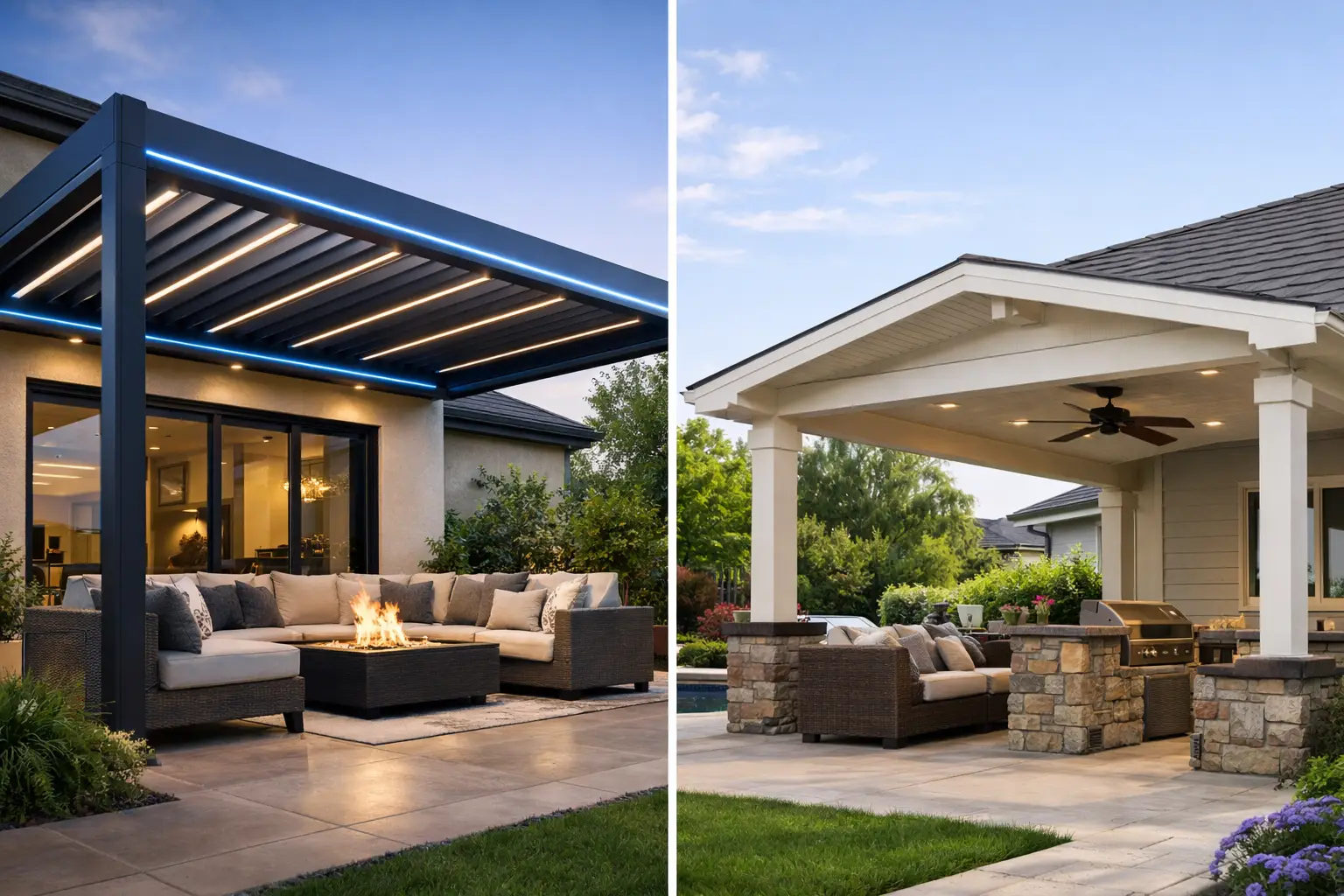
A covered pool deck can look exceptional on a calm Florida afternoon and feel completely inadequate when the sun shifts, rain arrives sideways, or a tropical system is on the forecast. That is why the aluminum pergola vs patio cover decision is about far more than adding shade. It determines how much control you have over your outdoor space, how the structure relates to your architecture, and how confidently it can be engineered for coastal weather.
For homeowners investing in a refined outdoor retreat, the best choice is usually not the least expensive roof over a patio. It is the solution that delivers daily comfort without compromising design, permitting, or long-term peace of mind.
Aluminum Pergola vs Patio Cover: The Core Difference
A patio cover is typically a fixed, solid overhead structure. It creates consistent shade and rain protection because its roof remains in one position. That simplicity can make sense over a smaller entry, a service area, or a patio where natural light and sky views are not priorities.
An architectural-grade aluminum pergola, particularly one with motorized louvers, is a more adaptable outdoor room. Its adjustable roof blades can open for daylight and airflow, tilt to manage direct sun, and close to help protect the space from rain. Instead of choosing between full exposure and permanent cover, you can adjust the environment as conditions change.
That distinction matters in Florida. A fixed cover is always closed, which can make an otherwise beautiful pool deck feel darker or more enclosed. A louvered aluminum pergola gives homeowners the option to enjoy an open sky at breakfast, filtered shade in the afternoon, and a covered entertaining area when a passing shower arrives.
Choose a Patio Cover When Consistency Is the Priority
A fixed patio cover has one clear advantage: predictable protection. If your sole goal is to keep a particular area shaded and dry at all times, a fixed roof can accomplish that with minimal interaction. There are no louvers to position and no changing roof configuration to consider.
This approach may suit a patio that receives relentless direct exposure, especially when the homeowner does not need light or ventilation from above. It can also be appropriate where the structure is intended to blend into an existing roofline with a straightforward, permanent appearance.
The trade-off is flexibility. A patio cover cannot respond to the time of day, seasonal light, or changing weather. It blocks the same amount of light on a bright winter morning as it does on a humid summer afternoon. Depending on its placement, it may also reduce the sense of openness that made the patio, lanai, or pool area appealing in the first place.
For a luxury property, the question is worth asking: Do you want a roof that simply covers the space, or a system that helps the space perform better throughout the year?
Why an Aluminum Pergola Delivers More Control
The value of a premium louvered pergola is not just its appearance. It is control. With motorized louvers, the roof can be adjusted in seconds to suit how you are using the area. That makes a meaningful difference for outdoor dining, poolside gatherings, quiet mornings, and evenings when the air is pleasant but the glare is not.
When louvers are open, daylight reaches the patio and warm air can rise through the roofline. When tilted, they provide measured shade rather than an all-or-nothing barrier. When closed, a properly designed system channels rainwater through integrated gutters and concealed drainage rather than allowing it to fall through the structure.
This is especially valuable on properties where the outdoor area is central to daily living. A pool deck, waterfront terrace, or rear patio should not become an unused zone for much of the day simply because the sun is too intense. A motorized pergola helps turn that space into a practical extension of the home.
Optional integrated lighting and automated shades elevate that control further. Lighting creates an intentional evening setting without relying on temporary fixtures. Automated shades can help manage low-angle sun, privacy, and wind-driven glare from the sides. The result is an outdoor room that feels considered, not improvised.
Storm Engineering Is Not an Add-On
In Florida, appearance alone is never enough. Any significant outdoor structure should be evaluated through the lens of local codes, site conditions, attachment details, and wind exposure. Coastal communities and open-water properties can demand a higher level of planning than a sheltered inland lot.
A patio cover may be built to code, but homeowners should not assume every fixed cover or every pergola is engineered to the same standard. The structural system, posts, footings, connections, roof configuration, and permitting approach all affect performance. A structure that looks substantial in a showroom or online image may not be appropriate for your address without project-specific engineering.
Premium aluminum pergola systems are designed for this conversation. At enVision Pergola, hurricane-rated systems can be engineered for wind speeds up to 185 mph, subject to the approved design, local requirements, and installation conditions. That is a different standard of consideration than selecting a decorative shade feature and hoping it is sufficient when severe weather approaches.
Professional permitting is equally important. It protects the homeowner from costly corrections, helps establish that the design meets jurisdictional requirements, and gives the project a clear path from concept to installation. For high-value homes, a concierge design-build process is not a luxury extra. It is the disciplined way to manage a structural addition.
Compare Materials Beyond the First Price
The initial price of a patio cover can appear more attractive because it has a simpler form and fewer operating components. But the better comparison is total ownership value: durability, maintenance expectations, functionality, architecture, and confidence in the installation.
Architectural aluminum is well suited to Florida’s humidity, heat, rain, and salt-air exposure. A quality powder-coated finish is designed to maintain a polished appearance with relatively straightforward care. Unlike a structure that depends on frequent refinishing, a premium aluminum system is intended to remain a low-maintenance part of the property.
Not all aluminum products are equal, however. Gauge, internal reinforcement, finish quality, drainage design, motor performance, and installation workmanship all matter. A luxury outdoor investment should come with clear specifications and warranty coverage, not vague assurances.
For example, strong structural and component warranties reduce the long-term risk of owning a motorized system. enVision Pergola provides 20-year structural coverage and 20-year coverage for motors and lighting on qualifying systems, giving homeowners a more meaningful basis for evaluating value than a headline price alone.
Design Should Respect the Home, Not Compete With It
A patio cover can sometimes read as an add-on, particularly when its proportions, post placement, or roofline do not align with the home. This is less of a concern for a concealed utility area, but it becomes highly visible over a pool, outdoor kitchen, or primary entertaining terrace.
A custom aluminum pergola can be designed around the property rather than forced into a standard footprint. The dimensions, orientation, color, columns, lighting, shade placement, and attachment method can be selected to complement the architecture and protect important views. Freestanding configurations can define a destination near a pool or garden, while attached designs can extend the home’s living area with a more integrated look.
Scale is critical. An undersized structure can feel incidental, while an oversized roof can overwhelm the patio and limit natural light. A professional design consultation should account for sun direction, furniture layout, doors, views, drainage, ceiling height, and the way guests move through the space.
The Better Choice Depends on How You Live Outside
Choose a fixed patio cover if permanent overhead protection is your only priority and you are comfortable with a consistently enclosed feel. It is a direct solution for a direct need.
Choose a motorized aluminum pergola if you want your patio to change with the weather, preserve access to daylight, and support a more elevated outdoor-living experience. The investment is typically greater, but so is the range of comfort, design flexibility, and technology it can deliver.
For homeowners in Boca Raton, Naples, Tampa, and other weather-exposed Florida markets, the most useful next step is not selecting from a catalog. It is having the site evaluated by a specialist who can explain what the property requires, what local permitting will involve, and which configuration will serve the home for years. The right overhead structure should make stepping outside feel like an upgrade, whatever the forecast brings.