
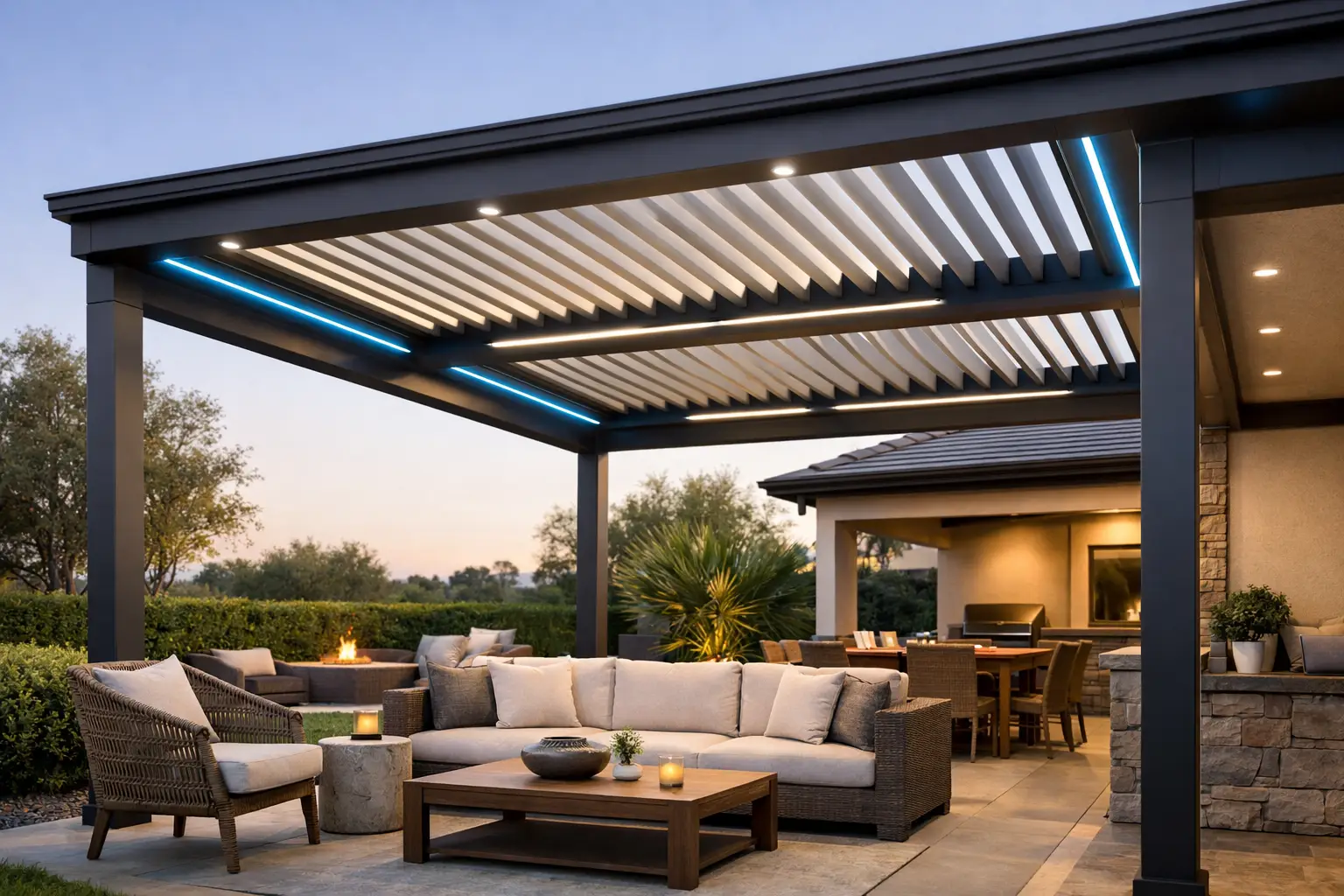
By 2 p.m. in Florida, a beautiful patio can feel less like an outdoor retreat and more like a surface test for heat and glare. That is why homeowners searching for the best pergola shade solutions for patios are usually not looking for decoration alone. They want control – over sun exposure, afternoon rain, privacy, and how usable that space feels in every season.
The right shade solution is rarely about one feature. It is about how the system performs when the sun shifts, when humidity climbs, and when a quick storm rolls in off the coast. For luxury homes, especially in hurricane-prone areas, the best answer also needs to look architectural, operate smoothly, and hold its value over time.
What makes the best pergola shade solutions for patios
A patio shade system should solve more than brightness. It should improve comfort, protect furnishings, and make the space usable more often without turning your backyard into something that feels temporary or overly mechanical.
For most upscale homeowners, the real decision comes down to five factors: sun control, rain protection, wind performance, aesthetics, and convenience. If one of those is missing, the patio still ends up underused. A shade sail may soften direct sun, for example, but it will not give you the same control during a passing storm. A fixed cover may block heat well at midday, but it cannot adapt when you want more light in the evening.
That is why the best pergola shade solutions for patios tend to be dynamic rather than static. Adjustable systems simply do more, especially in climates where the weather changes quickly.
Motorized louvered pergolas offer the highest level of control
If your goal is premium performance, motorized louvers sit at the top of the category. They allow you to adjust the roof overhead with the touch of a button, shifting from open sky to filtered shade to rain-blocking coverage in seconds.
This matters more than it may seem on paper. A fixed shade structure gives you one setting all day, every day. Louvers give you options. Open them in the morning to bring in light, angle them in the afternoon to reduce glare, then close them when rain appears. That flexibility makes the patio feel like a true extension of the home rather than a space you use only when conditions happen to cooperate.
For Florida properties, engineering also matters. A properly designed aluminum pergola system can deliver a refined architectural look while also being built for harsh sun, heavy rain, salt air, and significant wind exposure. That performance is especially relevant for coastal homes where homeowners do not want to choose between beauty and resilience.
The trade-off is straightforward: motorized louvered systems are a premium investment. But for homeowners who want year-round usability, integrated technology, and a cleaner long-term ownership experience, they often provide the strongest overall value.
Retractable canopy systems work, but with more limitations
Retractable fabric canopies appeal to homeowners who want a softer visual look and partial flexibility overhead. They can provide welcome shade during high sun and retract when you want an open-air feel.
That said, they are not the strongest fit for every patio. Fabric systems tend to require more maintenance over time, and their performance in wind and driving rain is not on the same level as an architectural-grade louvered roof. In a milder climate, that may be acceptable. In Florida, where weather can turn quickly, those limitations become more noticeable.
For a covered entertaining area used occasionally, a retractable canopy may be enough. For a primary outdoor living space attached to a luxury home, many homeowners decide they want something more substantial, more durable, and more integrated with the home’s design.
Fixed insulated roof panels provide consistent coverage
A fixed roof pergola or patio cover can be an effective solution if your priority is constant shade and dependable rain protection. There is no need to adjust anything, and the space beneath remains predictably covered throughout the day.
This is a practical choice for homeowners who use their patio the same way most of the time, especially if the area is dedicated to outdoor dining or a summer kitchen. The downside is a lack of flexibility. If you want more sunlight in the winter or a more open-sky atmosphere when entertaining, a fixed roof cannot adapt.
Design is another consideration. A well-executed fixed roof can look elegant, but it creates a more permanent visual ceiling. Some homeowners prefer that. Others want a structure that feels lighter and more responsive.
Automated drop shades solve the side exposure problem
Overhead shade is only part of the comfort equation. Many patios become uncomfortable because of low-angle sun, reflected glare, or a lack of privacy from neighboring homes. That is where automated drop shades become one of the smartest upgrades you can add to a pergola system.
Installed on the sides of the structure, these screens help block late-day sun, reduce heat buildup, and create a more enclosed, lounge-like setting when needed. They are especially valuable on west-facing patios, pool decks, and lanai-style spaces where the sun cuts in horizontally.
This is also one of the best examples of layered shade design. A pergola with an adjustable roof handles overhead conditions. Automated side shades fine-tune the experience as the sun shifts. Together, they create a far more livable outdoor environment than either element could achieve alone.
For homeowners who entertain frequently, side shades also add a level of polish. The space feels more intentional, more private, and better protected from the elements.
Privacy screens and decorative panels add style, but they are not full shade systems
Decorative screens and fixed privacy panels can absolutely improve a patio. They help define the space, soften sightlines, and provide partial relief from side sun. Architecturally, they can also make a pergola look more custom and substantial.
Still, they should be viewed as supporting features rather than primary shade solutions. They do not offer overhead rain protection, and they do not adapt to changing light conditions the way motorized systems do. If your main concern is patio usability in heat and rain, decorative panels alone will not solve the issue.
Where they shine is in combination with a higher-performance pergola system. Used thoughtfully, they bring both privacy and design value without asking them to do a job they were never meant to handle on their own.
Shade cloths and simple covers are lower cost, but usually short-term thinking
There are homeowners who start with basic shade cloths or tensioned overhead covers because the upfront cost is lower. For a temporary need, that can be understandable. But for a luxury residence, these options often create more compromise than value.
They tend to look less integrated, offer limited weather performance, and age faster in strong sun and coastal conditions. In some cases, they can also make an otherwise elegant patio feel improvised. If the goal is to increase the enjoyment and value of your home, a short-term shade fix can become an expensive detour.
The better question is not simply what costs less today. It is what will still feel attractive, functional, and worth owning several years from now.
Choosing the right patio shade solution depends on how you live
The best system for your neighbor may not be the best one for you. A couple who wants quiet morning coffee and occasional family dinners may prioritize a simpler setup than a homeowner who hosts large evening gatherings, uses the pool year-round, and expects the patio to function like an outdoor great room.
Orientation matters too. A south-facing patio has different shade demands than a west-facing one. Proximity to water, wind exposure, and whether the pergola is freestanding or attached to the home all influence the right design.
This is where a consultative process matters. High-end pergola projects should not start with a generic catalog answer. They should start with how the sun moves across your property, how the patio connects to the home, and what level of comfort and weather protection you actually expect. In markets like Boca Raton, Naples, and Tampa, where outdoor living is central to the home experience, those details directly affect whether the investment feels exceptional or merely adequate.
The strongest long-term option is usually a layered system
For homeowners who want the highest-performing result, the answer is often not a single shade feature. It is a combination of an engineered aluminum pergola with motorized louvers, integrated lighting, and optional automated side shades.
That layered approach gives you control during bright afternoons, protection during passing rain, better privacy when entertaining, and a finished appearance that complements the architecture instead of competing with it. It also supports a more turnkey ownership experience, especially when the design, permitting, and installation are handled by one specialist team.
That is one reason premium buyers often work with a company like enVision Pergola. When the structure is custom designed, professionally installed, and built with performance in mind, the patio stops being a weather gamble and starts functioning like the luxury living space it was meant to be.
A great patio shade solution should do more than block the sun. It should make you want to stay outside longer, entertain more often, and trust that the investment was built for the way you actually live.