
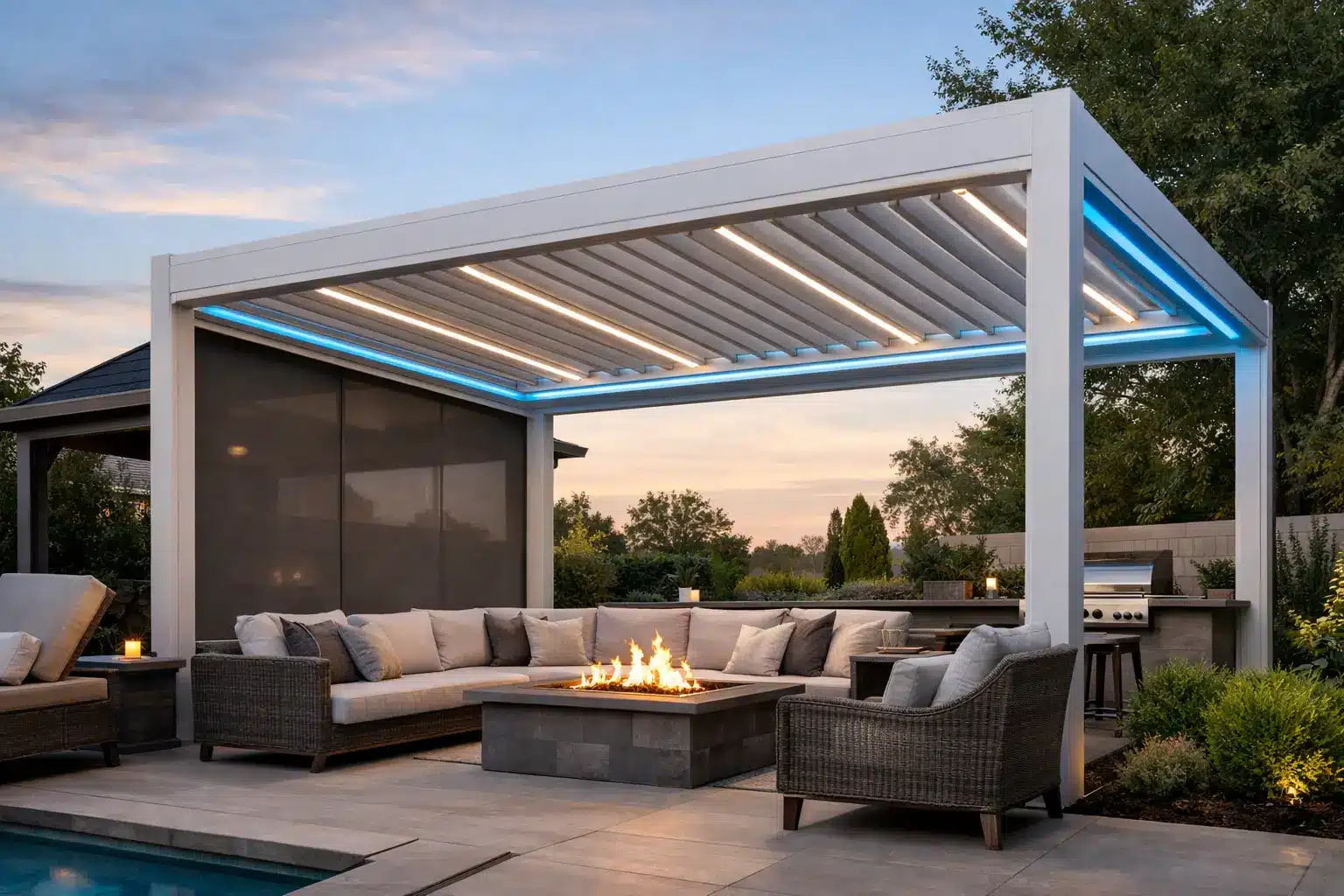
At 3 p.m., this homeowner’s patio had a predictable problem. The pool deck looked beautiful, the backyard was professionally landscaped, and the rear elevation of the home deserved a true outdoor living space. But the heat, glare, and afternoon sun made the area usable only in short windows. This case study backyard pergola with automated shades shows what changed when the goal shifted from adding decoration to building a performance-driven extension of the home.
The property was in coastal Florida, where outdoor comfort is never just about aesthetics. Sun angle, heat gain, salt air, rain exposure, and hurricane risk all shape the right solution. The homeowner wanted a structure that felt architecturally integrated with the house, delivered reliable shade throughout the day, and did not create a long list of maintenance concerns a few seasons later.
This was not a client looking for a simple cover. They wanted a premium entertaining space with clean lines, motorized control, and the kind of engineering that supports confidence during storm season. Just as important, they wanted one team to handle design, permitting, and installation with clear communication from start to finish.
What the homeowner wanted from the pergola
The brief was specific. The family used the backyard for weekend gatherings, evening dinners, and poolside relaxation, but they avoided the patio during the hottest part of the day. The western exposure created heavy glare and direct low-angle sun that moved under the main overhead structure and made seating uncomfortable.
Their priorities were straightforward: create dependable shade, preserve openness when desired, and keep the finished project aligned with the home’s architecture. They also wanted integrated lighting for evening use and a polished system that could be adjusted without manually pulling screens or rearranging furniture around shifting sun.
Automated shades became central to the conversation early. For many Florida homes, overhead coverage solves only part of the problem. When the sun drops, the real issue is lateral exposure. That is where automated perimeter shading can make the difference between a space that looks good in photos and one that actually gets used.
Why automated shades mattered in this case study backyard pergola
The pergola itself provided the structural foundation and overhead control, but the automated shades solved the daily comfort problem. On this backyard, the strongest discomfort came from one side in the late afternoon. Without shades, sunlight slipped beneath the roofline and heated the seating area, especially near the outdoor dining table.
By incorporating automated shades on the most exposed sides, the design created layered protection. The homeowner could lower the shades as the sun shifted, reduce glare on interior windows, and maintain a more comfortable outdoor temperature without closing off the entire space. That flexibility mattered. They did not want a permanently enclosed room. They wanted control.
There is a practical trade-off here. Automated shades improve comfort dramatically, but they work best when they are designed around the home’s orientation, prevailing weather, and how the space will actually be used. Too much enclosure can reduce openness and alter sightlines. Too little coverage leaves the problem unsolved. The right answer is rarely generic.
The design approach
The final design centered on a custom aluminum pergola sized to define the outdoor living area without overpowering the rear façade. The proportions were chosen to match the home’s scale and create a finished, intentional look rather than an add-on appearance.
Because this was Florida, engineering drove several design decisions. The homeowner wanted premium comfort features, but not at the expense of resilience. The structure needed to perform in a demanding environment, with hardware, finishes, and system components selected for long-term durability. That included integrating automation in a way that supported ease of use while maintaining a clean, high-end appearance.
Lighting was built into the system to extend the space into the evening. This often gets overlooked in early planning, but it changes how often a pergola gets used. A backyard project should serve lunch, late afternoon lounging, and dinner without feeling like three separate environments. Integrated lighting helps create that continuity.
From problem patio to usable outdoor room
Once installed, the difference was immediate. The area that had previously been avoided during peak sun hours became functional for everyday use. The homeowner no longer had to wait for the sun to move or reposition seating around glare. With a touch of a control, they could adjust the environment based on the hour, the weather, or the occasion.
This is where a premium pergola system tends to justify itself. The value is not only in the structure. It is in predictability. The homeowner could plan an afternoon gathering knowing the space would remain comfortable. They could host dinner with integrated lighting already built in. They could enjoy the backyard in light rain or strong sun without treating the patio like a fair-weather zone.
The home also benefited visually. From the interior, the pergola framed the backyard with a more finished architectural presence. From the exterior, it gave the rear of the home greater depth and purpose. That matters for discerning homeowners because outdoor living should feel like part of the property’s design language, not a separate utility feature.
Performance matters more in Florida
A case study like this is useful because it highlights something many homeowners realize only after the fact: comfort and engineering should be discussed together from day one. In Florida, a pergola is not simply a lifestyle purchase. It is a structural investment exposed to intense sun, heavy rain, coastal conditions, and seasonal storm pressure.
That is why hurricane-rated design, quality fabrication, and professional installation carry real weight. A luxury pergola should deliver more than visual appeal. It should offer peace of mind. For homeowners in places like Boca Raton, Naples, Tampa, and other coastal or storm-conscious markets, the question is not just how the system looks on installation day. It is how it performs years later.
Automated components also deserve a higher standard of planning than many buyers assume. Motorized features are excellent when they are integrated into a well-designed system with strong warranty coverage and clear service expectations. They are less impressive when treated as add-ons without regard for long-term ownership experience. That is why experienced design-build guidance matters.
What this project teaches homeowners considering the same upgrade
The main lesson from this case study backyard pergola with automated shades is that the best outdoor projects start with the real problem, not the product category. This homeowner did not simply need shade. They needed afternoon usability, visual cohesion, storm-conscious construction, and a low-friction ownership experience.
That distinction changes the outcome. When the conversation starts with lifestyle goals and site conditions, the final design tends to be more precise. Orientation gets the attention it deserves. Shade placement becomes intentional. Lighting is integrated early instead of added later. The result feels calmer, more refined, and more useful.
It also shows why turnkey execution is valuable at the luxury level. High-end homeowners are not looking to coordinate multiple vendors, chase permit details, or wonder who is responsible if something falls short. They want one accountable team with the technical knowledge to guide design decisions and the professionalism to keep the project moving. That is where a specialist builder earns trust.
For many buyers, the biggest hesitation is whether they will use the space enough to justify the investment. That is a fair question. The answer usually depends on whether the system truly adapts to Florida living. If the pergola only helps overhead and does nothing about glare or side sun, usage may still be limited. If the structure and automated shades are designed as one environment, the space tends to become part of daily life.
One final point is worth keeping in mind. Luxury outdoor living works best when it removes friction. If a homeowner has to think too hard about weather, heat, brightness, or setup, the space gets used less. If the environment adjusts quickly and looks exceptional while doing it, the backyard starts functioning like another finished room of the home.
That is the real success story here. Not just a beautiful pergola, but a backyard that finally started working on the homeowner’s terms – in the sun, in the evening, and through the realities of Florida living.