
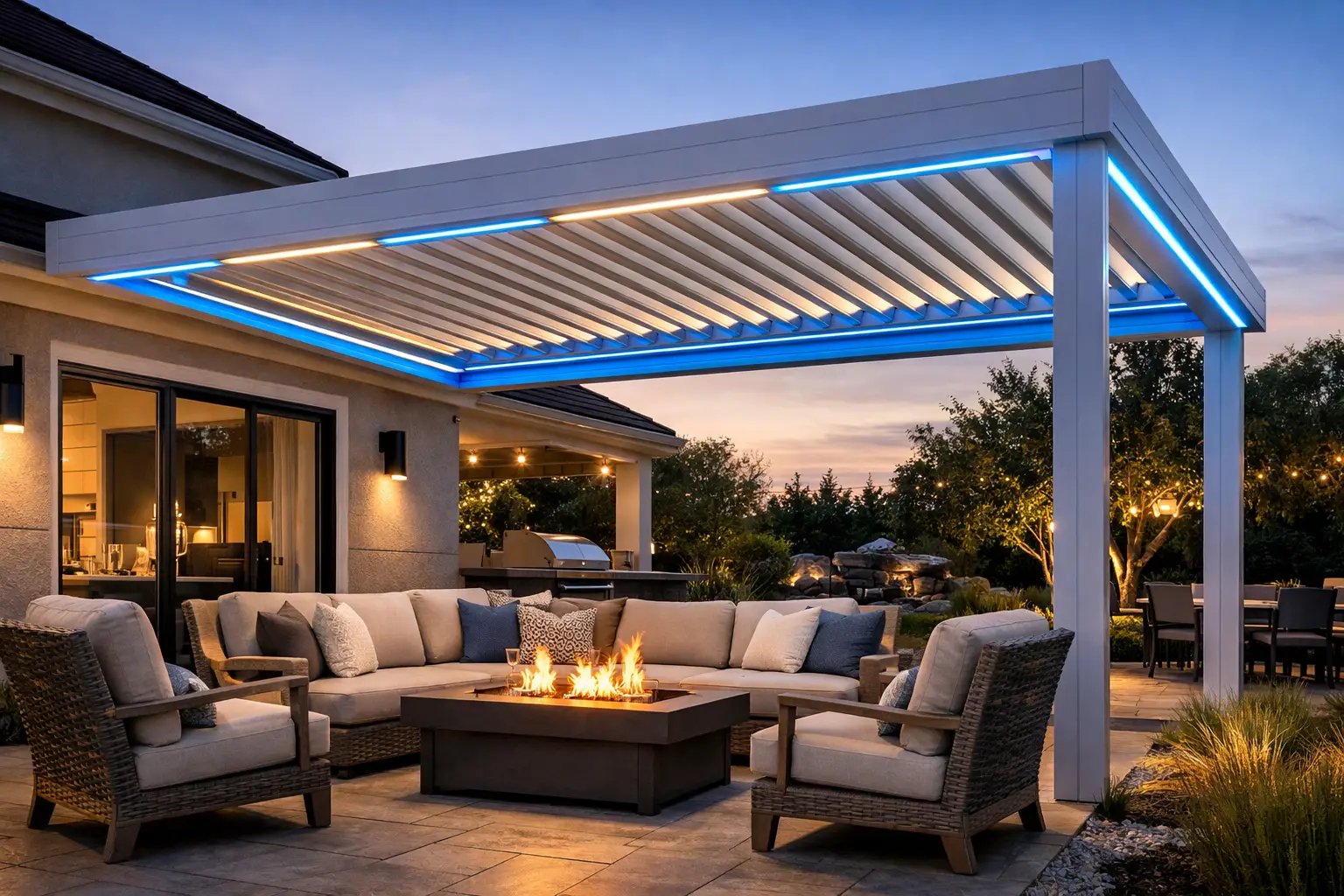
By 2 p.m. in Florida, the wrong backyard can feel like a surface you hurry across, not a place you actually use. A smart guide to backyard shade planning starts with that reality: shade is not just about blocking sun. It is about extending comfort, protecting finishes, managing glare, and making outdoor space feel as intentional as the rooms inside your home.
For luxury homeowners, shade planning should be treated like architectural planning. The best result is not a random umbrella or a last-minute add-on. It is a tailored system that responds to how the sun moves across your property, how you entertain, how close you are to the coast, and how much weather performance matters over the long term. In Florida especially, the conversation has to include heat, rain, wind exposure, and the value of a structure that is engineered to perform, not just look appealing in a photo.
Why backyard shade planning matters more in Florida
Shade decisions are more consequential here than they are in milder climates. Strong sun can make a beautiful pool deck uncomfortable for much of the day. West-facing rear exposures often create punishing late-afternoon heat. Open patios can take on glare that affects dining, reading, and even conversation. Then there is the other side of the equation: sudden rain, salt air near the coast, and the need for a structure that can hold its own when weather turns aggressive.
That is why a true guide to backyard shade planning should go beyond surface-level style choices. You are not simply deciding where to create cover. You are deciding how to make the space usable across more hours, more seasons, and more conditions without compromising the architecture of the home.
Start with how you actually use the space
The most effective shade plan begins with function, not product. Ask where people naturally gather and what tends to cut that time short. In many homes, it is one of three issues: direct sun over an outdoor dining area, insufficient coverage near a lounge or conversation space, or a patio that looks finished but feels exposed for most of the day.
A backyard designed around entertaining often needs layered coverage. The dining zone may need reliable midday protection, while a poolside lounge area may benefit from adjustable shade that preserves openness when desired. If you host evening dinners, integrated lighting becomes part of the planning conversation. If the backyard is visible from interior living areas, proportions and sightlines matter just as much as temperature control.
This is where premium planning differs from piecemeal buying. Rather than asking, “What shade product should I put here?” the better question is, “What level of control should each part of this outdoor living area have?”
Read the sun before you design the structure
One of the biggest mistakes in backyard shade planning is assuming any overhead cover will solve the problem. It depends on orientation. South and west exposures generally require a more strategic response than areas with softer morning sun. Low-angle afternoon sun can sneak under a roofline and still leave seating areas hot and bright. That means overhead coverage alone may not be enough.
In many Florida backyards, especially along waterfront or highly exposed properties, side protection becomes just as important as top coverage. Adjustable louvers can help you respond to sun angle and airflow. Integrated perimeter shades can add privacy and improve comfort when sunlight shifts later in the day. If your goal is true usability rather than occasional relief, flexibility matters.
The shape of the home also changes the answer. Deep lanais, second-story overhangs, neighboring structures, mature landscaping, and pool placement all affect how sunlight moves through the yard. A well-designed shade plan accounts for these factors early, before dimensions and placement are finalized.
Choose fixed shade or adjustable control
This is where planning becomes less about preference and more about performance. Fixed shade can work well in specific situations, especially when sun patterns are consistent and the goal is straightforward coverage. But many higher-end homeowners want more control than a fixed condition can provide.
Adjustable systems create a different level of outdoor living. With motorized louvers, you can manage sun, ventilation, and rain protection with much more precision. On bright days, the louvers can reduce direct exposure while still allowing airflow. During a passing storm, they can close to create a more protected environment. Add integrated lighting and the space transitions naturally into evening use without feeling like a separate project bolted on later.
That said, more capability should come with more engineering. In Florida, moving parts, structural performance, and installation quality are not details to gloss over. They are central to whether the investment holds up beautifully over time.
Material and engineering should lead the conversation
Luxury shade planning is often presented as a design exercise, but in this market it should be an engineering exercise first and a design exercise second. The structure has to withstand the climate it lives in. That means corrosion resistance, clean structural detailing, code-conscious design, and clear performance standards all deserve attention.
Architectural-grade aluminum has become the preferred choice for homeowners who want a refined look without sacrificing durability. It offers the crisp lines many upscale properties demand, while also standing up better to humidity, coastal conditions, and long-term exposure. More importantly, it supports a level of structural integrity that matters in hurricane-prone regions.
This is one area where trade-offs are real. A lower-cost solution may provide visual shade on day one, but if it is not engineered for serious wind conditions or installed with local permit requirements in mind, the long-term ownership experience can become far less appealing. Premium backyard planning means evaluating not just appearance and price, but warranty coverage, storm performance, and the quality of the builder behind the system.
Plan for comfort beyond sunlight
A sophisticated shade plan improves more than brightness. It changes how the entire backyard feels. Overhead protection can lower perceived heat in seating areas. Better glare control makes outdoor dining more comfortable. Rain management can save an event from being cut short. Privacy shades can make a busy property feel more secluded and polished.
This is especially valuable for homes where the backyard functions as an extension of the interior. If the patio connects directly to the great room or kitchen, the outdoor zone should feel equally finished. Integrated lighting, concealed drainage considerations, and clean structural lines all contribute to that sense of continuity.
For many homeowners, this is the moment the project shifts from “adding shade” to “creating a true outdoor room.” That distinction matters because it affects every decision that follows, from scale to controls to whether the investment supports the value of the home.
Work backward from your property’s risk profile
Not every backyard faces the same demands. A sheltered inland lot and a coastal property with broad wind exposure are two very different planning scenarios. If your home is in Boca Raton, Naples, Tampa, or another high-value Florida market where weather resilience directly affects buying decisions, storm-readiness should be part of the initial brief, not a feature discussed at the end.
That means asking practical questions early. What wind loads is the structure rated for? How does the installer handle permitting? What warranty protection exists on both the structure and the motorized components? What is the service experience after installation?
The right provider should answer these questions with precision, not generalities. For clients investing in a premium outdoor structure, peace of mind comes from specificity. Engineering claims, warranty terms, and communication standards should be clear from the beginning.
A better guide to backyard shade planning starts with professional design
The most successful projects rarely begin with a product catalog. They begin with a site-specific design conversation. Measurements, sun exposure, drainage considerations, architectural style, intended use, and local code requirements all shape the best answer.
That consultative process is especially important when you want a shade system to look fully integrated with the home rather than added later as an afterthought. Scale has to feel right. Posts should support sightlines, not interrupt them. The finished structure should elevate the architecture and improve daily comfort at the same time.
For that reason, turnkey execution matters. Design, permitting, fabrication, and installation all affect the final result. A concierge-style process with proactive communication is not just a luxury touch. It reduces mistakes, shortens uncertainty, and gives homeowners more confidence throughout the project.
enVision Pergola approaches this category the way it should be approached in Florida: as a premium, engineered outdoor living investment built for beauty, comfort, and serious weather performance.
If your backyard has the space but not the comfort, that is usually not a landscaping problem. It is a planning problem. The right shade strategy can turn a bright, underused area into one of the best parts of the home.