
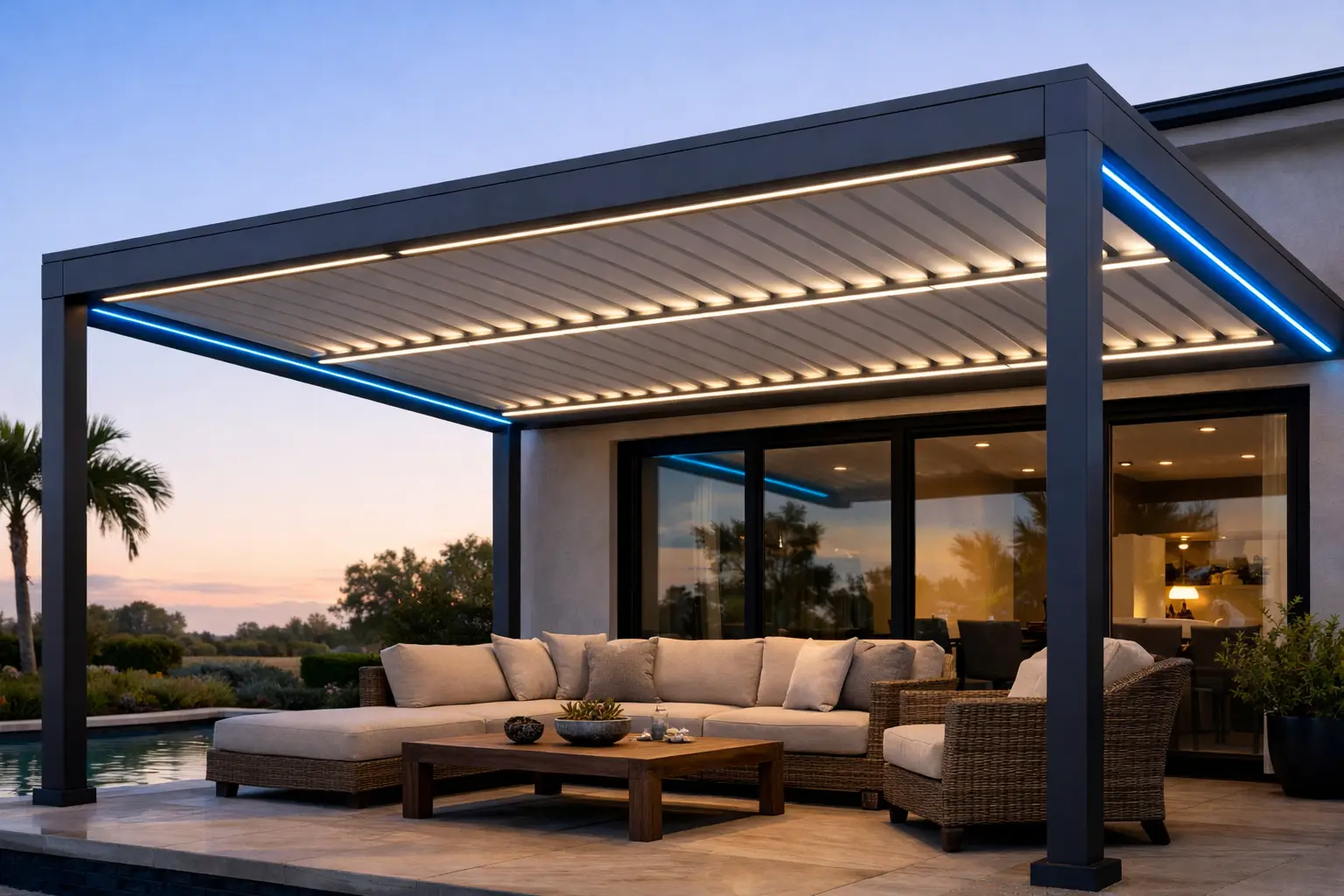
By 2 p.m. in Florida, the patio can feel less like a retreat and more like a space you avoid. That is exactly why a well-planned guide to motorized patio shade matters. The right shade system does more than block glare – it changes how often you use your outdoor space, how comfortable it feels in every season, and how confidently you invest in a luxury backyard upgrade.
For higher-end homes, especially along the coast, shade cannot be treated as an afterthought. It has to look architecturally right, operate reliably, and stand up to real weather. A motorized patio shade system should feel like part of the home, not an accessory added later.
What motorized patio shade actually solves
Most homeowners start with a simple goal: cut the sun and make the patio usable. But the real benefits are broader. Motorized shades reduce harsh afternoon exposure, improve privacy, soften wind, and create a more controlled environment for dining, lounging, or entertaining.
That matters even more when your patio sits beside a pool deck, outdoor kitchen, or covered seating area that sees regular use. In those settings, comfort is not just about temperature. It is about glare on a screen, low-angle sun during dinner, and whether guests can stay outside without shifting chairs every 20 minutes.
A quality motorized system also changes how the space looks. When integrated into an aluminum pergola or covered outdoor structure, the shade creates a cleaner, more finished visual line than loose panels or temporary solutions. For luxury homes, that design discipline matters.
A guide to motorized patio shade starts with the structure
The shade itself gets attention, but the supporting structure often determines whether the project performs well over time. This is especially true in Florida, where sun, salt air, humidity, and storm exposure all put pressure on exterior systems.
If the shade is being added to a pergola, lanai, or covered patio, the mounting surface must be engineered for the load and the motion of the system. A motorized shade is not just fabric moving up and down. It is a mechanical component with housing, tracks or guides, electrical needs, and wind considerations. If the structure is undersized or the installation is casual, the result can be vibration, alignment issues, or premature wear.
That is why many homeowners choose a fully integrated approach instead of piecing together separate contractors. When the pergola, automation, and shade are designed as one package, you get better fit, cleaner detailing, and fewer surprises during installation.
How the best systems feel in daily use
Luxury outdoor products are judged quickly. If the controls are frustrating or the motion feels slow and noisy, the system will not feel premium no matter how attractive it looks on day one.
A well-designed motorized patio shade should operate smoothly and predictably. You should be able to lower it for strong western sun, raise it when the evening breeze is pleasant, and make those adjustments without interrupting the moment. That ease of use is the whole point of automation.
For some homes, a handheld remote is enough. For others, wall controls or smart automation make more sense, especially when multiple shades, lighting zones, and motorized louvers are working together. The best choice depends on how you actually live. If you host often, one-touch presets can make the space feel far more polished. If simplicity matters most, fewer controls may be the better answer.
Not all shade fabrics and screens perform the same
This is where trade-offs matter. Some homeowners want the darkest possible screen to cut heat and glare. Others care more about preserving outward views or maintaining a light, open feel. You usually cannot maximize every benefit at once.
A more open weave can keep the patio visually connected to the yard while still reducing sun exposure. A denser screen will increase privacy and block more light, but it can also make the perimeter feel more enclosed. Neither choice is automatically right. It depends on the orientation of the patio, neighboring homes, and whether your priority is daytime comfort, privacy, or both.
Color matters too. Lighter tones can feel softer and brighter, while darker screens often preserve views better by reducing reflection. On a luxury home, these decisions should be made with the architecture in mind, not pulled from a basic sample book without context.
Florida weather changes the buying decision
In a milder climate, motorized shade might be mostly about convenience. In Florida, performance has to be part of the conversation. Intense UV exposure, summer storms, and coastal conditions mean the product needs to be specified correctly from the start.
This is where homeowners should ask harder questions. How is the system secured? What are the wind limitations in normal operation? How does it integrate with a hurricane-rated pergola or patio structure? What kind of warranty backs the motors and electronics? Those questions are not overly technical. They are practical.
A premium system should provide comfort on calm days and confidence when conditions shift. That does not mean every shade is meant to stay deployed in severe weather. It means the overall project should be engineered with local realities in mind, with clear guidance on operation and long-term care.
For coastal homeowners in places like Boca Raton, Naples, Tampa, or Jupiter, that level of clarity is part of the value. You are not buying shade for a showroom setting. You are buying it for real exposure, real humidity, and real storm seasons.
Design integration matters more than most buyers expect
Many patio shade systems look fine in a product photo and disappointing on an actual home. Usually, the issue is not the idea of the shade. It is poor integration.
The housing may look bulky. The side channels may feel visually heavy. The color may fight with the exterior finishes. Or the shade line may sit awkwardly against the pergola opening, making the entire installation look added on rather than built in.
That is why custom measurement and design review matter so much. On an upscale property, clean sightlines are not a small detail. They are the difference between a high-end outdoor room and a functional system that never quite looks right.
This is also where lighting and louvers can influence the best shade strategy. If your pergola already includes integrated lighting or adjustable roof louvers, the shade should complement those features, not compete with them. The goal is a complete outdoor environment with layered control over sun, rain, airflow, and ambiance.
What affects long-term value
A motorized shade system is not the place to shop only by initial price. The lower quote can become the more expensive choice if the system lacks structural coordination, uses lesser motors, or comes with weak warranty protection.
Long-term value usually comes from four things: engineering, installation quality, durability, and service support. If the system is installed precisely, built from architectural-grade materials, and backed by meaningful warranty coverage, ownership feels very different over the next 10 to 20 years.
That is particularly true for homeowners creating an outdoor living space intended to function as a true extension of the home. If the patio is being used for dinners, visiting family, or quiet mornings by the pool, reliability matters. You should not be wondering whether the shade will hesitate, bind, or look worn after a few seasons.
This is one reason many Florida homeowners prefer a full-service specialist instead of trying to coordinate design, permits, product sourcing, and installation separately. A concierge-style process tends to produce better results because accountability stays clear from estimate through final walkthrough.
When motorized patio shade is worth it
Motorized shade is usually worth the investment when the patio already serves as an active living area or is being upgraded to become one. If you rarely use the space, automation alone will not change that. But if the only thing stopping you is heat, glare, or lack of privacy, the right system can dramatically increase how often the area gets used.
It is especially compelling for homes with west-facing exposure, large openings, outdoor entertainment areas, or clients who want a polished, low-effort experience. Press a button, adjust the environment, and stay outside longer. That simplicity is a luxury, but it is also practical.
For homeowners comparing options, the smartest move is to think beyond the screen itself. Look at the structure, the controls, the warranties, the installation approach, and whether the company understands Florida conditions at a high level. A specialist like enVision Pergola approaches motorized shade as part of a larger engineered outdoor living system, which is exactly how premium projects should be planned.
The best outdoor spaces are the ones you use without thinking twice. When sun, glare, and exposure are handled properly, the patio stops being seasonal square footage and starts feeling like one of the best rooms on the property.