
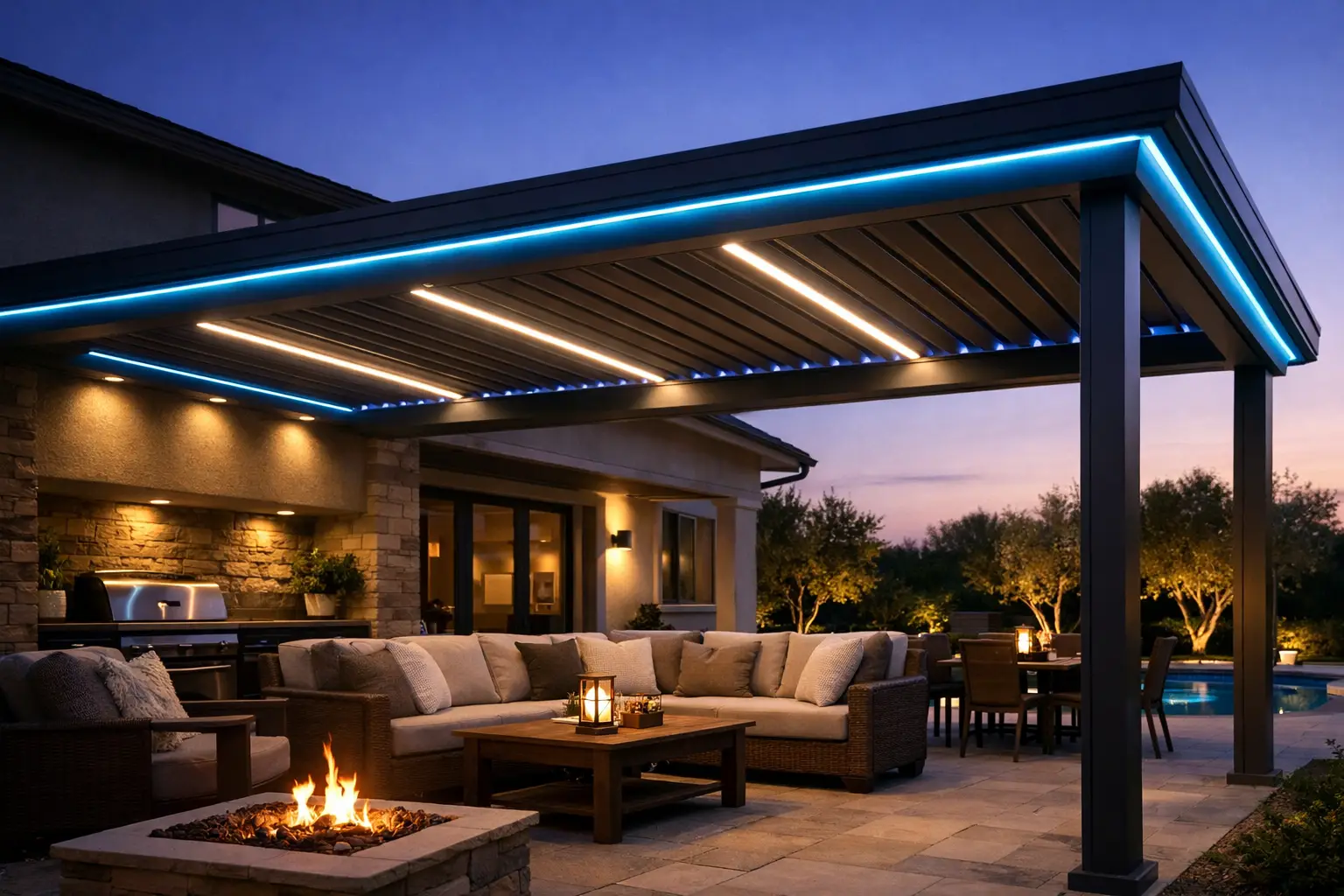
A pergola can look stunning at noon and feel flat after sunset. That is usually not a structure problem. It is a lighting problem. The best integrated pergola lighting design ideas treat illumination as part of the architecture from the start, not as an accessory added later when the project is already finished.
For Florida homeowners investing in a premium outdoor living space, lighting has to do more than create ambiance. It needs to support evening dining, safe circulation around a pool deck or patio, and a refined visual experience that matches the caliber of the home. It also needs to work cleanly within a high-performance pergola system, without exposed fixtures, cluttered wiring, or design choices that feel dated in two years.
What makes integrated pergola lighting worth doing right
Integrated lighting changes how a pergola is used. A well-lit structure extends dinner past sunset, makes early morning coffee feel intentional, and gives the patio a finished, architectural presence even when no one is outside. It also improves visibility at steps, seating zones, outdoor kitchens, and transition points between the house and yard.
In a luxury setting, the bigger advantage is visual discipline. When lighting is built into the pergola itself, the result feels quieter and more custom. Fixtures do not compete with the frame. Wiring stays concealed. The light appears to come from the structure rather than being attached to it as an afterthought.
That distinction matters even more with modern aluminum pergolas. Clean lines, motorized louvers, and automated features call for lighting that is equally deliberate. If the pergola is engineered to perform in Florida weather, the lighting plan should reflect the same level of precision.
Integrated pergola lighting design ideas that elevate the whole space
The strongest lighting plans usually combine a few layers rather than relying on one bright source. Each layer serves a purpose, and together they create comfort without glare.
Perimeter frame lighting for a soft architectural glow
One of the most effective integrated pergola lighting design ideas is placing LED lighting within the pergola frame. This creates an even wash of light around the interior edge of the structure and defines the ceiling plane at night.
The benefit is balance. Perimeter lighting makes the space feel finished and upscale, but it does not overpower conversation or dining. It also complements contemporary pergola design because the source stays visually discreet. If you want the pergola to read as an extension of the home rather than a separate backyard feature, this approach does that well.
Louver-integrated lighting for adaptable ambiance
When a pergola includes motorized louvers, lighting can be coordinated with that feature instead of working against it. Louver-integrated lighting supports a cleaner appearance and can help maintain consistent illumination as the space shifts from open sky to covered shade.
This is especially useful for homeowners who use their pergola throughout the day and evening. The mood can feel open and bright during a casual gathering, then more intimate after dark. The exact effect depends on beam spread, color temperature, and fixture placement, which is why planning matters. Too much direct light can create glare on dining surfaces. Too little can leave the center of the pergola underlit.
Recessed downlighting over dining and seating zones
If your pergola covers a defined dining table or lounge arrangement, recessed downlights can give you more task-oriented illumination. This is less about mood and more about usability. You want enough light to serve food, read a phone, or move around comfortably without turning the space into a spotlighted patio.
The trade-off is that downlighting needs restraint. In a luxury outdoor setting, harsh pools of light can flatten the design. Warmer tones and careful spacing usually produce a better result than a grid of overly bright fixtures. A consultative design-build approach helps here because fixture placement can align with furniture layout from the beginning.
Uplighting to emphasize columns and ceiling depth
Not every lighting effect needs to point downward. Subtle uplighting built into select structural points can add depth and drama, especially on taller pergolas or installations with a strong architectural presence.
This approach works best as an accent layer rather than the main source of illumination. It can make columns feel more substantial and add dimension to the ceiling above. Used sparingly, it brings a custom-home sensibility to the outdoor room. Used too heavily, it can feel theatrical. That is a real trade-off, and one worth discussing before installation.
Step and edge lighting for safety without visual clutter
For pergolas built near pools, raised patios, or tiered hardscapes, low-level lighting at steps and edges is one of the smartest additions you can make. It improves safety, but it also keeps the visual language of the space refined.
Rather than relying on oversized path fixtures, integrated step and edge lighting marks transitions with a lower, softer line of illumination. This is particularly valuable for homeowners who entertain at night or want the outdoor area to feel polished from every angle. Safety features do not need to look utilitarian when they are designed into the project.
Color temperature matters more than most homeowners expect
Brightness gets attention, but color temperature usually determines whether the pergola feels welcoming or clinical. For most luxury residential applications, a warm white tone tends to be the better fit. It flatters finishes, softens shadows, and supports the relaxed feeling people want in an outdoor retreat.
Cooler tones can sometimes work in highly contemporary settings, but they need to be handled carefully. In many cases they read too stark at night, especially near landscaping, pools, or warm-toned exterior materials. If your home already has established exterior lighting, matching or complementing that temperature will help the pergola feel intentional rather than visually disconnected.
Dimming is not optional in a premium pergola
A pergola that looks perfect during a dinner party may feel too bright for a quiet evening outside. That is why dimming is so important. It gives the space flexibility without requiring multiple unrelated fixtures or temporary workarounds.
This is one of those details that separates a decorative lighting package from a true outdoor living system. The ability to shift from brighter task lighting to softer ambient light changes how often the pergola gets used. It also helps protect the design from a common mistake – overlighting the structure because there is no way to adjust intensity later.
Design for Florida conditions, not just a showroom photo
Outdoor lighting decisions in Florida should account for more than appearance. Heat, humidity, salt exposure in coastal areas, and seasonal storms all affect long-term performance. A beautiful concept can become frustrating if the system was not designed for real environmental demands.
That is why integrated lighting should be considered alongside the pergola’s engineering, finish quality, and installation standards. In coastal markets such as Naples, Boca Raton, or Tampa, homeowners are right to ask how the entire system is built to last, not just how it looks on day one. Premium outdoor living requires both aesthetics and resilience.
The same thinking applies to warranties. Lighting is easier to enjoy when it is part of a professionally designed, professionally installed system backed by meaningful coverage. That lowers ownership risk and gives the project more lasting value.
How to choose the right integrated pergola lighting design ideas for your home
The right plan depends on how you actually live outside. If your pergola is primarily for dining, prioritize a layered approach with soft perimeter lighting and focused illumination over the table. If it is more of a lounge setting, indirect ambient light may be enough, with accent lighting used to shape the mood.
If the pergola sits beside a pool, think carefully about transitions, steps, and how light reflects off water at night. If it connects directly to the home, the goal may be visual continuity so the outdoor room feels like a natural extension of the interior. A larger property may call for the pergola to act as a visual destination after dark, while a more compact backyard may benefit from lighting that keeps the footprint calm and understated.
This is where a specialist builder brings real value. The best outcome is rarely about choosing the most fixtures. It is about aligning lighting with architecture, furniture placement, controls, and performance expectations from the very beginning. That is the difference between an attractive pergola and an outdoor space that feels fully resolved.
For homeowners investing in a custom aluminum pergola, lighting should never be the last decision made. When it is integrated thoughtfully, it adds comfort, safety, and a level of finish that is visible every evening the moment the sun goes down. If your goal is an outdoor space that feels as refined and dependable as the rest of your home, start with the lighting plan early and let the structure support it beautifully.