
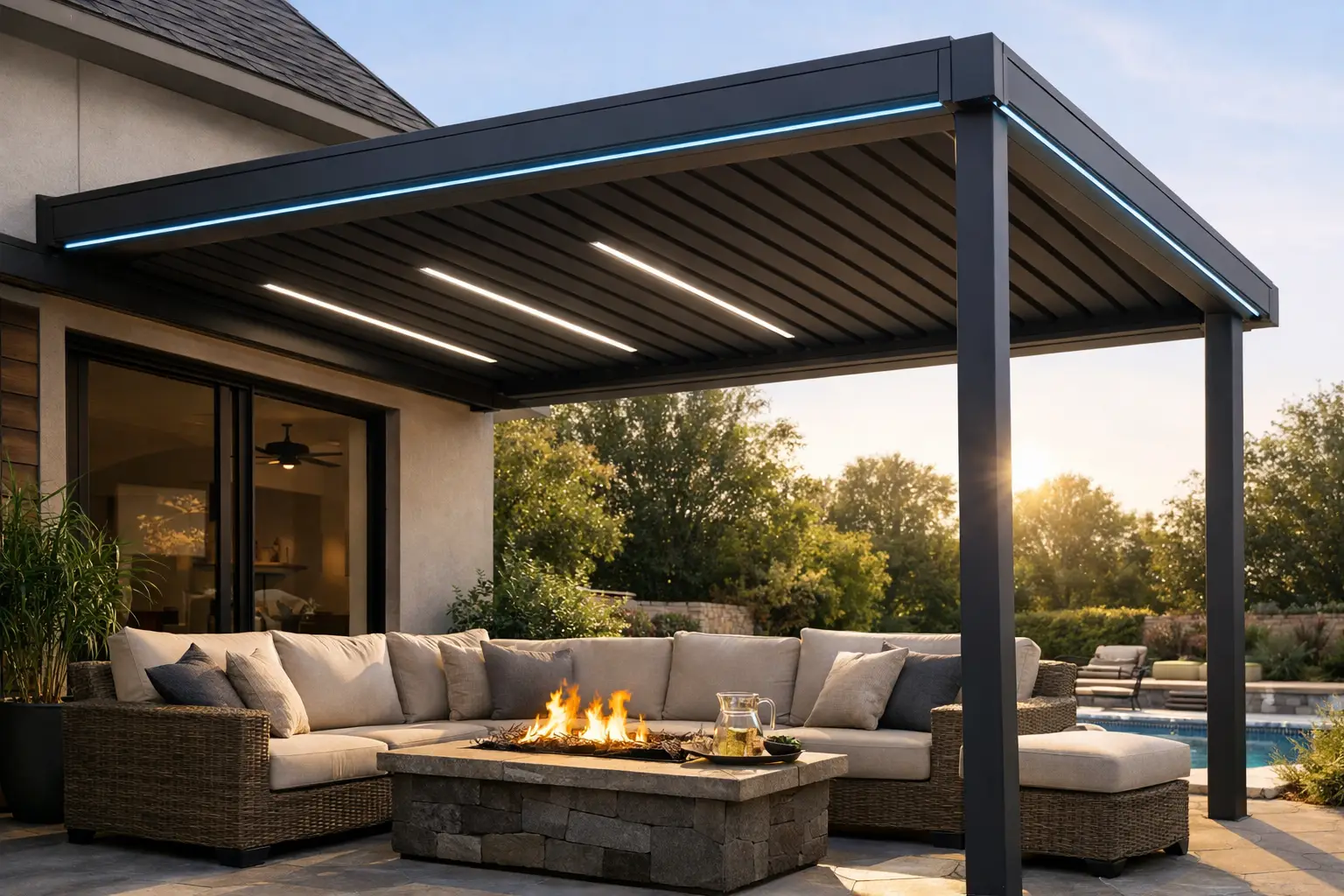
By 3:30 p.m. in Florida, a beautiful patio can turn unusable. The angle of the sun shifts, the deck heats up, glare bounces off the pool, and the space you planned for outdoor dining suddenly feels exposed. If you are looking for a patio pergola that blocks afternoon sun, the answer is not just more shade. It is controlled shade, placed and engineered correctly for the way your home actually faces.
That distinction matters. Many homeowners assume any overhead structure will solve late-day heat and glare. In practice, afternoon sun is more demanding than midday sun because it arrives at a lower angle. Light pushes in from the west and southwest, slipping under open roof lines and reaching deep into the seating area. A pergola that looks impressive at noon can still leave you squinting during dinner.
What makes a patio pergola that blocks afternoon sun work
The best-performing pergolas do two jobs at once. First, they reduce overhead solar exposure. Second, they address the low-angle light that comes in from the side. That is why a luxury aluminum pergola with motorized louvers often outperforms a fixed open-top design when comfort is the priority.
Adjustable louvers give you control over how much direct light enters the patio throughout the day. In the morning, you may want the roof more open to keep the space bright. In the afternoon, you can rotate the louvers to tighten shade, reduce glare, and improve comfort without making the area feel closed off. That flexibility is what separates a decorative feature from a true outdoor living system.
Still, louvers alone are not always enough if your patio takes intense western exposure. When the sun drops lower, side protection becomes just as important as overhead coverage. This is where integrated drop screens or privacy shades can change the experience dramatically. They intercept harsh light before it reaches your seating area and help create a cooler, more usable patio during the hours homeowners tend to entertain most.
Why west-facing patios need a different design approach
A west-facing patio is the classic trouble spot for afternoon heat. If your lanai, pool deck, or outdoor kitchen faces west, the structure needs to be designed around that reality from the beginning. Placement, projection, height, and side-screen integration all affect whether the pergola truly blocks afternoon sun or just creates partial relief.
For example, a pergola installed too high may preserve views and openness, but it can also allow more angled light underneath the roofline later in the day. A shallow projection may look proportionate to the patio slab, yet still fail to cover the seating zone when the sun is lower in the sky. These are not cosmetic details. They are performance decisions.
This is also why custom design matters more than off-the-shelf sizing. The ideal system should respond to your home’s orientation, the time of day you use the space most, nearby reflective surfaces, and even the presence of a pool, which can intensify brightness. In coastal Florida communities, where outdoor spaces are central to daily living, precision is what turns a pergola into a meaningful upgrade instead of a compromise.
Overhead shade is only part of the comfort equation
Homeowners often start with the goal of blocking sun, but they usually want a broader result. They want the patio to feel cooler, more private, and more inviting for longer stretches of the day. That means your pergola should be evaluated as part of a complete comfort strategy.
A well-designed aluminum pergola can help reduce radiant heat, cut glare on phones and tablets, and protect furnishings from prolonged sun exposure. Add motorized screens, and the space becomes even more adaptable. You gain the ability to soften the western sun without losing the architectural openness that makes an outdoor living area feel premium.
There is a trade-off, of course. The more aggressively you block afternoon sun, the more enclosed the space may feel. Some homeowners want maximum protection and are happy to prioritize shade over openness. Others prefer a lighter touch and want to preserve long sightlines to the pool or garden. The right answer depends on how you use the space and what you value most – cooler temperatures, stronger privacy, more filtered light, or a balance of all three.
Choosing louvers, screens, and orientation wisely
If your goal is a patio pergola that blocks afternoon sun, the most effective systems usually combine adjustable louvers with optional vertical shading. That combination gives you real control as weather and light conditions change.
Motorized louvers are ideal when you want immediate adjustment. They let you react to the sun’s angle, passing clouds, or a quick rain shower without interrupting the way you use the patio. Integrated screens add another layer of performance by addressing lateral sunlight, which is often the real source of discomfort in the late afternoon.
Orientation is equally important. Even a premium pergola will underperform if it is laid out without considering solar direction. A design team should evaluate where the sun travels across your property, where people actually sit, and which hours matter most to you. If you host dinners outside, the pergola should be optimized for evening comfort, not just midday coverage. If your pool deck becomes unbearable after lunch, the structure should be configured to intercept that specific exposure.
Why aluminum is the right material for Florida performance
In Florida, sun control cannot be separated from storm performance. A pergola is not just an outdoor feature. It is a permanent architectural addition exposed to heat, humidity, salt air, and hurricane conditions. That is why material and engineering deserve as much attention as shade coverage.
Architectural-grade aluminum offers a cleaner long-term ownership experience for luxury homes because it is built for durability, structural consistency, and low maintenance. More importantly, a professionally designed and installed system can be engineered to meet demanding wind requirements. For homeowners in coastal and hurricane-prone areas, that is not a bonus. It is essential.
A premium pergola should also come with meaningful warranty protection. Strong structural coverage and long-term support for motors and lighting reduce ownership risk and reinforce the idea that this is a serious home improvement, not a seasonal accessory. When you are investing in a custom outdoor environment, reliability matters just as much as appearance.
A patio pergola that blocks afternoon sun should still feel elegant
Performance is the first requirement, but luxury homeowners should not have to choose between function and design. The best pergolas are proportioned to complement the architecture of the home, not overpower it. Clean lines, integrated lighting, concealed drainage, and thoughtful color selection all contribute to a finished look that feels intentional.
This is especially important on high-end properties where the pergola may be visible from interior living spaces. From inside the home, the structure should frame views rather than interrupt them. From outside, it should read as a natural extension of the architecture. When that balance is achieved, the pergola does more than block sun. It elevates the way the entire property lives.
For many homeowners, integrated lighting is part of that equation. Once the afternoon heat is controlled, the patio becomes a place people stay into the evening. Soft overhead lighting extends usability and adds a polished, resort-style feel that makes the space more inviting for family dinners, cocktails with guests, or quiet nights outside.
What to expect from a professional design-build process
A successful pergola project starts with a conversation about how the space fails today. Is the problem direct glare at the dining table? Excessive heat over the lounge area? Too much sun entering the home through rear glass in the late afternoon? The better the diagnosis, the better the outcome.
From there, a consultative design-build team can assess dimensions, orientation, engineering requirements, permitting, and the integration of features like motorized louvers, screens, and lighting. This is where experience matters. The patio pergola that blocks afternoon sun most effectively is rarely the one chosen from a generic brochure. It is the one configured around your property, your lifestyle, and your tolerance for trade-offs.
In markets like Boca Raton, Naples, Tampa, and other Florida coastal communities, homeowners are increasingly treating pergolas as true living-space investments. That shift makes sense. When designed properly, a pergola can turn a harsh, underused patio into one of the most comfortable and desirable areas of the home.
At the premium end of the market, the difference is not just what you buy. It is how it is designed, permitted, installed, and supported after the project is complete. That is where a specialist builder earns trust.
If your patio becomes unusable when the sun moves west, do not settle for a structure that only looks the part. The right pergola should give you comfort on demand, confidence in storm season, and a patio you can actually enjoy when the day is at its brightest.