
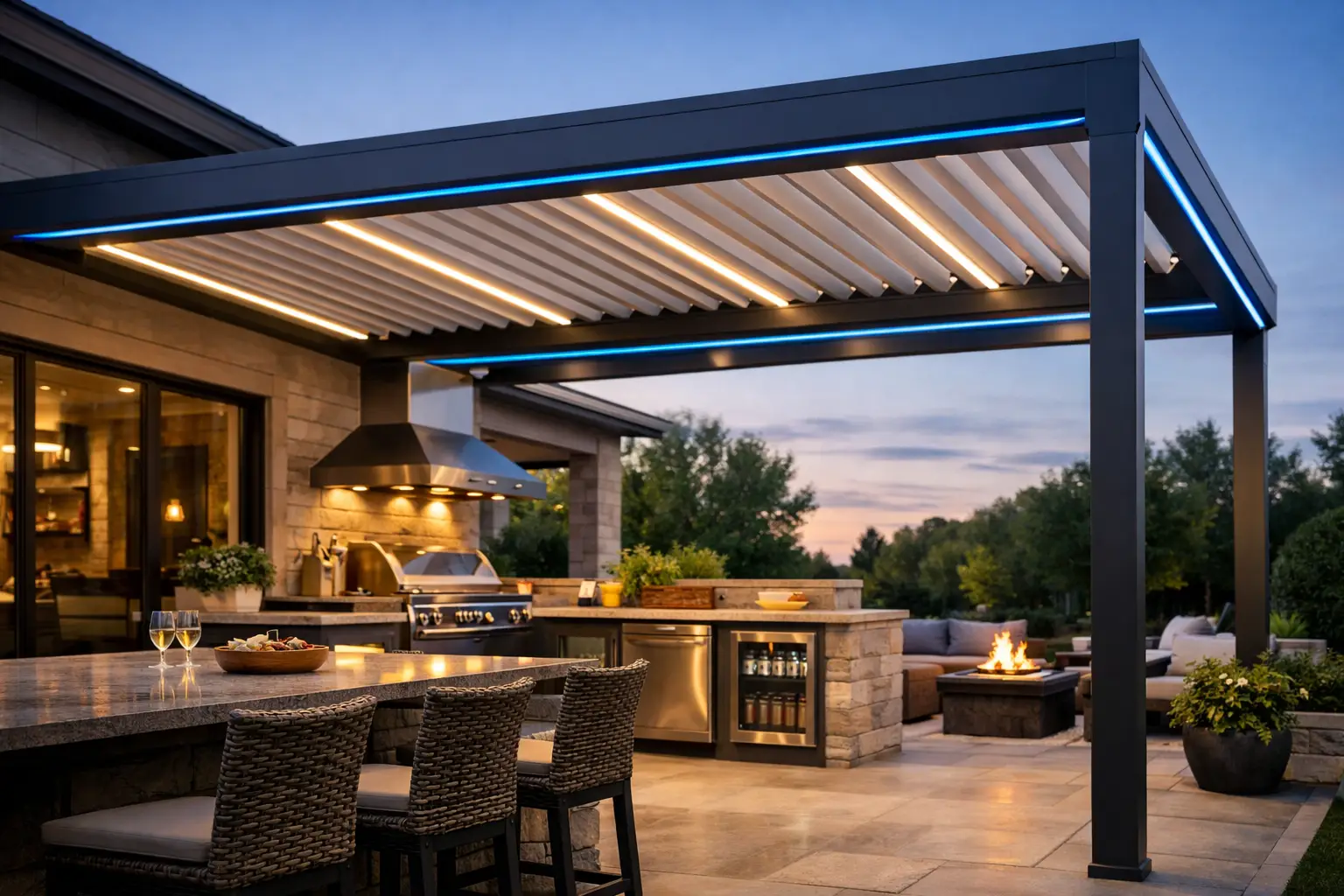
An outdoor kitchen can look exceptional on paper and still underperform the first time you host in July. The issue is rarely the grill or the countertops. It is usually the cover overhead. A smart pergola design for outdoor kitchen area planning gives you shade where the heat builds, ventilation where smoke collects, and weather protection that makes the space feel like a true extension of the home rather than a nice idea you only use seasonally.
For Florida homeowners, that standard is even higher. The structure has to do more than complete the look. It needs to stand up to intense sun, passing storms, salt air in coastal markets, and the practical realities of cooking outside. When the pergola is engineered correctly, the kitchen becomes more comfortable, more usable, and far more valuable.
What good pergola design changes in an outdoor kitchen
A pergola above an outdoor kitchen is not just an architectural accent. It affects how the entire space works. Shade changes surface temperatures. Roof configuration changes airflow. Lighting placement affects prep visibility after sunset. The location of posts affects circulation around appliances, bar seating, and serving zones.
That is why premium projects start with function before finish selections. A beautiful pergola that traps heat over the cooking line or forces awkward traffic around support columns will feel compromised from day one. The best designs resolve those issues early, then layer in the visual refinement homeowners expect from a luxury outdoor living investment.
In practical terms, the pergola should make the kitchen easier to use at noon, at dinner, and during a quick weather shift. If it only looks impressive in listing photos, it is not doing enough.
Pergola design for outdoor kitchen area starts with layout
The first decision is coverage strategy. Some homeowners want the pergola centered over the entire kitchen and dining area for a unified ceiling plane. Others prefer to cover the cooking and prep zone while leaving the adjacent lounge or sun shelf open. Neither approach is universally right. It depends on the size of the patio, the home elevation, and how you entertain.
If the kitchen includes a grill, sink, refrigeration, and bar seating, full-span coverage often creates the cleanest result. It helps the space read as a finished outdoor room and provides more consistent comfort. If the kitchen is secondary to a pool-focused backyard, partial coverage may preserve openness while still protecting the highest-use zone.
Clearance matters as much as footprint. Too low, and the structure can feel heavy while limiting ventilation. Too high, and you lose the sense of shelter that makes the space inviting. A balanced pergola height should relate to the home architecture, maintain openness, and still create meaningful shade at the hours you actually use the kitchen.
Plan around heat, smoke, and movement
Outdoor kitchens generate concentrated heat, especially around grills and side burners. That means the pergola design should support air movement rather than trap it. Adjustable louvers are especially effective here because they allow you to tune shade and ventilation at the same time. When the angle is right, you can reduce direct sun without creating a stagnant pocket over the cooking area.
Circulation is another detail that separates a polished design from an average one. Guests tend to gather at the bar, pass behind the cook, and move between the kitchen, dining area, and pool. Posts should not pinch those pathways. Appliance doors should open freely. Seating should feel intentional rather than squeezed under the edge of the structure.
The best materials for Florida are about performance, not trends
For a luxury outdoor kitchen, the pergola needs to perform as a permanent architectural feature. In Florida, that means resisting corrosion, handling high humidity, and maintaining a sharp finish under intense UV exposure. Architectural-grade aluminum is the category homeowners gravitate toward when they want a premium look with serious structural reliability.
This is not a place to think short term. Cooking areas introduce grease, heat, moisture, and regular cleaning. The pergola material should tolerate that environment without becoming a maintenance project. It should also be engineered for local weather exposure, particularly in hurricane-prone and coastal communities where decorative structures can quickly become liabilities if they are not built to a much higher standard.
That engineering piece is where many buying decisions become clearer. A pergola over an outdoor kitchen is a major visual and functional centerpiece. It should be designed to look refined, but it should also be backed by real performance standards, wind resistance, and warranty coverage that make sense for long-term ownership.
Shade and rain control matter more than most homeowners expect
The common mistake is assuming any overhead structure will solve comfort. It will not. Slatted systems can still leave the cook in direct sun during peak afternoon hours if the orientation is wrong. Fixed covers can create deep shade but limit flexibility when you want more light in cooler months. The right answer depends on exposure and how often the space is used.
Motorized louvers are often the most versatile solution because they let the homeowner respond to conditions in real time. Open them for airflow during a warm evening. Tilt them to cut glare at lunch. Close them when a sudden shower rolls through and the meal is not over. That level of control changes how often the outdoor kitchen gets used, especially in South Florida and Gulf Coast markets where weather can shift quickly.
Rain management should be considered from the start, not added as an afterthought. Water needs to move off the pergola in a controlled way so it does not dump at the edge of the kitchen or create splash zones near seating and finishes. Integrated drainage keeps the structure cleaner and makes the space more comfortable during and after storms.
Lighting should be built in, not patched in later
Outdoor kitchens are evening spaces. If the pergola does not support quality lighting, the project is unfinished. Prep surfaces need task lighting. Dining areas need a warmer, more relaxed mood. Walkways and transitions need visibility without glare.
Integrated lighting keeps the ceiling plane clean and avoids the improvised look of surface-mounted fixtures added after installation. It also gives homeowners more control over how the space feels, from bright and practical during cooking to soft and inviting once dinner is served. In higher-end projects, that difference is obvious immediately.
Pergola design for outdoor kitchen area should match the home
A pergola should not look like it landed on the patio from a different property. Proportion, color, and detailing all need to align with the home’s architecture. On a clean-lined coastal residence, the pergola may call for a restrained profile and crisp geometry. On a Mediterranean-inspired home, the spacing, scale, and finish selection may need to feel more substantial and integrated with the surrounding hardscape.
This is where custom design matters. The goal is not to make the pergola disappear. It should have presence. But that presence should feel architectural, not added on. When the pergola aligns with the home’s rooflines, outdoor flooring, kitchen cabinetry, and pool design, the entire backyard feels more expensive and more resolved.
Color selection deserves more attention than homeowners sometimes give it. Dark finishes can look striking and contemporary, but in some settings a lighter tone will better complement the home and keep the structure visually lighter. The right answer depends on the palette of the residence, the amount of surrounding greenery, and how bold you want the pergola to read from inside the house.
What premium buyers should ask before moving forward
If you are investing in a pergola above an outdoor kitchen, the conversation should go well beyond style boards. Ask how the structure is engineered for wind load. Ask how water is managed. Ask how lighting, motorization, and optional shades are integrated. Ask what the warranty actually covers and for how long.
It is also worth asking who is handling design, permitting, and installation. In Florida, the difference between a smooth project and a frustrating one often comes down to process discipline. Homeowners with high standards usually want a single expert team that can manage the full path from estimate to completion, communicate clearly, and build with local conditions in mind.
That is one reason many luxury homeowners choose specialized firms like enVision Pergola rather than treating the pergola as a generic add-on. When the structure is central to the kitchen’s comfort, appearance, and storm readiness, expertise matters.
A well-designed pergola does more than cover an outdoor kitchen. It makes the space feel intentional, comfortable, and ready for real life in Florida. If the design is handled with the right level of engineering and care, your next dinner outside will feel less like a workaround for the weather and more like the reason you invested in the backyard in the first place.