
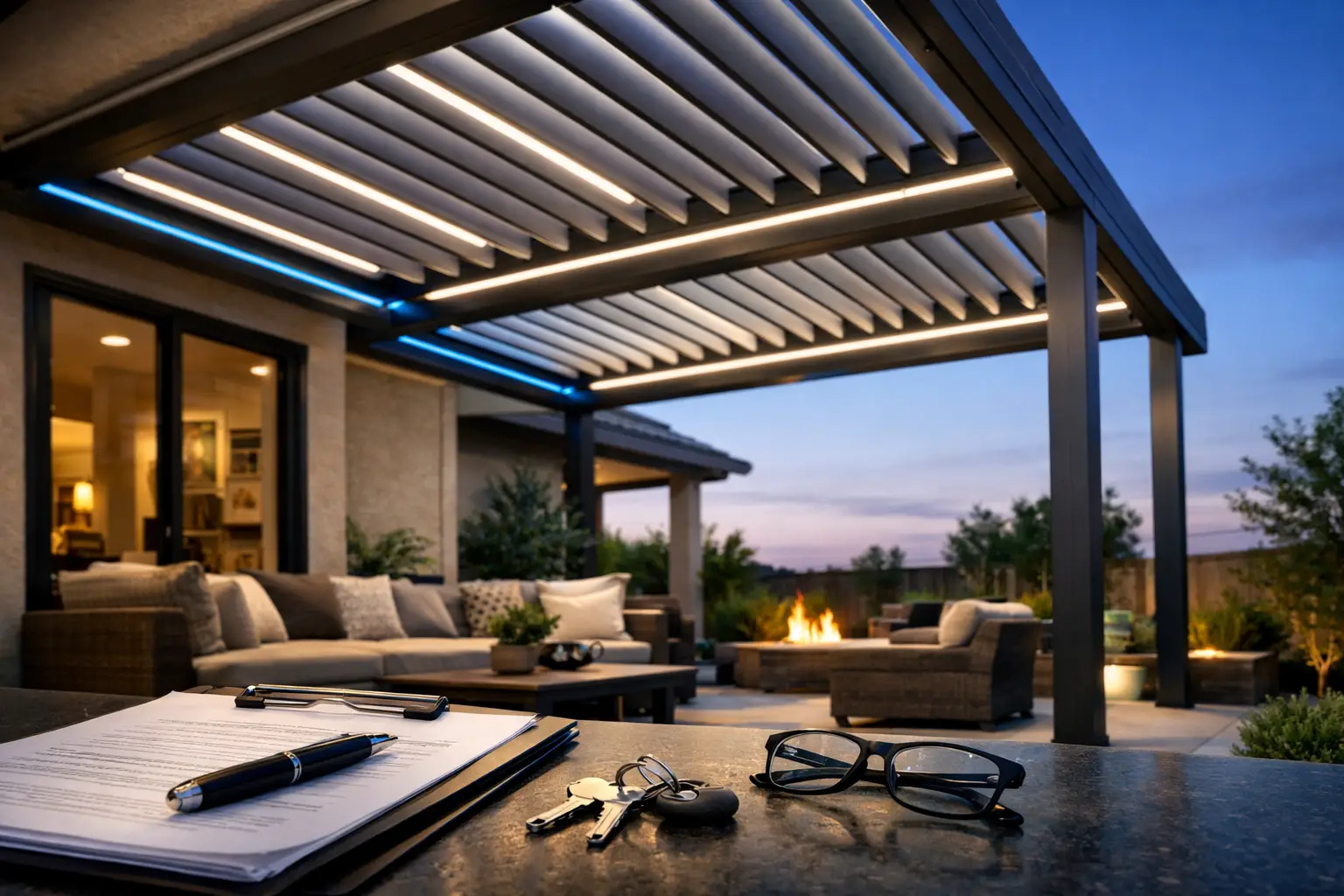
A pergola can look flawless on day one and still become an expensive mistake if the warranty is thin, vague, or full of exclusions. When homeowners ask about pergola warranty coverage what to check, they are usually trying to avoid a problem that only shows up later – after a storm, after a motor fails, or after they realize the installer and manufacturer point fingers at each other.
For a premium outdoor structure, the warranty should do more than sound reassuring in a proposal. It should tell you exactly what is covered, for how long, who stands behind each component, and what could void protection. In Florida, where sun, salt air, wind, and driving rain test every exterior product, those details matter even more.
Pergola warranty coverage: what to check first
Start with the most basic question: is the warranty covering the structure, the finish, and the moving components separately, or is everything bundled into a single broad statement? Many buyers assume one warranty covers the whole system equally. It usually does not.
A well-built aluminum pergola often includes multiple layers of coverage. The frame may carry one term, the powder-coated finish another, and motors, lighting, or controls their own coverage periods. That is normal. What matters is whether those terms are clearly written and easy to verify before you sign.
If a salesperson says, “It has a great warranty,” that is not enough. Ask for the actual warranty language. A premium purchase deserves premium clarity.
Structural coverage matters most
The structural warranty is the backbone of the entire promise. This is the part that should protect against defects in the primary frame and major load-bearing components. If the pergola is marketed as engineered for demanding weather, the structural warranty should reflect that confidence.
Read this section carefully. You want to know whether coverage applies only to manufacturing defects or also to failure under expected use. Those are not the same thing. A narrow warranty may only cover a part that was made incorrectly, while excluding issues tied to installation conditions, fasteners, movement, or environmental exposure.
For Florida homeowners, this becomes especially important when a pergola is sold on storm-resilience claims. A structure can be engineered to a high wind standard, but warranty protection may still depend on proper permitting, approved installation methods, and site-specific conditions. That is reasonable, but it should be transparent.
A strong structural warranty is a good sign. A long term with vague language is not automatically better than a slightly shorter term with very clear protection.
Ask how wind claims and warranty terms work together
This is where many buyers miss the fine print. If a pergola is described as hurricane-rated or built for extreme wind loads, ask whether the warranty covers structural failure caused by qualifying wind events, or whether storm damage is excluded and left to insurance.
Sometimes the answer depends on whether the event exceeded the rated design conditions, whether the unit was closed or open at the time, or whether accessories changed the load profile. That does not make the product weak. It means engineering claims and warranty claims are related, but they are not identical.
An experienced contractor should be able to explain the difference without hedging.
Do not overlook finish coverage
Luxury outdoor products are judged by appearance as much as performance. A pergola can remain standing for years and still disappoint if the finish chalks, peels, blisters, fades unevenly, or corrodes near the coast.
Finish coverage deserves its own review. Ask what exactly is protected against and under what conditions. Coastal homes in places like Naples, Boca Raton, or Jupiter face more aggressive environmental exposure than inland properties. Salt air, humidity, and intense UV can accelerate wear, so you need to know whether those conditions are fully contemplated or quietly limited.
Some finish warranties cover defects in application but not cosmetic changes over time. Others define acceptable fading or gloss loss so broadly that a homeowner may feel unprotected despite having paperwork in hand. This is one of those areas where the wording matters more than the headline number.
Motors, lighting, and controls usually have separate coverage
Modern pergolas often include motorized louvers, integrated lighting, remote controls, sensors, and automated shades. These convenience features elevate the experience, but they also introduce additional points of failure. The warranty for these components should be specific, not implied.
Ask who manufactures the motors and controls, how long they are covered, and whether labor is included if a part fails. A 20-year component warranty sounds excellent, but if you are responsible for diagnostic visits, removal, reinstall, or shipping after year two, the ownership picture changes.
This does not mean long motor coverage is less valuable. It means you should understand whether the warranty covers the part only or the full service event. For many homeowners, that difference is more important than the raw number of years.
Pergola warranty coverage what to check in labor and installation
This is where premium providers separate themselves. A manufacturer warranty covers the product, but installation workmanship often falls under the contractor. If those responsibilities are not clearly divided, you may end up in the middle of a dispute.
Ask whether labor is covered and for how long. Then ask a more direct question: if something goes wrong, who handles the claim from start to finish? The best answer is simple and reassuring. You want one accountable team that manages the process, communicates clearly, and does not leave you chasing separate vendors.
That is especially important for custom pergolas involving design, permitting, electrical integration, and professional installation. A full-service builder should be able to stand behind both the system and the execution in a way that feels organized and deliberate.
Look closely at exclusions and maintenance requirements
Every warranty has exclusions. That alone is not a red flag. What matters is whether the exclusions are reasonable and disclosed early.
Common exclusions can include improper use, unauthorized modifications, neglected maintenance, acts of nature, chemical exposure, or damage caused by nearby construction or impact. For a high-end pergola, the maintenance requirements should also be clear. If routine cleaning, drainage upkeep, or periodic inspections are required to keep the warranty valid, that should be stated plainly.
This is one of the easiest places for expectations to drift apart. A homeowner may think normal coastal conditions are exactly what the pergola was built for. A weak warranty may treat those same conditions as grounds to narrow coverage. Read this section with a practical eye.
Watch for transferability rules
If you may sell your home in the next several years, ask whether the warranty transfers to a new owner. Transferable coverage can strengthen resale confidence, especially for buyers evaluating a high-value outdoor improvement.
Some warranties transfer once, some require registration within a tight timeframe, and some end the moment ownership changes. If you are investing in a custom architectural feature, that detail is worth knowing upfront.
Registration, claim process, and response time
A warranty is only as useful as the process behind it. Ask whether registration is required after installation and who handles it. Ideally, it is completed for you or at least guided carefully so nothing is missed.
Then ask how claims are submitted, what documentation is needed, and how long service typically takes. Premium homeowners are not just buying protection on paper. They are buying confidence that if a motor stalls or a component needs attention, the path to resolution is efficient.
A vague answer here usually signals a weak support structure. A strong provider will explain the process in plain language and set realistic expectations.
The best warranty is backed by the right company
Even a strong written warranty loses value if the company behind it is hard to reach, slow to respond, or no longer operating in your market. That is why the provider matters as much as the warranty document itself.
Look for a company with a stable local presence, a reputation for communication, and a consultative process from design through installation. In a market like Florida, where code, permitting, engineering, and weather exposure all shape long-term performance, experience is not a luxury. It is part of the protection.
That is one reason many homeowners prefer working with a specialist such as enVision Pergola rather than piecing together product supply and installation from separate sources. When one team manages design, permitting, installation, and service expectations, warranty conversations tend to be clearer from the beginning.
What a confident buyer should ask before signing
Before you move forward, ask for the full written warranty and review five things: the structural term, finish coverage, motor and lighting coverage, labor responsibility, and exclusions tied to storms or coastal exposure. Then ask who will actually handle service if needed.
If the answers are precise, consistent, and easy to document, you are likely dealing with a serious provider. If the language shifts depending on who you ask, slow down.
A pergola warranty should match the level of the investment. You are not buying patio furniture. You are adding a permanent outdoor living structure that needs to perform beautifully, hold up in demanding conditions, and come with support that feels just as engineered as the product itself.
The right warranty does more than protect against defects. It lets you enjoy the space with far less second-guessing, which is exactly what a premium outdoor retreat should deliver.