
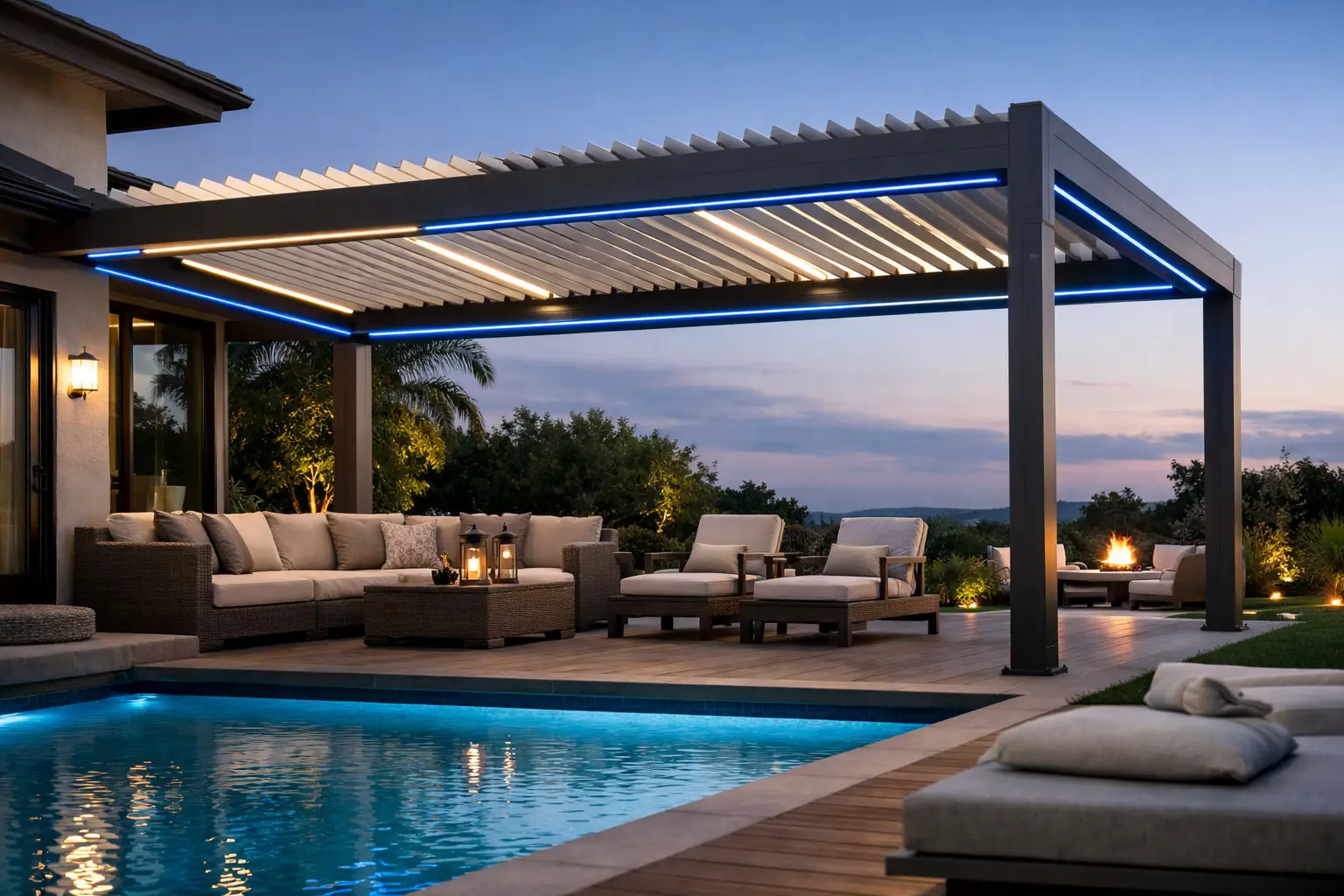
A pool deck can look finished and still feel incomplete. The water is beautiful, the pavers are clean, the chaise lounges are in place – but without overhead structure, the space often feels exposed during peak sun, underused in light rain, and less comfortable for long afternoons outdoors. That is where smart pool deck pergola design inspiration becomes more than a style exercise. It becomes a way to turn the pool area into a true living space.
For Florida homeowners, the stakes are higher. A pergola near a pool has to do more than frame a view. It has to handle harsh UV, humidity, wind exposure, and the expectation that a luxury outdoor investment should look exceptional year after year. The best designs balance architecture, comfort, and engineering from the start.
What Great Pool Deck Pergola Design Inspiration Gets Right
The strongest pergola concepts do not begin with trim details or decorative extras. They begin with how the space will actually be used. Some homeowners want a shaded lounge for quiet mornings and late afternoons. Others want an outdoor dining area beside the pool, or a covered zone that supports entertaining after sunset with lighting and motorized shade control.
That distinction matters because the pergola should not feel like an object dropped onto the deck. It should feel integrated with the home, the pool geometry, and the way people move through the space. A rectangular pool paired with a crisp modern pergola can create strong visual order. A freeform pool may benefit from a more carefully positioned structure that anchors one side of the deck without fighting the curves.
Scale is equally important. A pergola that is too small can look tentative next to an expansive poolscape. One that is too large can dominate the deck and block sightlines from the home. The right proportions create presence without heaviness.
1. Frame a Luxury Lounge Zone
One of the most effective ideas is also one of the simplest – use the pergola to define a dedicated lounge zone just off the water. This works especially well when the pool deck is large enough to create a clear shift from swimming area to relaxation area.
A pair of deep seating arrangements under a motorized louvered pergola instantly changes how the deck functions. The space becomes usable at noon, not just early morning and evening. It also creates a visual destination from inside the home, which is a major part of luxury outdoor design. When the pergola is aligned with major doors or large glass openings, the backyard feels more intentional and more architectural.
2. Use the Pergola as a Poolside Dining Room
For homeowners who entertain often, a pergola can create an outdoor dining room that feels protected but still open to the air. This is particularly valuable on pool decks where unshaded dining tables tend to sit empty during the hottest part of the day.
A clean-lined aluminum pergola over a substantial dining table adds structure and purpose. Integrated lighting extends the space into the evening, while adjustable louvers let you control sun and airflow throughout the day. The result is not just a prettier deck. It is a more functional one.
There is a trade-off, though. Dining areas need enough clearance around chairs and circulation paths, especially when wet swimmers are moving between the pool and the house. In tighter layouts, a lounge-focused pergola may feel more comfortable than a formal dining setup.
3. Create a Resort-Style Transition From House to Pool
Some of the best pool deck pergola design inspiration comes from properties that use the pergola as a transition element rather than a single destination. Instead of placing it at the far edge of the deck, position it between the home and pool to create a shaded threshold.
This approach works well for larger Florida homes where the rear elevation deserves a strong architectural connection to the outdoor living area. A pergola can visually extend the home’s lines, soften the jump from interior to exterior, and make the pool deck feel like part of a complete composition.
In premium projects, this transition zone often includes seating, outdoor dining, or even a full summer kitchen nearby. The pergola then serves as the central organizing feature rather than a secondary accessory.
4. Add Motorized Louvers for Real Control
Fixed overhead slats can look attractive, but they do not offer the same level of daily comfort as motorized louvers. Around a pool, where light conditions shift quickly and comfort matters, adjustability is a major advantage.
Open louvers can bring in sun during cooler mornings. Closed louvers can create shade at midday or provide protection during a passing shower. For homeowners who expect a premium outdoor experience, this kind of control is often what separates a decorative pergola from a high-performance one.
There is also a visual benefit. Motorized louvered systems typically have a cleaner, more architectural profile that suits upscale homes well. On modern and transitional properties, that sharper aesthetic can elevate the entire pool deck.
5. Integrate Lighting From the Beginning
Too many poolside structures are designed for daylight only. That is a missed opportunity. A luxury pool area should perform after sunset, and the pergola is one of the best places to build that experience.
Integrated LED lighting keeps the ceiling plane clean and avoids the clutter of add-on fixtures. It can highlight seating, define dining space, and make the deck feel polished at night without harsh glare. If your pool already has waterline or landscape lighting, the pergola lighting should complement it rather than compete with it.
Warm, even illumination usually feels more refined than overly bright task lighting in a lounge setting. The goal is atmosphere with clarity, not a floodlit backyard.
6. Use Automated Shades Where the Sun Is Most Aggressive
Florida sun is not just bright. It is directional, intense, and persistent. On many pool decks, overhead coverage alone is not enough, especially in late afternoon when low-angle sun cuts across the seating area.
This is where automated shades can make a dramatic difference. They create privacy, reduce glare, and improve comfort without closing the space off permanently. In west-facing or waterfront settings, they can be the feature that makes the pergola usable when it would otherwise be avoided.
It depends on the site, of course. A heavily landscaped backyard may not need as much side protection as an exposed coastal property. But on open pool decks, shades often turn a good design into a genuinely high-performing one.
7. Match the Pergola to the Home’s Architecture
The pergola should feel custom to the house, not generic to the category. On a contemporary home, that usually means strong horizontal lines, minimal visual clutter, and a finish that coordinates with window frames, railings, or roof accents. On a more coastal luxury home, the structure may still be crisp and modern but softened by furnishings, stone, or a lighter palette.
This is one reason custom design matters. The right beam proportions, column placements, and finish selections can make the pergola feel original to the property. The wrong choices can make even an expensive installation feel like an afterthought.
8. Respect Wind Exposure and Engineering Realities
This is the part many inspiration articles skip, but Florida homeowners should not. A pool deck pergola sits in one of the most exposed areas of the property. Open yard conditions, waterfront lots, and broad deck layouts can all increase wind impact.
That means design decisions should be filtered through structural performance, not just appearance. Column placement, attachment method, span capability, and code compliance all matter. A premium pergola should be engineered for local conditions and installed with the same seriousness as any other architectural addition.
For homeowners in coastal and hurricane-prone areas like Naples, Boca Raton, or Tampa, this is not a secondary issue. It is part of what protects the investment. A beautiful pergola that is not designed for Florida exposure is not truly a luxury solution.
9. Keep the Deck Layout Comfortable, Not Crowded
A common mistake is trying to fit too much under or around the pergola. The pool deck needs breathing room. Lounge chairs still need sun. Walkways need to stay clear. The view of the water should remain open from key vantage points.
That usually means choosing one primary function for the pergola and supporting it well instead of forcing multiple competing uses into a single footprint. A spacious lounge area often feels more luxurious than an overpacked mix of seating, dining, and accessories.
10. Treat the Pergola as a Long-Term Home Upgrade
The best inspiration is not only visual. It is practical. A pergola on a pool deck should add comfort immediately, but it should also hold its value over time through durable materials, low maintenance expectations, and thoughtful integration with the property.
That is why discerning homeowners tend to look beyond appearance alone. Warranty coverage, weather resistance, finish quality, and installation standards all shape the ownership experience. A concierge-style process also matters more than people expect. Clear timelines, proactive communication, and professional permitting can make a complex outdoor project feel controlled from day one.
For homeowners who want a poolside structure that is as dependable as it is striking, this is where a specialist builder earns attention. A company like enVision Pergola approaches the project as both a design statement and an engineered system, which is exactly how a premium Florida pergola should be handled.
The right pergola does more than add shade to a pool deck. It gives the entire backyard a center of gravity – a place to gather, relax, entertain, and stay outside longer with far more comfort. If you are collecting ideas, start by asking not what looks good in a photo, but what will feel exceptional on your property in July, in a passing storm, and five years from now.