
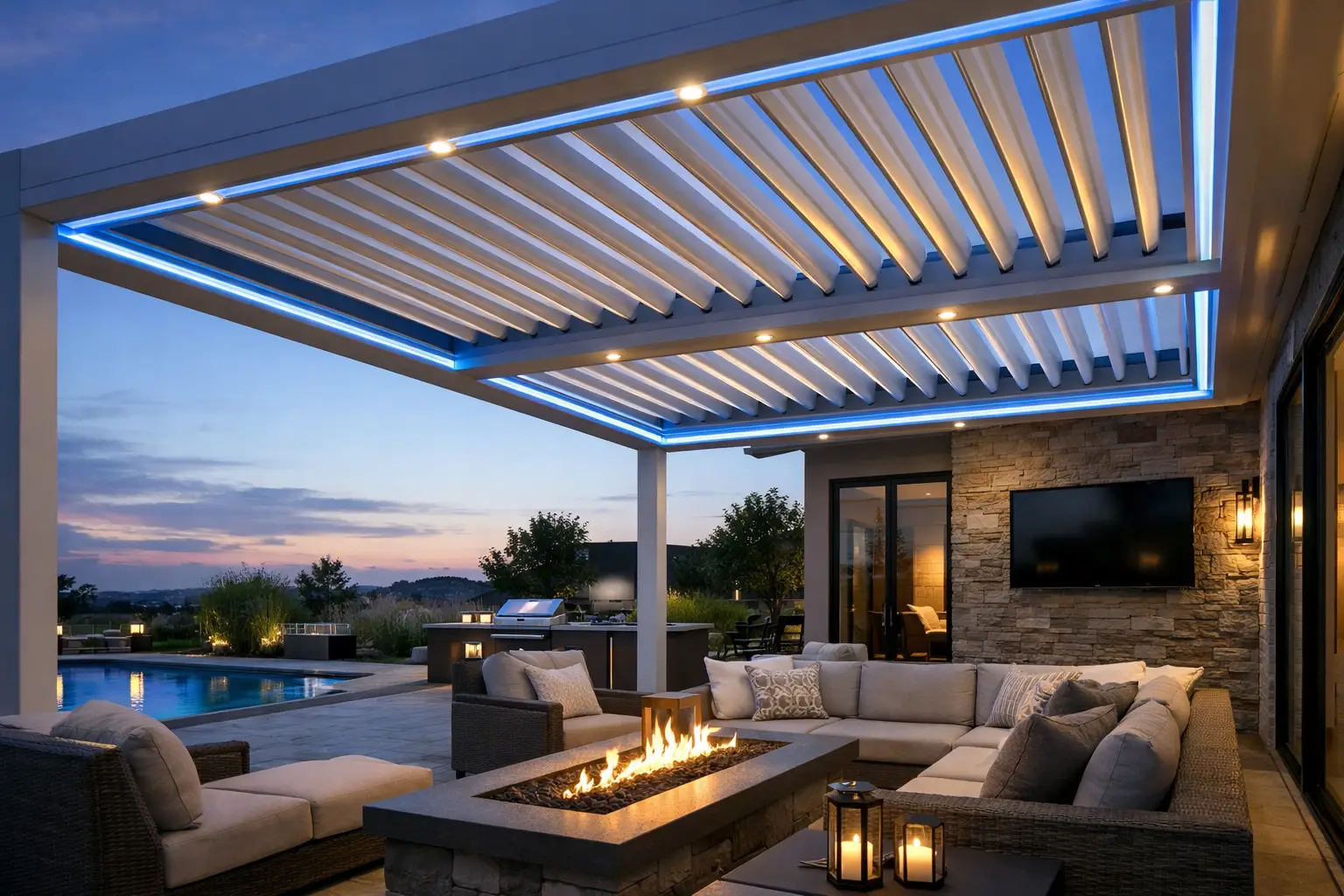
A motorized pergola can feel flawless on day one. The louvers respond at a touch, the rain sensor closes the roof automatically, and the entire space shifts from full sun to sheltered comfort in seconds. The real test, though, is not the showroom moment. A serious review of pergola motor reliability starts five, ten, or even fifteen years into ownership, when weather exposure, installation quality, and component engineering begin to separate premium systems from expensive disappointments.
For Florida homeowners, that distinction matters more. Heat, salt air, wind, sudden rain, and constant UV exposure create a harsher operating environment than many buyers realize. A pergola motor is not just a convenience feature. It is the mechanical core of the system, and if it fails, the experience of ownership changes fast.
What pergola motor reliability really means
Reliability is often confused with simple functionality. A motor that opens and closes louvers during a sales demonstration is not necessarily reliable. True reliability means consistent operation under repeated use, resistance to weather-related degradation, and a design that protects the motor assembly from the stresses that shorten service life.
It also means the system performs predictably when it matters most. In a premium outdoor structure, the motor should not hesitate during a sudden storm, strain under normal loads, or require frequent service calls to maintain basic operation. Quiet performance matters too, but it ranks below consistency, weather resistance, and long-term durability.
There is also an ownership side to reliability. Even strong motor systems can eventually need service. The difference is whether the product was engineered with that reality in mind. A meaningful warranty, professional installation, and a company that stands behind the system are part of reliability, not separate from it.
A practical review of pergola motor reliability factors
When evaluating pergola motor quality, the first question is not who made the nicest remote or app. It is whether the motor and control system were selected for exterior architectural use rather than adapted from lighter-duty applications. That distinction affects everything from torque capacity to moisture protection.
Motor reliability is usually shaped by five core variables: motor grade, enclosure protection, louver weight and balance, control integration, and installation precision. If one of those is weak, long-term performance suffers.
Motor grade and duty cycle
Not all motors are built for the same workload. In a premium louvered pergola, the motor should be matched to the size and weight of the roof assembly and rated for repeated operation over time. Undersized motors may function adequately in the early years, but they tend to wear faster because they work harder during every cycle.
This is one area where buyers should be careful with vague promises. Terms like heavy-duty only matter if the engineering behind them is real. A properly specified motor should operate without strain, especially on larger pergolas where multiple louver sections or integrated accessories add complexity.
Protection from moisture, heat, and corrosion
Florida is unforgiving on outdoor systems. Even a well-designed pergola faces humidity, wind-driven rain, heat buildup, and in many coastal areas, salt exposure. A motor that lacks proper sealing or sits in a poorly protected location will have a shorter service life, even if the pergola itself looks beautiful.
The best systems treat the motor as a protected component within the structure, not an afterthought. Water management matters. So does how wiring, connectors, and control boxes are housed. Corrosion at electrical connections can create intermittent problems long before a motor fully fails.
The role of installation quality
This point is often overlooked in any review of pergola motor reliability, yet it may be the most important one. A premium motor installed poorly can become unreliable far sooner than expected. Misalignment, improper tension, uneven framing, or rushed electrical work all create extra stress.
That is why full-service design and installation matters. A pergola is not just a product crate arriving at the curb. It is a mechanical system that depends on precise assembly. If the louvers do not move smoothly because the structure is slightly out of square, the motor pays the price every time the roof opens or closes.
Where pergola motors usually fail first
Most failures do not begin with a dramatic burnout. They start small. Slower movement, hesitation at certain positions, unusual noise, remote inconsistency, or failure after heavy rain are all warning signs. In many cases, the motor itself is not the first weak point. Electrical connections, control boards, sensors, and water intrusion can trigger the early problems owners notice.
That matters because a pergola buyer should think beyond the motor label alone. The entire automation package deserves scrutiny. A reliable system is one where the motor, controls, sensors, and installation details were designed to work together.
There is also a difference between wear-related service and premature failure. Over a long enough timeline, moving parts may need attention. That is normal. What is not normal is repeated troubleshooting in the first few years, especially in a high-end pergola positioned as a permanent extension of the home.
How warranty coverage changes the equation
A long motor warranty is one of the clearest signals of manufacturer and installer confidence. It does not guarantee perfection, but it does show that the company expects the system to perform over time. More importantly, it reduces ownership risk on a premium investment.
For luxury homeowners, this is not a small detail. The real cost of motor failure is not just the replacement part. It is the inconvenience, the interruption to outdoor living, and the concern about whether the original purchase was truly engineered for long-term value. Strong warranty coverage helps answer that concern before it becomes a problem.
This is where enVision Pergola stands apart in the Florida market. A 20-year motor and lighting warranty is unusually strong, especially when paired with a 20-year structural warranty. That level of coverage supports a performance-first message because it places accountability behind the claim.
What Florida homeowners should ask before buying
The right questions are often more revealing than the brochure. Ask how the motor is protected from moisture and heat. Ask whether the system has been engineered for high-wind regions and how the motor assembly is affected by storm conditions. Ask who handles installation, service, and warranty support. Ask what typically needs maintenance over time.
It is also worth asking how often the installer works in coastal and hurricane-prone environments. A company serving places like Boca Raton, Naples, Tampa, or Jupiter should understand that motor reliability is not theoretical in Florida. It is tied directly to local weather exposure, permitting realities, and long-term service expectations.
Be cautious with low-price comparisons. A less expensive pergola can look competitive until you consider motor quality, weather sealing, and warranty support. In this category, bargain pricing often shows up later as noise, service issues, or shorter component life.
Is pergola motor reliability generally good?
In the premium category, yes – but only when the system is engineered correctly and installed by specialists. A well-built motorized pergola can deliver dependable performance for many years. The problem is that product quality varies, and buyers do not always see the hidden differences upfront.
If the motor is properly sized, well protected, and supported by a serious warranty, reliability is typically strong. If the system relies on lighter-grade components, vague specifications, or inconsistent installation practices, reliability becomes far less predictable.
That is the trade-off buyers should understand. Motorization adds comfort, control, and real lifestyle value. It also introduces moving parts and electronics, which means quality matters more, not less. In a luxury pergola, the automation should feel effortless because the engineering behind it is anything but casual.
For homeowners investing in a permanent outdoor living upgrade, the smart approach is simple: do not judge the motor by the first button press. Judge it by how confidently the company specifies it, protects it, installs it, and warranties it. That is where long-term reliability is decided, and that is what turns a beautiful pergola into a dependable part of the home for years to come.