
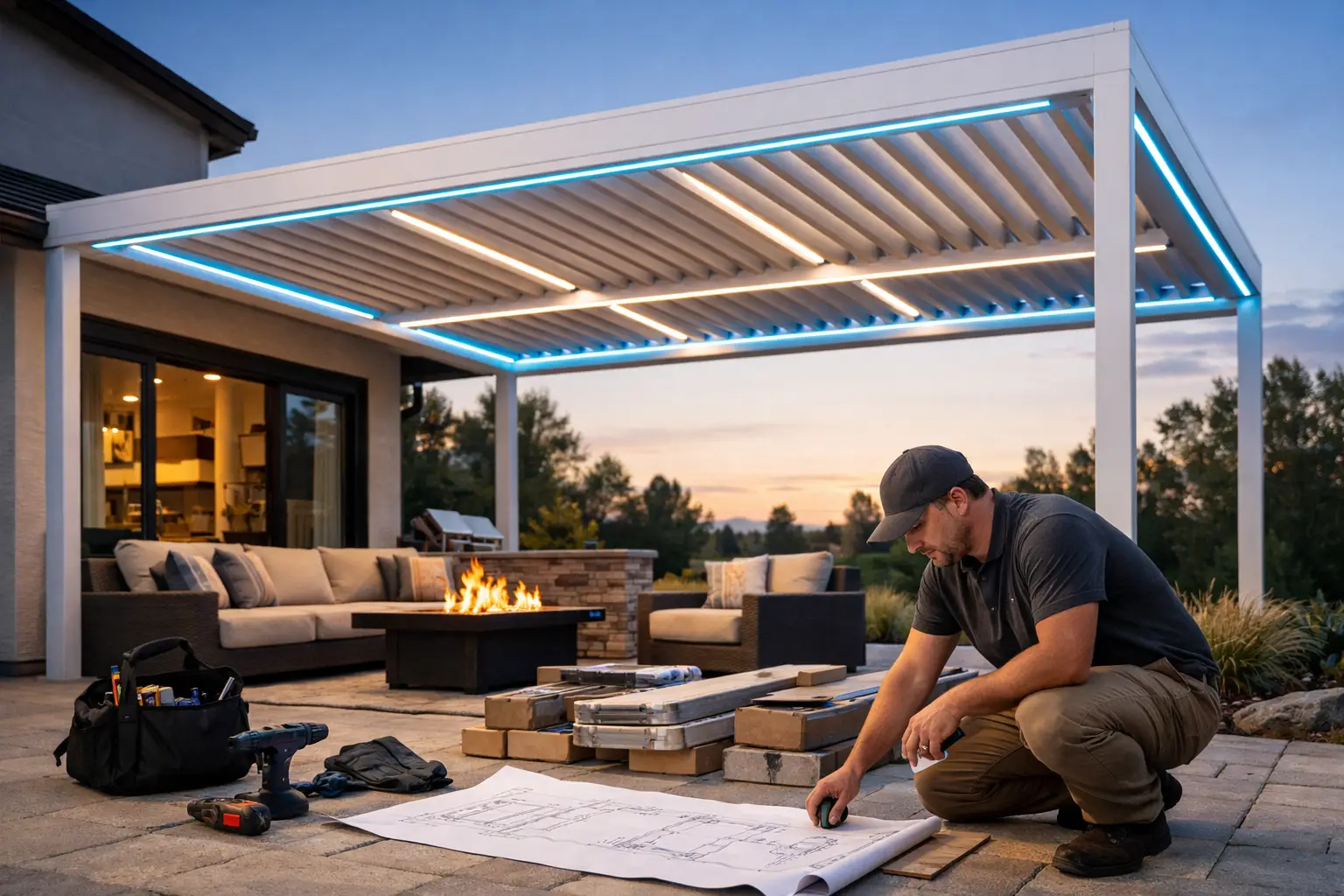
A pergola project usually feels exciting right up until the practical questions start. Will it fit the space the way you imagine? Is the patio structurally ready? How much clearance does the installer need? If you are wondering how to prepare for pergola installation, the right answer is not just choosing a style you like. It is getting the site, scope, and expectations aligned before materials ever arrive.
For Florida homeowners, preparation matters even more. A premium pergola is not a casual backyard add-on. It is a structural outdoor living upgrade that needs to perform in sun, rain, humidity, and, in many locations, serious wind exposure. The more deliberate you are upfront, the smoother the installation tends to be and the better the long-term result looks and performs.
Start with the space, not the product
The first step is to evaluate how the pergola will actually be used. Some homeowners want a defined lounge area by the pool. Others are creating a shaded extension of the home for dining, entertaining, or everyday relaxation. Those goals affect size, orientation, lighting needs, shade options, and whether motorized louvers make sense for your lifestyle.
This is where many projects either gain clarity or get sidetracked. A pergola can look impressive in a brochure, but installation success starts with the actual footprint of your property. Measure the intended area, note nearby walls and rooflines, and think about how people move through the space. You do not want a structure that technically fits but feels oversized, blocks circulation, or interrupts views you value.
If the pergola will connect to the home or sit close to an existing lanai, pool deck, or outdoor kitchen, those relationships matter. The goal is not simply to place a structure outside. The goal is to make it feel architecturally intentional.
How to prepare for pergola installation with a site review
A proper site review should happen before final design decisions are locked in. This includes more than checking dimensions. Installers need to understand the base condition, drainage, nearby utilities, access paths, elevation changes, and any features that may complicate installation.
For example, a pergola being installed on an existing slab may require confirmation that the slab is suitable for anchoring and load requirements. A paver surface may need more evaluation depending on what sits beneath it. If your chosen location is near a pool, screen enclosure, seawall, or property line, those details can affect engineering and layout.
Trees and landscaping also deserve attention. Mature plantings can add beauty and privacy, but they may limit equipment access or interfere with louvers, lighting plans, or shade systems. Trimming or temporary protection may be needed before work begins.
This is also the time to flag anything that could create surprise costs later. Hidden irrigation lines, uneven grade, and limited side-yard access are all manageable, but only if they are identified early.
Confirm permits and approvals early
One of the biggest mistakes homeowners make is treating permits as an afterthought. In Florida, structural outdoor installations often require permitting, and coastal or high-wind regions can involve stricter review. If you live in an HOA community, architectural approval may also be required before installation can be scheduled.
That does not mean the process has to be frustrating. It means you want a builder who plans for it. A concierge-style company that handles design, engineering, permitting, and installation removes a great deal of homeowner guesswork. You should know who is responsible for drawings, engineering documents, submittals, revisions, and final inspection coordination.
If your neighborhood has deed restrictions or design guidelines, gather those documents early. HOA approvals can take longer than expected, especially when boards meet only once per month. The best time to learn that your community wants a particular color, setback, or drainage detail is before fabrication begins, not after.
Prepare the installation area for access
Even a well-designed pergola project can stall if the crew cannot access the site efficiently. Before installation day, think through the route from the street or driveway to the work area. Large components, tools, ladders, and equipment all need safe, practical entry.
Gates should be measured. Pathways should be clear. Patio furniture, planters, decorative items, and fragile accessories should be moved out of the work zone in advance. If the pergola will be installed near a pool, outdoor kitchen, or premium hardscape, protecting adjacent finishes matters just as much as preparing the footprint itself.
If you have pets, this is also the time to plan for containment. Installation days involve open gates, active crews, and repeated movement in and out of the property. The same goes for vehicles. Make room in the driveway if the crew needs staging space.
For higher-end homes, access planning is often less about convenience and more about protecting the property. A professional installation team should respect that, but homeowners can help by making the site as straightforward as possible.
Think through power, lighting, and controls
Many luxury pergola systems do more than provide shade. If your project includes integrated lighting, motorized louvers, or automated shades, preparation needs to include electrical planning. This should be addressed before installation, not improvised in the field.
Ask where power will come from, where switches or control interfaces will be located, and whether any conduit runs need to be concealed. If you are building a polished outdoor entertaining space, visible afterthought wiring will undercut the finished result.
It also helps to think about how you want to use the pergola after dark. Some homeowners only need ambient lighting for occasional dinners outside. Others want a full evening living space that feels like an extension of the interior. The right lighting plan depends on the mood you want, but also on how much control you expect from the system.
Expect some disruption, but define it clearly
Homeowners investing in a premium outdoor structure usually value a controlled, professional experience. That is reasonable. Still, installation is a construction process, and some temporary disruption should be expected.
The key is clarity. You should know the anticipated timeline, typical work hours, what the crew needs from you, and whether any area of the property will be temporarily off limits. If weather could affect scheduling, that should be discussed upfront, especially in Florida where rain patterns can change quickly.
This is one of the places where contractor communication separates a commodity install from a premium one. Clear updates, realistic sequencing, and proactive notice about next steps make the experience feel managed rather than reactive.
Prepare for engineering, not just appearance
When homeowners think about pergola installation, they often focus on finish and style first. That matters, especially on a custom home. But in Florida, structural performance is not a background detail. It is central to the value of the investment.
Your preparation should include questions about engineering criteria, anchoring approach, and the product’s performance in local conditions. In hurricane-prone markets, a pergola should be selected and installed with wind exposure in mind, not treated as a decorative accessory. Warranty coverage also deserves attention. Strong structural and system warranties speak to long-term confidence, but only if the installation is done correctly and according to specification.
That is why the cheapest path is rarely the smartest one. A lower initial number can look attractive until details like permitting, engineering, finish quality, drainage coordination, or motor integration start falling short.
How to prepare for pergola installation without delays
If you want the project to move efficiently, make decisions early and keep them consistent. Delays often come from late changes in size, color, placement, or options after engineering or permitting is already underway.
Before giving final approval, make sure you are comfortable with the footprint, height, orientation, post locations, lighting plan, and any automated features. Review renderings carefully. Ask practical questions. Will the louvers direct rain away from seating areas? Will posts interfere with furniture layouts? Will the pergola preserve the view line from inside the home?
It is far better to spend an extra day refining the design than to make rushed changes once fabrication has started. Premium projects benefit from decisiveness, but that decisiveness should come after thoughtful review.
Know what a finished site requires
Preparation does not stop at installation day. Ask what the site will look like when the work is complete. Will packaging and debris be removed? Will the crew walk you through controls, lighting, and maintenance basics? Will there be a final inspection if required by the municipality?
This matters because the final handoff shapes your first impression of ownership. A luxury pergola should not just look exceptional. It should be delivered with the same level of care that went into the design and engineering.
For homeowners in coastal Florida communities such as Boca Raton, Naples, or Tampa, where weather exposure and design standards both run high, that full-service approach is often the difference between a project that simply gets built and one that feels genuinely well executed.
A well-prepared pergola installation tends to look effortless when it is finished. That is not luck. It is what happens when the site is reviewed carefully, the engineering is taken seriously, and the entire process is handled with the level of precision a premium home deserves. If you approach the project that way from the start, the finished space will feel less like an addition and more like it was always meant to be there.